
Jinwoo Chong Books
Jinwoo Chong is an American writer whose work has appeared in literary magazines such as The Rumpus and CRAFT. He holds an MFA in fiction from Columbia University.
Known for: Flux
Books by Jinwoo Chong
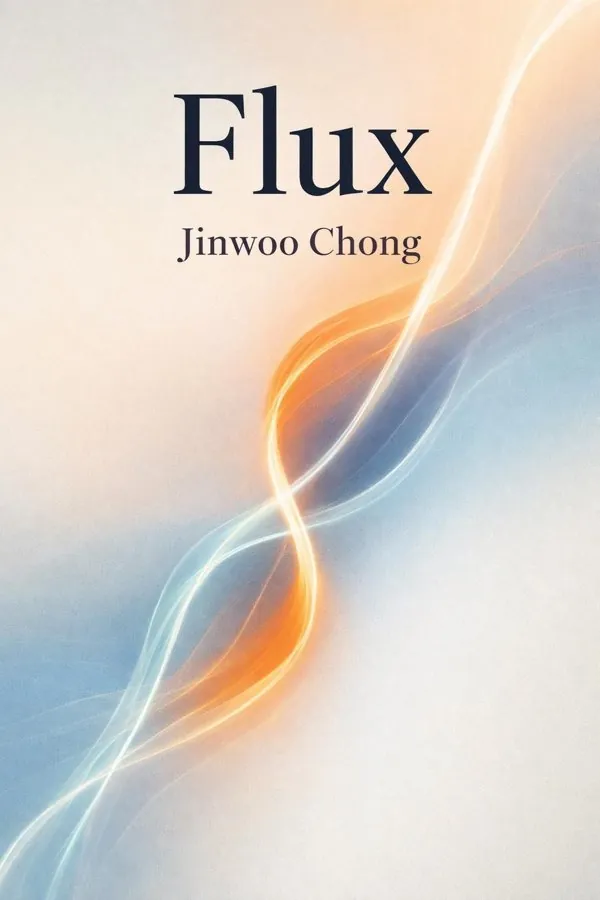
Flux
What if time does not move cleanly forward, but loops, fractures, and returns through grief, media, and memory? Jinwoo Chong’s Flux is a genre-defying debut that fuses literary fiction, speculative unease, family drama, and pop-cultural nostalgia into a haunting meditation on identity. The novel follows three seemingly separate figures—Brandon in the present, Blue in the 1980s, and Bo in a speculative future—whose lives are linked by loss, transformation, and a mysterious corporation whose technologies promise to reshape reality itself. As these narratives begin to echo and overlap, Flux asks whether memory is something we preserve, something that distorts us, or something that can be engineered. What makes the novel matter is not just its clever structure, but its emotional precision. Chong writes about loneliness, immigrant family dynamics, queer longing, and the seductive pull of nostalgia with unusual sensitivity, while also using speculative elements to sharpen rather than dilute those concerns. A Columbia-trained fiction writer with work published in respected literary venues, Chong brings both stylistic ambition and psychological depth to his first novel. Flux is a striking exploration of how people survive trauma by reinventing time, and at what cost.
Read SummaryKey Insights from Jinwoo Chong
Brandon and the Promise of Rewriting Time
Grief often feels less like an emotion than a new calendar imposed on the living. In Flux, Brandon embodies this disorientation. His mother’s death has severed his connection to ordinary time, leaving him suspended between before and after, memory and numbness. He moves through life as though the wo...
From Flux
Blue and the Nostalgia of Becoming
Childhood is where many identities begin not through certainty, but through imitation. Blue’s 1980s-set narrative captures this truth with aching clarity. He is a young boy shaped by distance, longing, and mediated images, especially the stylized television hero Raider. In a home where intimacy is u...
From Flux
Bo and the Reckoning of the Future
The future in speculative fiction often reveals the hidden logic of the present. Bo’s storyline does exactly that. Set in a later world where technological systems shape everyday existence in intimate ways, his narrative examines what happens when identity becomes increasingly externalized, monitore...
From Flux
The Convergence When Time Folds Back
Some stories move toward revelation by connecting plot points; Flux moves toward revelation by collapsing temporal distance. As Brandon, Blue, and Bo’s narratives begin to mirror and intersect, the novel reveals that time is not merely a structure for events but a medium through which identity is di...
From Flux
Memory Is Both Refuge and Trap
We tend to think of memory as proof of who we are, but Flux suggests it can be just as destabilizing as it is preserving. Across all three narrative strands, memories do not sit quietly in the background. They intrude, distort, repeat, and sometimes offer a false promise of return. Characters revisi...
From Flux
Technology Amplifies Human Longing
Technology in Flux is frightening not because it is alien, but because it intensifies desires people already have. The novel does not imagine machines as cold intruders disrupting an otherwise stable humanity. Instead, it shows how tools and systems amplify grief, nostalgia, loneliness, and the wish...
From Flux
About Jinwoo Chong
Jinwoo Chong is an American writer whose work has appeared in literary magazines such as The Rumpus and CRAFT. He holds an MFA in fiction from Columbia University. Flux is his first novel.






Frequently Asked Questions
Jinwoo Chong is an American writer whose work has appeared in literary magazines such as The Rumpus and CRAFT. He holds an MFA in fiction from Columbia University.
Read Jinwoo Chong's books in 15 minutes
Get AI-powered summaries with key insights from 1 book by Jinwoo Chong.