
Jerry Kaplan Books
Jerry Kaplan is an American computer scientist, entrepreneur, and author known for his work in artificial intelligence and technology entrepreneurship. He has founded several Silicon Valley startups and taught at Stanford University, focusing on the social and economic impacts of emerging technologies.
Known for: Humans Need Not Apply: A Guide to Wealth and Work in the Age of Artificial Intelligence
Books by Jerry Kaplan
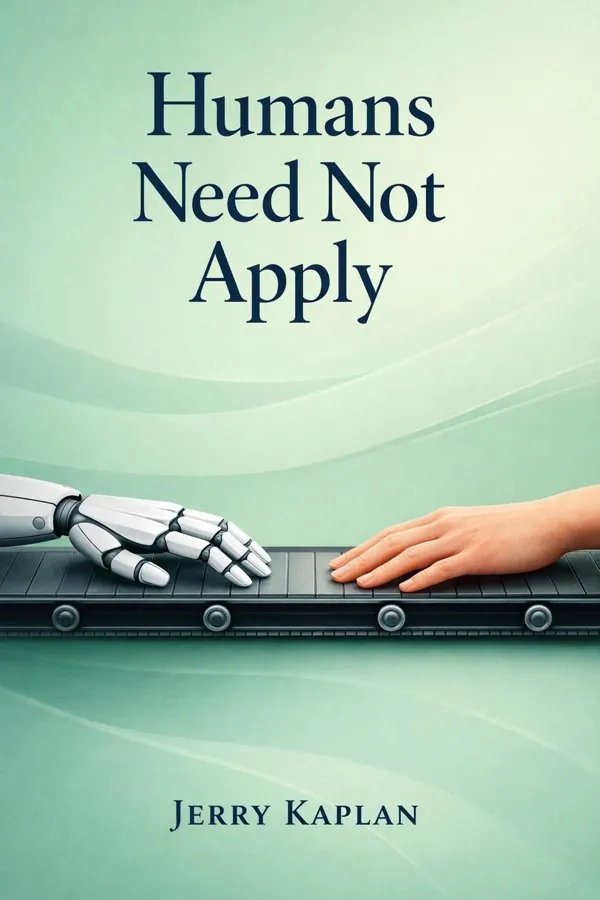
Humans Need Not Apply: A Guide to Wealth and Work in the Age of Artificial Intelligence
What happens when machines stop being simple tools and start becoming capable workers, decision-makers, and economic actors? In Humans Need Not Apply, Jerry Kaplan tackles this unsettling question with rare clarity. The book is not a technical manual on artificial intelligence, nor is it a sensational warning about robot uprisings. Instead, it is a sharp, accessible exploration of how intelligent machines are changing employment, wealth creation, social status, and the structure of modern capitalism. Kaplan argues that the real disruption of AI is not just technological but economic and political. As software and smart machines take over tasks once reserved for skilled professionals as well as routine laborers, societies will be forced to rethink the link between work, income, and dignity. Who benefits when machines produce more value than humans? What happens to people whose labor is no longer needed? And how should law, education, and public policy adapt? Kaplan writes with the authority of someone who has lived inside the technology industry. As a computer scientist, entrepreneur, and Stanford educator, he combines practical knowledge with philosophical depth, making this book an essential guide to one of the defining transitions of our time.
Read SummaryKey Insights from Jerry Kaplan
The Long Evolution of Machine Intelligence
Artificial intelligence did not appear all at once as a magical breakthrough; it evolved through decades of ambition, disappointment, and reinvention. That history matters because it helps us understand both what AI can really do and why public expectations are so often distorted. Kaplan begins by s...
From Humans Need Not Apply: A Guide to Wealth and Work in the Age of Artificial Intelligence
Work Is Being Redefined by Automation
For centuries, work has been more than a way to earn money; it has been a source of identity, discipline, pride, and social belonging. Kaplan’s unsettling insight is that AI threatens not only jobs but the very cultural meaning of work. Once intelligent systems can perform cognitive tasks as well as...
From Humans Need Not Apply: A Guide to Wealth and Work in the Age of Artificial Intelligence
Machines Concentrate Wealth Through Ownership
The deepest economic impact of AI may not be unemployment alone but the concentration of wealth in the hands of those who own the machines. Kaplan pushes readers to see automation not simply as a labor issue but as an ownership issue. When software, robots, and intelligent platforms produce value, t...
From Humans Need Not Apply: A Guide to Wealth and Work in the Age of Artificial Intelligence
Social Classes Will Be Reorganized
Technological revolutions do not just change tools; they rearrange society. Kaplan argues that AI is likely to redraw class boundaries in ways that feel both familiar and new. Industrial capitalism divided people by access to land, factories, credentials, and wages. The machine economy may sort peop...
From Humans Need Not Apply: A Guide to Wealth and Work in the Age of Artificial Intelligence
Automation Targets Tasks, Not Whole Jobs
One of Kaplan’s most useful clarifications is that automation usually replaces tasks before it replaces occupations. This matters because debates about the future of work often become exaggerated. People ask whether doctors, teachers, lawyers, or drivers will vanish. Kaplan suggests a more precise q...
From Humans Need Not Apply: A Guide to Wealth and Work in the Age of Artificial Intelligence
Legal and Moral Questions Lag Technology
Machines may act intelligently, but our legal and ethical systems still struggle to classify what they are and how responsibility should work around them. Kaplan highlights a critical tension: technology evolves quickly, while law, regulation, and moral consensus evolve slowly. That gap creates conf...
From Humans Need Not Apply: A Guide to Wealth and Work in the Age of Artificial Intelligence
About Jerry Kaplan
Jerry Kaplan is an American computer scientist, entrepreneur, and author known for his work in artificial intelligence and technology entrepreneurship. He has founded several Silicon Valley startups and taught at Stanford University, focusing on the social and economic impacts of emerging technologi...
Read more
Jerry Kaplan is an American computer scientist, entrepreneur, and author known for his work in artificial intelligence and technology entrepreneurship. He has founded several Silicon Valley startups and taught at Stanford University, focusing on the social and economic impacts of emerging technologi...
Jerry Kaplan is an American computer scientist, entrepreneur, and author known for his work in artificial intelligence and technology entrepreneurship. He has founded several Silicon Valley startups and taught at Stanford University, focusing on the social and economic impacts of emerging technologies.

Frequently Asked Questions
Jerry Kaplan is an American computer scientist, entrepreneur, and author known for his work in artificial intelligence and technology entrepreneurship. He has founded several Silicon Valley startups and taught at Stanford University, focusing on the social and economic impacts of emerging technologies.
Read Jerry Kaplan's books in 15 minutes
Get AI-powered summaries with key insights from 1 book by Jerry Kaplan.