
Jennifer Michael Hecht Books
Jennifer Michael Hecht is an American historian, poet, and philosopher. She holds a Ph.
Known for: Doubt: A History: The Great Doubters and Their Legacy of Innovation from Socrates and Jesus to Thomas Jefferson and Emily Dickinson
Books by Jennifer Michael Hecht
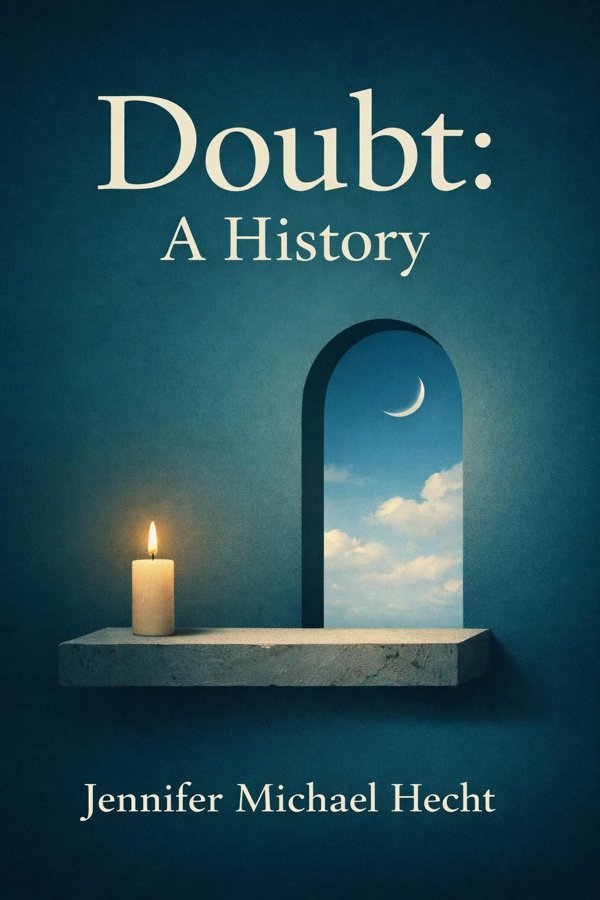
Doubt: A History: The Great Doubters and Their Legacy of Innovation from Socrates and Jesus to Thomas Jefferson and Emily Dickinson
Jennifer Michael Hecht’s Doubt: A History is a sweeping intellectual history of one of civilization’s most misunderstood forces: doubt. Rather than treating skepticism as a weakness, Hecht argues that questioning authority, inherited belief, and official truth has been one of the main engines of human progress. Moving from ancient Greece and the Hebrew tradition through Christianity, Islam, the Renaissance, the Scientific Revolution, the Enlightenment, and modern secular thought, she shows how doubters preserved intellectual freedom when orthodoxy tried to close debate. The book matters because it reframes cultural history: many of the ideas we now associate with reason, tolerance, science, and individual conscience emerged not from certainty, but from brave uncertainty. Hecht is exceptionally well suited to tell this story. A historian, poet, and philosopher with a Ph.D. in the history of science from Columbia University, she combines scholarly range with a vivid, humane voice. The result is both a history of ideas and a defense of intellectual courage, showing that doubt is not the enemy of meaning, but often its beginning.
Read SummaryKey Insights from Jennifer Michael Hecht
Athens Made Questioning a Public Art
A civilization changes when it stops treating questions as threats and starts treating them as tools. Hecht begins in ancient Greece because Athens gave doubt a new cultural visibility. Socrates did not found a religion, write a sacred text, or offer final answers. Instead, he asked unsettling quest...
From Doubt: A History: The Great Doubters and Their Legacy of Innovation from Socrates and Jesus to Thomas Jefferson and Emily Dickinson
Hellenistic Schools Civilized Uncertainty
When old certainties break, people do not stop searching for truth; they search for better ways to live without guarantees. After the classical Greek era, Hellenistic and Roman philosophers turned doubt into competing life strategies. Epicurus rejected superstition by arguing that the gods, if they ...
From Doubt: A History: The Great Doubters and Their Legacy of Innovation from Socrates and Jesus to Thomas Jefferson and Emily Dickinson
Early Christianity Contained Doubt Within Faith
Religious traditions often define themselves against doubt, yet they are also shaped by it from the beginning. Hecht’s treatment of early Christianity is especially nuanced because she does not portray belief and doubt as simple opposites. The early Christian world was full of argument: about script...
From Doubt: A History: The Great Doubters and Their Legacy of Innovation from Socrates and Jesus to Thomas Jefferson and Emily Dickinson
Medieval Thinkers Questioned Under Constraints
Doubt does not vanish in religious ages; it learns to speak carefully. The medieval period is often caricatured as intellectually frozen, but Hecht shows a more complicated reality. Jewish, Christian, and Islamic thinkers debated revelation, reason, metaphysics, and the limits of language about God....
From Doubt: A History: The Great Doubters and Their Legacy of Innovation from Socrates and Jesus to Thomas Jefferson and Emily Dickinson
Renaissance Humanism Recentered Human Judgment
A culture opens when people rediscover that authority can be inherited without being absolute. In Hecht’s account, the Renaissance revives classical learning in ways that unsettle medieval intellectual monopoly. Humanists returned to original texts, compared versions, examined language historically,...
From Doubt: A History: The Great Doubters and Their Legacy of Innovation from Socrates and Jesus to Thomas Jefferson and Emily Dickinson
Science Turned Doubt Into a Method
The Scientific Revolution transformed doubt from a philosophical posture into a disciplined way of investigating the world. Hecht traces how figures like Copernicus, Galileo, Bacon, and Descartes challenged inherited authorities by insisting that tradition alone could not settle questions about natu...
From Doubt: A History: The Great Doubters and Their Legacy of Innovation from Socrates and Jesus to Thomas Jefferson and Emily Dickinson
About Jennifer Michael Hecht
Jennifer Michael Hecht is an American historian, poet, and philosopher. She holds a Ph.D. in the history of science from Columbia University and is known for her works on the history of doubt, secularism, and the philosophy of happiness.


Frequently Asked Questions
Jennifer Michael Hecht is an American historian, poet, and philosopher. She holds a Ph.
Read Jennifer Michael Hecht's books in 15 minutes
Get AI-powered summaries with key insights from 1 book by Jennifer Michael Hecht.