
Herman Melville Books
Herman Melville (1819–1891) was an American novelist, short story writer, and poet of the American Renaissance period. He is best known for his masterpiece Moby-Dick, though his work was largely unrecognized during his lifetime.
Known for: Bartleby, the Scrivener: A Story of Wall Street, Moby-Dick; or, The Whale
Books by Herman Melville
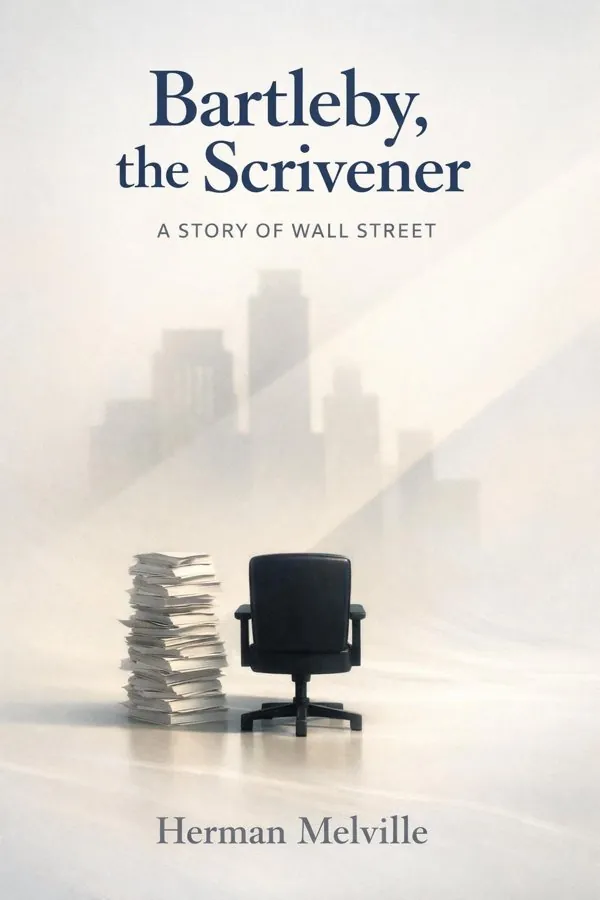
Bartleby, the Scrivener: A Story of Wall Street
Herman Melville’s “Bartleby, the Scrivener: A Story of Wall Street,” first published in 1853, is a short work with an unusually large afterlife. Set inside a quiet law office in lower Manhattan, it be...

Moby-Dick; or, The Whale
Moby-Dick; or, The Whale is far more than a sea adventure about a captain hunting a legendary whale. Published in 1851, Herman Melville’s novel follows Ishmael, a restless young sailor who joins the w...
Key Insights from Herman Melville
The Quiet Life of a Wall Street Lawyer
Order can look like virtue, but sometimes it is merely comfort arranged into habit. The lawyer who narrates “Bartleby” prides himself on being safe, prudent, and moderate. He is not a courtroom hero or a fierce intellectual; he is a professional man who values calm, routine, and the absence of confl...
From Bartleby, the Scrivener: A Story of Wall Street
Bartleby’s Arrival and Silent Efficiency
At first, the most troubling people are often the most useful ones. When Bartleby arrives, he appears to be the ideal employee: pale, quiet, sober, tireless, and astonishingly productive. He copies legal documents with mechanical consistency and without complaint. For the lawyer, this seems like a b...
From Bartleby, the Scrivener: A Story of Wall Street
I Would Prefer Not To
A quiet refusal can be more disruptive than open rebellion. The turning point of the story comes when Bartleby is asked to help compare a copied document and answers, calmly and without drama, “I would prefer not to.” The phrase is astonishing because it is neither aggressive nor apologetic. It does...
From Bartleby, the Scrivener: A Story of Wall Street
Withdrawal, Confusion, and Moral Evasion
When someone refuses to fit the system, the system first tries to reinterpret them. After Bartleby’s first refusal, the lawyer does not immediately dismiss him. Instead, he hesitates, rationalizes, and adapts. Bartleby continues copying for a time, then gradually refuses more tasks, then all tasks. ...
From Bartleby, the Scrivener: A Story of Wall Street
An Office Built on Human Fragments
The workplace in “Bartleby” is comic on the surface, but its comedy hides a grim truth: modern offices often sort people into useful fragments rather than seeing them whole. Before Bartleby dominates the story, Melville introduces the lawyer’s other employees. Turkey is productive in the morning but...
From Bartleby, the Scrivener: A Story of Wall Street
Abandonment, Relocation, and the Tombs
Sometimes the most revealing moral failure is not cruelty, but retreat. As Bartleby becomes impossible to manage, the lawyer tries various mild strategies: persuasion, offers of help, even relocation. Yet when Bartleby refuses to leave the office, the lawyer chooses an extraordinary solution—he move...
From Bartleby, the Scrivener: A Story of Wall Street
About Herman Melville
Herman Melville (1819–1891) was an American novelist, short story writer, and poet of the American Renaissance period. He is best known for his masterpiece Moby-Dick, though his work was largely unrecognized during his lifetime. Melville’s writing often explores complex moral and existential questio...
Read more
Herman Melville (1819–1891) was an American novelist, short story writer, and poet of the American Renaissance period. He is best known for his masterpiece Moby-Dick, though his work was largely unrecognized during his lifetime. Melville’s writing often explores complex moral and existential questio...
Herman Melville (1819–1891) was an American novelist, short story writer, and poet of the American Renaissance period. He is best known for his masterpiece Moby-Dick, though his work was largely unrecognized during his lifetime. Melville’s writing often explores complex moral and existential questions, drawing on his experiences at sea and his deep interest in philosophy and religion.





Frequently Asked Questions
Herman Melville (1819–1891) was an American novelist, short story writer, and poet of the American Renaissance period. He is best known for his masterpiece Moby-Dick, though his work was largely unrecognized during his lifetime.
Read Herman Melville's books in 15 minutes
Get AI-powered summaries with key insights from 2 books by Herman Melville.