
Henry A. Kissinger Books
Kissinger is a former U.
Known for: The Age of AI: And Our Human Future
Books by Henry A. Kissinger
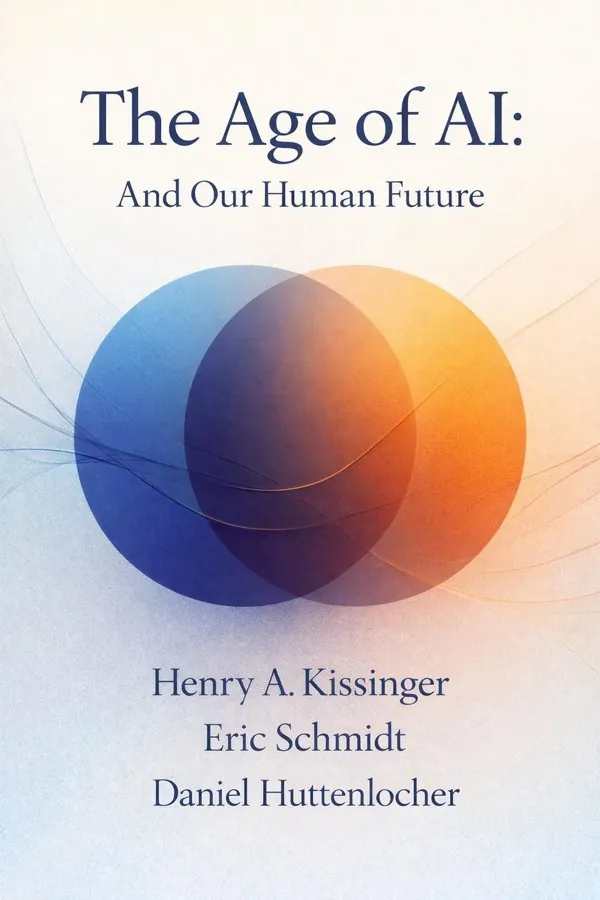
The Age of AI: And Our Human Future
Artificial intelligence is often discussed as a tool, a threat, or a business opportunity. The Age of AI: And Our Human Future argues that it is something even more consequential: a force that may alter how human beings understand knowledge, power, creativity, war, governance, and even themselves. Henry A. Kissinger, Eric Schmidt, and Daniel Huttenlocher combine the perspectives of diplomacy, technology leadership, and computer science to ask a question larger than whether AI will automate jobs or improve products. They ask what happens when machines can generate insights and decisions that humans cannot fully explain, yet increasingly rely upon. That question matters because AI is no longer a distant possibility. It already shapes search results, financial markets, medical diagnosis, military planning, logistics, recommendation systems, and public discourse. As these systems grow more capable, societies will face choices that are not merely technical but philosophical and political. This book stands out because it does not treat AI as a niche innovation. It treats it as a civilizational turning point. The result is a serious, accessible exploration of how humanity might preserve judgment, responsibility, and meaning in a world transformed by nonhuman intelligence.
Read SummaryKey Insights from Henry A. Kissinger
AI Is A Different Intelligence
The most important mistake people make about AI is assuming it is simply human intelligence scaled up. The authors argue that artificial intelligence is not a faster version of human reasoning but a fundamentally different way of processing the world. Humans usually learn by linking experience, conc...
From The Age of AI: And Our Human Future
Knowledge Without Full Understanding
For centuries, human civilization has tied knowledge to explanation. We believed that to know something meant to understand why it worked. AI disrupts that assumption. The authors describe this as an epistemological shift: we are entering an age in which machines can produce reliable results without...
From The Age of AI: And Our Human Future
History Shows Technology Reshapes Order
Transformative technologies do not merely add convenience; they reorganize civilization. The authors place AI in the lineage of the printing press, the scientific revolution, and the nuclear age. Each innovation altered not only what humans could do but also how institutions were structured, how aut...
From The Age of AI: And Our Human Future
Human Cognition Will Be Rebalanced
When a society adopts a new cognitive tool, people do not simply become more capable; they often become different thinkers. The authors argue that AI will reshape human cognition by changing what we remember, how we decide, and when we defer to external systems. Just as calculators reduced the need ...
From The Age of AI: And Our Human Future
Ethics Must Be Designed Early
A powerful technology does not become ethical by accident. One of the book’s core arguments is that AI ethics cannot be treated as a public relations layer added after deployment. Because AI systems can influence hiring, lending, policing, healthcare, education, and warfare, ethical choices are embe...
From The Age of AI: And Our Human Future
AI Will Redefine Power And Security
The authors treat AI not only as a commercial breakthrough but as a geopolitical force. Nations that lead in AI may gain advantages in intelligence analysis, cyber operations, military planning, economic competitiveness, and influence over global standards. This makes AI a strategic technology, comp...
From The Age of AI: And Our Human Future
About Henry A. Kissinger
Kissinger is a former U.

Frequently Asked Questions
Kissinger is a former U.
Read Henry A. Kissinger's books in 15 minutes
Get AI-powered summaries with key insights from 1 book by Henry A. Kissinger.