
Gerhard L. Weinberg Books
Gerhard L. Weinberg is a German-born American historian specializing in World War II and modern European history.
Known for: A World at Arms: A Global History of World War II
Books by Gerhard L. Weinberg
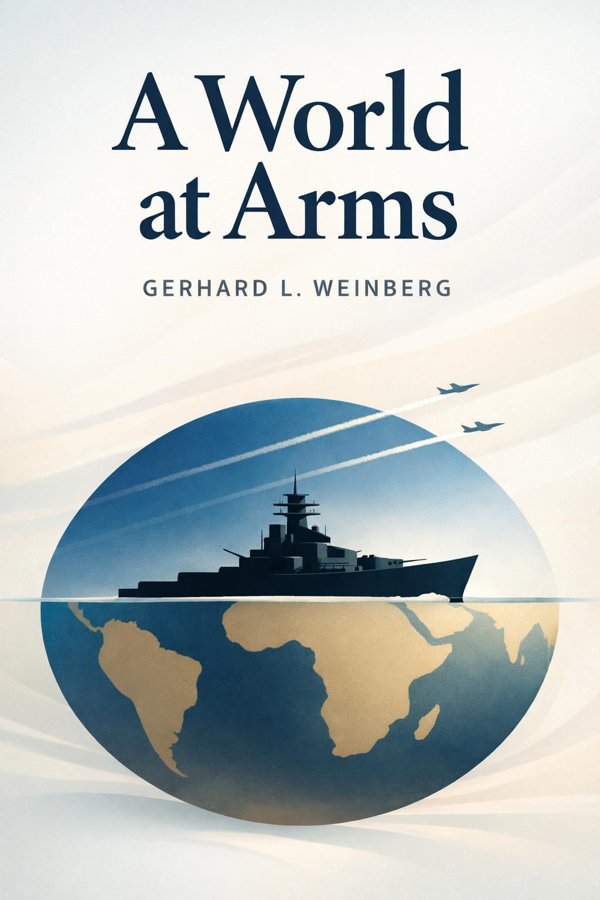
A World at Arms: A Global History of World War II
World War II is often told in fragments: Hitler in Europe, Pearl Harbor in the Pacific, the Holocaust, D-Day, Hiroshima. Gerhard L. Weinberg’s A World at Arms brings those fragments together into one sweeping, unified history of a truly global conflict. Rather than treating the war as separate regional struggles, Weinberg shows how events in Europe, Asia, Africa, the Atlantic, and the Pacific continuously shaped one another. Decisions made in Berlin affected Burma; battles in the Soviet Union altered strategy in North Africa; American industrial output transformed every front. What makes this book so valuable is not only its scale but its balance. Weinberg examines grand strategy, diplomacy, ideology, economics, occupation, and civilian life, while giving attention to both major powers and smaller states caught in the storm. The result is a fuller understanding of how the war was fought, why it unfolded as it did, and how it remade the modern world. As one of the most respected historians of World War II, Weinberg writes with authority, clarity, and command of global sources, making this book an essential guide to the conflict’s true scope.
Read SummaryKey Insights from Gerhard L. Weinberg
The Unfinished Peace After World War I
Wars rarely end when the shooting stops; they often continue as bitterness, instability, and revenge. Weinberg begins by showing that the roots of World War II lay deep in the unresolved tensions of the interwar years. The First World War did not produce a durable peace. Instead, it left Germany hum...
From A World at Arms: A Global History of World War II
Aggression Triumphed While Diplomacy Hesitated
The road to war was not inevitable, but it was cleared step by step by leaders who mistook restraint for peace. Weinberg traces how the late 1930s became a period in which bold aggressors repeatedly tested the world and found it hesitant. Japan expanded deeper into China. Mussolini invaded Ethiopia....
From A World at Arms: A Global History of World War II
A European War Became Global
What began as a war over Poland quickly became a struggle spanning continents because the major powers were tied together by empire, resources, and strategy. Weinberg shows that World War II cannot be understood as a sequence of isolated campaigns. Germany’s victories in Europe affected Britain’s im...
From A World at Arms: A Global History of World War II
Resources and Geography Shaped Strategy
Battlefield courage matters, but wars of this scale are ultimately decided by fuel, steel, shipping, distance, and terrain. Weinberg repeatedly emphasizes that strategy in World War II was inseparable from geography and resources. Germany sought quick victories partly because it lacked the economic ...
From A World at Arms: A Global History of World War II
1942 to 1943 Changed Everything
Great wars often turn not at one single moment but through a series of blows that expose the limits of expansion. Weinberg identifies 1942 to 1943 as the decisive shift in World War II. The Axis powers still appeared formidable, yet their advance had reached its high-water mark. In the Soviet Union,...
From A World at Arms: A Global History of World War II
Home Fronts Were Also Battlefields
World War II was fought not only by armies at the front but by entire societies under enormous strain. Weinberg gives sustained attention to the home fronts of all major powers, showing that civilian endurance, state organization, propaganda, labor systems, and industrial output were central to vict...
From A World at Arms: A Global History of World War II
About Gerhard L. Weinberg
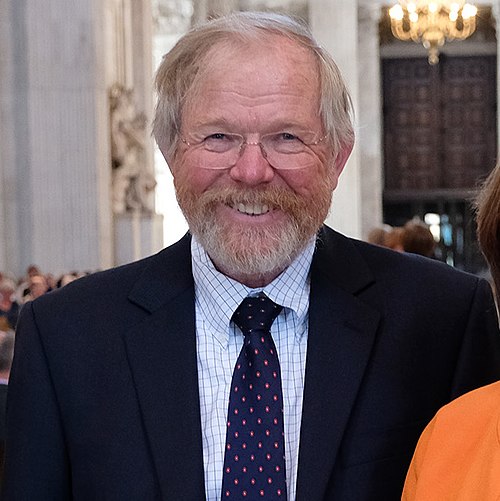
Gerhard L. Weinberg is a German-born American historian specializing in World War II and modern European history. He is Professor Emeritus of History at the University of North Carolina at Chapel Hill and has authored several influential works on the origins and conduct of the war.


Frequently Asked Questions
Gerhard L. Weinberg is a German-born American historian specializing in World War II and modern European history.
Read Gerhard L. Weinberg's books in 15 minutes
Get AI-powered summaries with key insights from 1 book by Gerhard L. Weinberg.