
Frances A. Yates Books
Frances Amelia Yates (1899–1981) was a British historian known for her influential works on Renaissance thought, Hermeticism, and the history of ideas. She was a Fellow of the Warburg Institute, University of London.
Known for: The Art of Memory
Books by Frances A. Yates
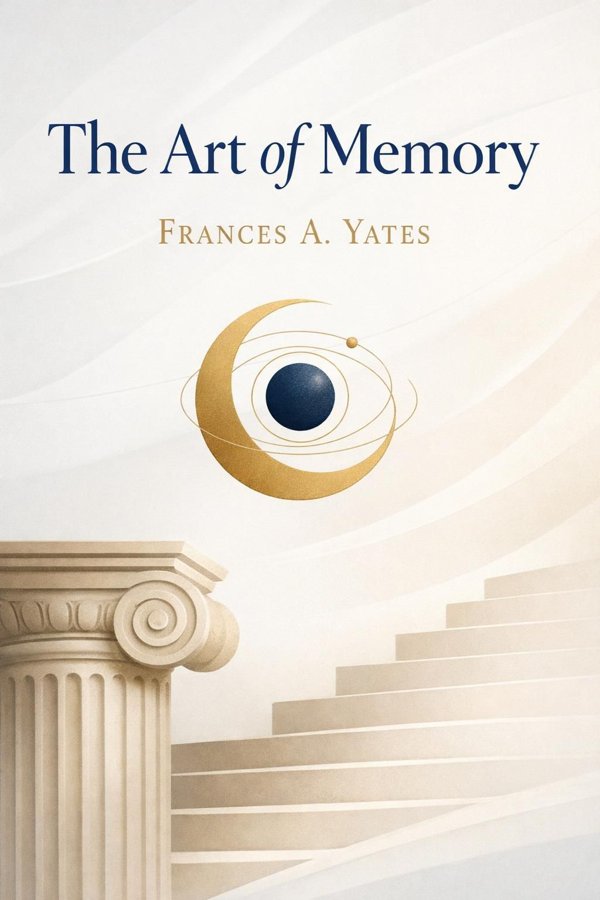
The Art of Memory
Frances A. Yates’s The Art of Memory is a landmark work of intellectual history that reveals how memory was once understood not as a passive storehouse, but as an active technology for shaping thought. Tracing mnemonic systems from ancient Greece and Rome through the Middle Ages and into the Renaissance, Yates shows that methods of remembering were deeply connected to rhetoric, religion, philosophy, and even the birth of modern science. Her book is not merely about tricks for recalling facts. It is about how entire civilizations organized knowledge before the age of print, search engines, and databases. What makes this study so important is its central claim: memory techniques influenced far more than education. They shaped habits of imagination, systems of classification, spiritual discipline, and ambitious attempts to comprehend the universe itself. Yates, one of the twentieth century’s most respected historians of Renaissance thought and a leading scholar at the Warburg Institute, brings extraordinary depth to this overlooked subject. The result is a rich, surprising account of how the architecture of memory became part of the architecture of Western culture.
Read SummaryKey Insights from Frances A. Yates
The Classical Origins of Memory Art
One of the most powerful ideas in intellectual history begins with a disaster: memory becomes visible when chaos must be reordered. Yates opens with the famous story of Simonides of Ceos, who allegedly discovered the principles of artificial memory after identifying banquet guests crushed in a colla...
From The Art of Memory
Memory as a Tool of Rhetoric
We often assume that thinking clearly and remembering well are separate skills, but the classical tradition treated them as inseparable. In the ancient rhetorical world described by Yates, memory was one of the essential parts of eloquence. A great speaker did not merely gather arguments; he organiz...
From The Art of Memory
From Antiquity to Spiritual Order
A cultural technique survives only if a new age finds a new purpose for it. One of Yates’s most fascinating arguments is that the art of memory did not vanish with the fall of the classical world; it was transformed by Christianity and the Middle Ages. The rhetorical halls of Rome gave way to monast...
From The Art of Memory
Scholastic Thought and Structured Recall
Memory becomes more powerful when it serves systems, not just isolated facts. Yates shows that in the medieval scholastic world, memory was increasingly woven into methods of classification, teaching, and intellectual organization. As universities emerged and theological reasoning became more elabor...
From The Art of Memory
The Renaissance Revival of Classical Memory
When old intellectual tools return, they rarely come back unchanged. Yates argues that the Renaissance revived the classical art of memory with extraordinary energy, but also with new ambitions. Humanists recovered ancient rhetorical texts and renewed interest in Ciceronian and Quintilian traditions...
From The Art of Memory
Giordano Bruno and Magical Memory
Some intellectual traditions become most revealing at their extremes. In Yates’s account, Giordano Bruno represents one of the most dramatic transformations of the art of memory. For Bruno, memory was not merely a practical rhetorical method. It became part of an expansive Hermetic and cosmological ...
From The Art of Memory
About Frances A. Yates
Frances Amelia Yates (1899–1981) was a British historian known for her influential works on Renaissance thought, Hermeticism, and the history of ideas. She was a Fellow of the Warburg Institute, University of London.


Frequently Asked Questions
Frances Amelia Yates (1899–1981) was a British historian known for her influential works on Renaissance thought, Hermeticism, and the history of ideas. She was a Fellow of the Warburg Institute, University of London.
Read Frances A. Yates's books in 15 minutes
Get AI-powered summaries with key insights from 1 book by Frances A. Yates.