
Eveline Cruickshanks Books
Eveline Cruickshanks is a British historian specializing in seventeenth- and eighteenth-century British political history. She has written extensively on Jacobitism and the Tory party, contributing to a deeper understanding of the political and ideological conflicts of the period.
Known for: The Glorious Revolution
Books by Eveline Cruickshanks
The Glorious Revolution
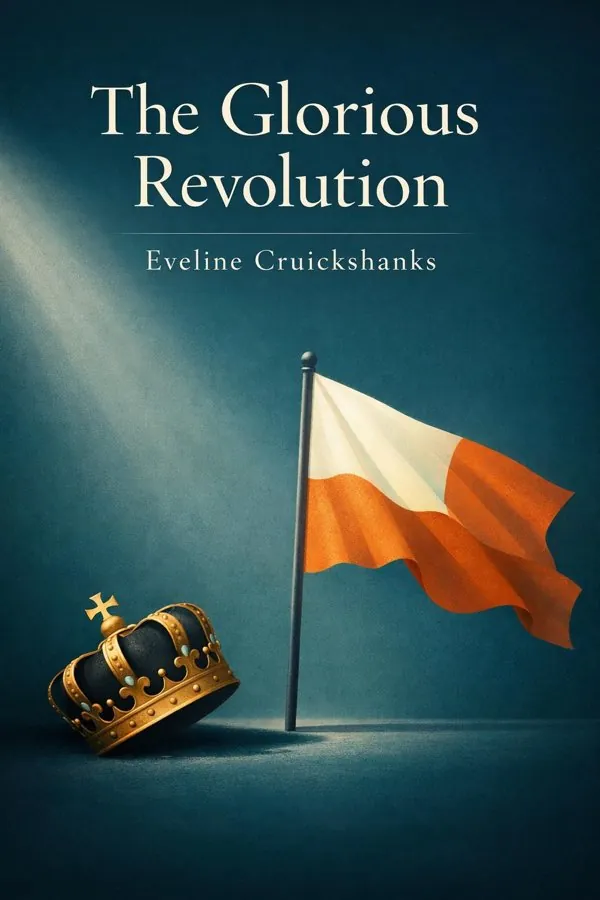
Eveline Cruickshanks’s The Glorious Revolution revisits one of the most famous turning points in British history: the overthrow of James II in 1688 and the accession of William III and Mary II. Often presented as a calm, bloodless, and inevitable victory for liberty, the revolution is usually wrapped in patriotic myth. Cruickshanks challenges that comforting story. She shows that the events of 1688–1689 were driven by fear, faction, propaganda, dynastic calculation, religious conflict, and the hard realities of power. Rather than a simple constitutional triumph, the revolution emerges as a contested and deeply divisive political upheaval. What makes this book so valuable is its refusal to flatten history into a tidy morality play. Cruickshanks, a leading historian of late Stuart politics, Jacobitism, and party conflict, brings sharp archival insight to the era’s rival loyalties and competing interpretations. She helps readers see that constitutional change did not arise in a vacuum; it grew out of anxieties about monarchy, Parliament, Protestant identity, and European geopolitics. For anyone who wants to understand how modern Britain was shaped, this book offers a more rigorous and unsettling account than the traditional legend.
Read SummaryKey Insights from Eveline Cruickshanks
The Late Stuart Monarchy Set the Stage
Revolutions rarely begin with a single dramatic event; they grow out of tensions that have been accumulating for years. Cruickshanks begins by placing 1688 within the world of the restored Stuart monarchy after 1660. Charles II returned to the throne promising stability after civil war, regicide, an...
From The Glorious Revolution
Religion Was the Emotional Core
Political arguments often sound constitutional on the surface, but religion can supply the passion that makes them explosive. In Cruickshanks’s account, the Catholic question was not a side issue in late seventeenth-century England; it was the emotional center of politics. Many Protestants believed ...
From The Glorious Revolution
James II Turned Anxiety into Resistance
A ruler does not need to be a tyrant in intention to create a crisis of authority; it is enough to govern in ways large parts of society experience as threatening. Cruickshanks presents James II as a monarch whose policies intensified existing fears. He expanded the standing army, promoted Catholics...
From The Glorious Revolution
Opposition Emerged Through Networks and Fear
Resistance is rarely spontaneous; it is organized through relationships, shared language, and a growing sense that ordinary remedies have failed. Cruickshanks shows how opposition to James II formed through a mix of aristocratic networks, church interests, local political influence, and internationa...
From The Glorious Revolution
William’s Invitation Was a Calculated Gamble
Inviting a foreign prince to intervene is not an act of pure patriotism; it is a gamble that domestic survival requires external force. One of the most dramatic episodes in the story is the invitation sent to William of Orange by leading English figures. Cruickshanks treats this not as a romantic re...
From The Glorious Revolution
James Fell Through Desertion and Collapse
Regimes often look strongest just before they disintegrate. Cruickshanks demonstrates that James II did not lose power simply because William landed with an army. He lost because support for his rule unraveled rapidly once elites, officers, and influential figures began defecting. Authority depends ...
From The Glorious Revolution
About Eveline Cruickshanks
Eveline Cruickshanks is a British historian specializing in seventeenth- and eighteenth-century British political history. She has written extensively on Jacobitism and the Tory party, contributing to a deeper understanding of the political and ideological conflicts of the period.


Frequently Asked Questions
Eveline Cruickshanks is a British historian specializing in seventeenth- and eighteenth-century British political history. She has written extensively on Jacobitism and the Tory party, contributing to a deeper understanding of the political and ideological conflicts of the period.
Read Eveline Cruickshanks's books in 15 minutes
Get AI-powered summaries with key insights from 1 book by Eveline Cruickshanks.