
Elliot G. Gerson Books
Gerson is an executive at the Aspen Institute and a Rhodes Trust representative.
Known for: Make No Small Plans
Books by Elliot G. Gerson
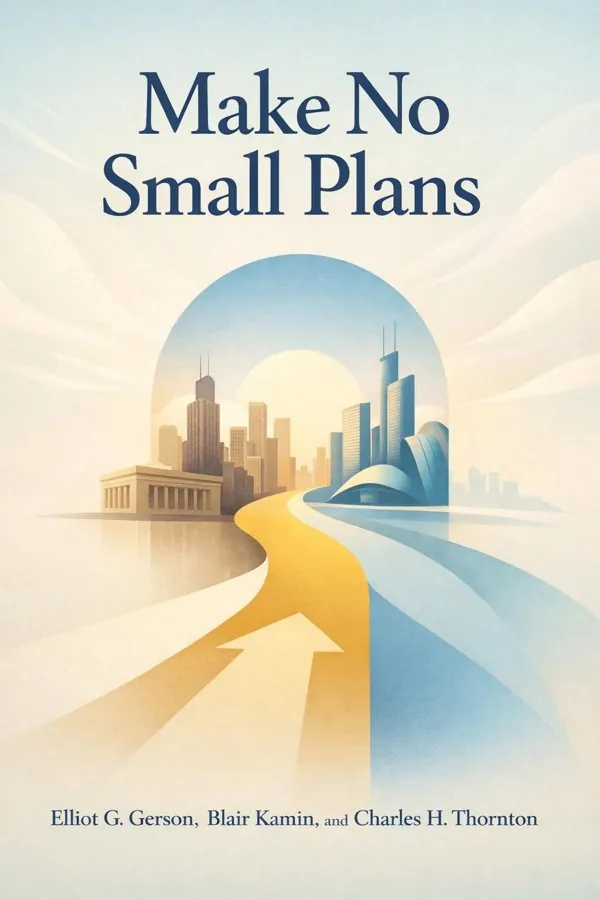
Make No Small Plans
Make No Small Plans is an unusual and memorable book: part graphic novel, part civic history, and part invitation to imagine a better city. Commissioned by the Chicago Architecture Foundation, it follows three teenagers as they move through Chicago’s past, present, and possible futures, discovering how architecture, infrastructure, politics, and public vision shaped one of the world’s great urban laboratories. Inspired by Daniel Burnham’s 1909 Plan of Chicago and his famous challenge to “make no little plans,” the book turns urban design into a living story rather than a distant subject reserved for experts. What makes the book matter is its central claim: cities are not accidental. They are designed, contested, rebuilt, and reimagined by people with values, courage, and ambition. That means ordinary citizens, especially young people, have a role in shaping what comes next. The authors bring rare authority to that message. Blair Kamin offers the eye of a Pulitzer Prize–winning architecture critic, Charles H. Thornton brings the mind of a leading structural engineer, and Elliot G. Gerson contributes a deep commitment to civic leadership and education. Together, they create a book that makes urban history vivid, accessible, and urgently relevant.
Read SummaryKey Insights from Elliot G. Gerson
Three Teenagers Enter Chicago’s Living Story
A city becomes more meaningful when we stop treating it as background and start seeing it as a story in progress. Make No Small Plans begins with three teenagers who represent curiosity, skepticism, and possibility. They are not experts, and that is precisely the point. Through their eyes, readers e...
From Make No Small Plans
Burnham’s Big Vision Changed Urban Thinking
Great cities rarely emerge from small ambitions. One of the book’s central episodes introduces Daniel Burnham and Edward Bennett’s 1909 Plan of Chicago, a landmark in American urban planning. Burnham’s famous declaration to “make no little plans” was not merely rhetorical flair. It reflected a philo...
From Make No Small Plans
Fire Turned Destruction Into Reinvention
Disaster can expose weakness, but it can also open the door to reinvention. The Great Chicago Fire of 1871 is one of the book’s defining historical moments. Rather than presenting it only as tragedy, Make No Small Plans shows how the fire became a turning point that pushed Chicago to rebuild at a ne...
From Make No Small Plans
Skyscrapers Revealed Engineering as Civic Art
Tall buildings are not just feats of vanity; they are arguments about what technology can make possible. In tracing Chicago’s architectural rise, the book highlights the development of skyscrapers and the engineering breakthroughs that supported them. This is where design meets physics, and where ci...
From Make No Small Plans
Civic Visionaries Shape More Than Buildings
Cities are built by coalitions, not by lone geniuses. While Burnham is the most famous voice in the book, Make No Small Plans broadens the narrative to include reformers, planners, engineers, architects, public officials, and community actors who helped transform Chicago into a metropolis. This wide...
From Make No Small Plans
Planning Works Best When People Participate
A well-designed city is not only efficient; it is democratic. One of the book’s strongest contemporary themes is that urban planning should not be imposed from above without public participation. While grand visions matter, they must be connected to the lived experiences of residents whose daily liv...
From Make No Small Plans
About Elliot G. Gerson
Gerson is an executive at the Aspen Institute and a Rhodes Trust representative.

Frequently Asked Questions
Gerson is an executive at the Aspen Institute and a Rhodes Trust representative.
Read Elliot G. Gerson's books in 15 minutes
Get AI-powered summaries with key insights from 1 book by Elliot G. Gerson.