
Elinor Ostrom Books
Elinor Ostrom (1933–2012) was an American political economist known for her work on the governance of common-pool resources. She was the first woman to receive the Nobel Prize in Economic Sciences in 2009 for her analysis of economic governance, especially the commons.
Known for: Governing the Commons: The Evolution of Institutions for Collective Action, Understanding Institutional Diversity
Books by Elinor Ostrom
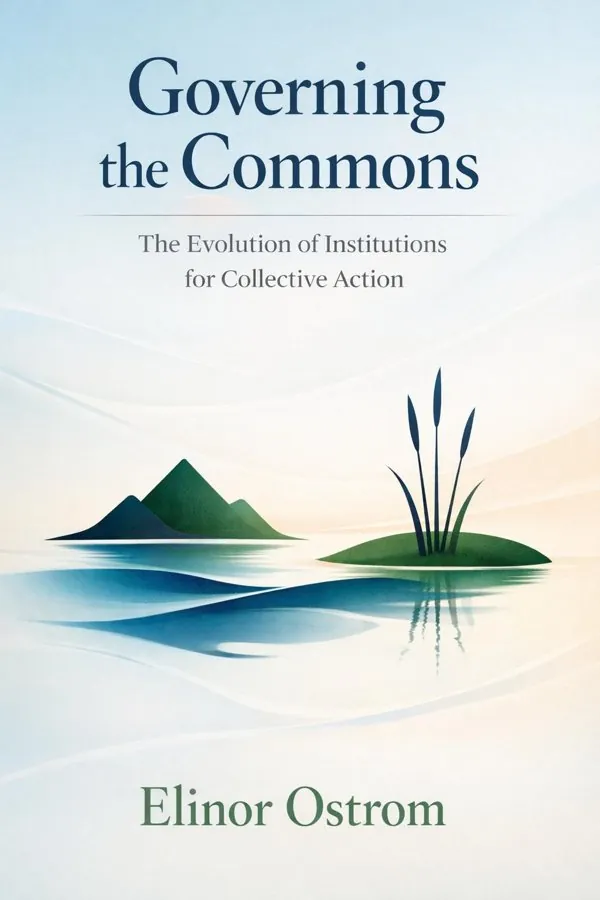
Governing the Commons: The Evolution of Institutions for Collective Action
In this groundbreaking work, Elinor Ostrom challenges the conventional wisdom that common property is poorly managed and should be either regulated by central authorities or privatized. Drawing on ext...

Understanding Institutional Diversity
In this influential work, Elinor Ostrom explores the complexity and variety of institutional arrangements that govern human interactions. She develops a framework for analyzing how rules, norms, and s...
Key Insights from Elinor Ostrom
Theoretical Background
Before we can understand why commons sometimes thrive and sometimes collapse, we must examine the intellectual frameworks that shape our expectations. Classic economic models depict individuals as rational, utility-maximizing agents who inevitably overuse shared resources. This logic was popularized...
From Governing the Commons: The Evolution of Institutions for Collective Action
Critique of Conventional Solutions
Having questioned the theoretical foundations, we must scrutinize the solutions typically proposed. For decades, policy circles revolved around two options: centralized government control or complete privatization. Both approaches hold intuitive appeal yet encounter significant practical limitations...
From Governing the Commons: The Evolution of Institutions for Collective Action
Conceptual Foundations
At the foundation of my argument lies the concept of institutions—not as monolithic entities like governments or markets, but as sets of rules, norms, and shared strategies that structure human interactions. Institutions are created and maintained by people; they are not external forces acting upon ...
From Understanding Institutional Diversity
The Institutional Analysis and Development (IAD) Framework
The IAD framework is the analytical heart of this book. Its power lies in providing a flexible map—one that helps identify the key variables shaping any institutional arrangement, without imposing one model of how things should work. The basic unit of analysis in the IAD framework is the 'action si...
From Understanding Institutional Diversity
About Elinor Ostrom
Elinor Ostrom (1933–2012) was an American political economist known for her work on the governance of common-pool resources. She was the first woman to receive the Nobel Prize in Economic Sciences in 2009 for her analysis of economic governance, especially the commons. Ostrom was a professor at Indi...
Read more
Elinor Ostrom (1933–2012) was an American political economist known for her work on the governance of common-pool resources. She was the first woman to receive the Nobel Prize in Economic Sciences in 2009 for her analysis of economic governance, especially the commons. Ostrom was a professor at Indi...
Elinor Ostrom (1933–2012) was an American political economist known for her work on the governance of common-pool resources. She was the first woman to receive the Nobel Prize in Economic Sciences in 2009 for her analysis of economic governance, especially the commons. Ostrom was a professor at Indiana University and co-director of the Workshop in Political Theory and Policy Analysis.



Frequently Asked Questions
Elinor Ostrom (1933–2012) was an American political economist known for her work on the governance of common-pool resources. She was the first woman to receive the Nobel Prize in Economic Sciences in 2009 for her analysis of economic governance, especially the commons.
Read Elinor Ostrom's books in 15 minutes
Get AI-powered summaries with key insights from 2 books by Elinor Ostrom.