
Douglass C. North Books
North (1920–2015) was an American economist and Nobel laureate known for his work on institutional economics and economic history.
Known for: State Formation and Political Order: The Political Economy of Institutions and Decisions
Books by Douglass C. North
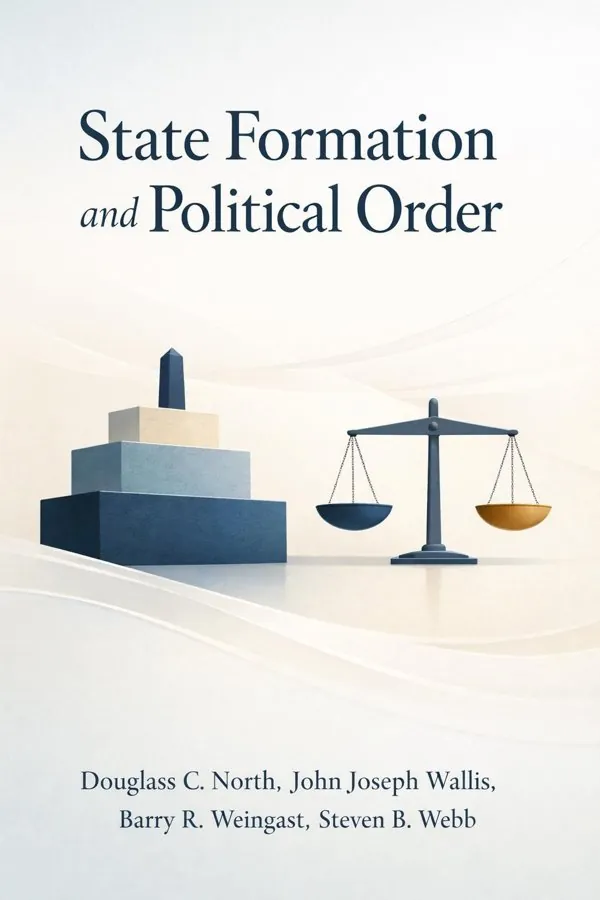
State Formation and Political Order: The Political Economy of Institutions and Decisions
Why do some societies become stable, prosperous, and politically inclusive while others remain trapped in corruption, violence, and fragility? In State Formation and Political Order: The Political Economy of Institutions and Decisions, Douglass C. North, John Joseph Wallis, Barry R. Weingast, and Steven B. Webb tackle that question by linking political power, economic incentives, and institutional design. Their core insight is that political order does not emerge automatically from elections, markets, or constitutional language. It is built through arrangements that control violence, organize elite competition, and shape who can access economic and political opportunities. The book matters because it offers a realistic alternative to simplistic development advice. Instead of assuming all countries should immediately imitate modern democracies, the authors explain how most societies historically operate as limited access orders, where elites preserve peace by restricting entry to organizations, offices, and valuable markets. They then show how some societies gradually transition toward open access orders, where impersonal rules, broad participation, and durable institutions support growth and liberty. With North’s Nobel Prize-winning authority in institutional economics and his coauthors’ deep expertise in political economy and governance, this book provides one of the most influential frameworks for understanding state formation, development, and political order.
Read SummaryKey Insights from Douglass C. North
Violence Lies Behind Every Political Order
A society’s first political problem is not prosperity, justice, or even representation; it is violence. The authors begin from a stark but clarifying premise: any social order must find a way to control organized violence among groups capable of fighting. Political institutions are therefore not abs...
From State Formation and Political Order: The Political Economy of Institutions and Decisions
Limited Access Orders Create Elite Peace
Most societies in human history have not been open, competitive, or broadly inclusive. They have been what the authors call limited access orders, also known as natural states. Their defining logic is simple: elites maintain peace by restricting access to valuable political and economic opportunitie...
From State Formation and Political Order: The Political Economy of Institutions and Decisions
Institutions and Organizations Evolve Together
Institutions do not float above society; they are shaped by the organizations that operate within them. One of the book’s most valuable insights is the constant interaction between institutions, which are the rules of the game, and organizations, which are the players built to pursue goals within th...
From State Formation and Political Order: The Political Economy of Institutions and Decisions
Transitions Depend on Doorstep Conditions
Societies do not jump directly from fragile patronage systems to modern open democracies. The authors argue that successful transitions occur through specific preconditions they call doorstep conditions. These conditions make it possible for a limited access order to begin moving toward an open acce...
From State Formation and Political Order: The Political Economy of Institutions and Decisions
Open Access Orders Enable Broad Competition
Open access orders are rare in history, but where they emerge, they transform both politics and economics. Their central feature is not perfection or total equality. It is open entry. Individuals and groups can create organizations, compete in markets, contest political power, and defend rights unde...
From State Formation and Political Order: The Political Economy of Institutions and Decisions
Development Is Political Before It Is Economic
Economic growth is often treated as a technical challenge of investment, trade, or education. This book insists that growth is deeply political. The structure of political order determines who can access opportunities, how secure property rights are, whether organizations can form freely, and whethe...
From State Formation and Political Order: The Political Economy of Institutions and Decisions
About Douglass C. North
North (1920–2015) was an American economist and Nobel laureate known for his work on institutional economics and economic history.


Frequently Asked Questions
North (1920–2015) was an American economist and Nobel laureate known for his work on institutional economics and economic history.
Read Douglass C. North's books in 15 minutes
Get AI-powered summaries with key insights from 1 book by Douglass C. North.