
David S. Landes Books
David S. Landes (1924–2013) was an American historian and economist, and a professor at Harvard University.
Known for: The Wealth and Poverty of Nations: Why Some Are So Rich and Some So Poor
Books by David S. Landes
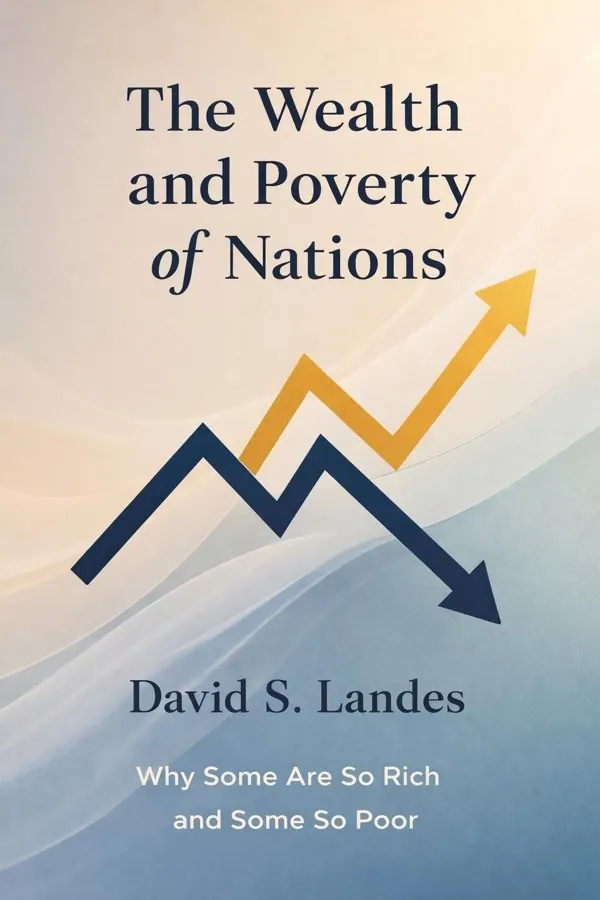
The Wealth and Poverty of Nations: Why Some Are So Rich and Some So Poor
Why do some nations become engines of innovation, wealth, and power while others remain trapped in poverty for generations? In The Wealth and Poverty of Nations, historian David S. Landes tackles this enormous question with sweeping ambition and remarkable historical range. Rather than reducing economic success to a single variable, Landes examines how culture, institutions, technology, geography, religion, and political choices interact over centuries to shape the fate of societies. His central claim is both provocative and memorable: prosperity is not simply inherited from nature or extracted through force, but built through habits, systems, and values that encourage work, learning, experimentation, trust, and accountability. What makes the book especially valuable is Landes’s authority. A leading economic historian and longtime Harvard professor, he combines deep archival knowledge with a grand comparative view of world history. The result is a rich, often debated, but consistently stimulating account of why the modern world developed so unevenly. For readers interested in economics, history, development, or global inequality, this book offers a bold framework for understanding how nations rise, stagnate, or fall behind.
Read SummaryKey Insights from David S. Landes
Europe’s Edge Came From Competition
A civilization may become powerful not because it is unified, but because it is divided in productive ways. One of Landes’s most important arguments is that Europe’s long-term economic advantage emerged from its fragmentation. Unlike imperial China or other centralized empires, Europe consisted of m...
From The Wealth and Poverty of Nations: Why Some Are So Rich and Some So Poor
Industrialization Changed Everything at Once
History sometimes moves gradually, and sometimes it lurches forward. For Landes, the Industrial Revolution was the decisive rupture in the economic history of humanity. Beginning in Britain, it transformed production from labor-intensive craft and agriculture into mechanized, scalable industry. This...
From The Wealth and Poverty of Nations: Why Some Are So Rich and Some So Poor
Culture Shapes Economic Possibility
Economic outcomes are not driven by prices and policies alone; they are also shaped by what people believe is honorable, useful, and worth striving for. Landes places culture at the center of development, arguing that values such as thrift, punctuality, honesty, discipline, education, and openness t...
From The Wealth and Poverty of Nations: Why Some Are So Rich and Some So Poor
Science and Technology Reward the Curious
Wealth grows fastest where curiosity is organized into practical power. Landes argues that one of the great distinctions of the modern West was the sustained linking of scientific inquiry to technological application. Many civilizations produced brilliant inventions, but Europe increasingly built in...
From The Wealth and Poverty of Nations: Why Some Are So Rich and Some So Poor
Colonialism Explains Some, Not All
It is tempting to explain global inequality with a single moral narrative, but Landes insists the historical record is more complicated. Colonialism clearly inflicted violence, extraction, dependency, and institutional distortion on many societies. Empires took resources, redirected trade, imposed f...
From The Wealth and Poverty of Nations: Why Some Are So Rich and Some So Poor
Geography Sets Limits, Not Destiny
Nature matters, but it does not speak the final word. Landes gives geography and climate an important place in his account, noting that disease environments, soil quality, water access, transport routes, and seasonal patterns can either support or obstruct growth. Temperate zones often had advantage...
From The Wealth and Poverty of Nations: Why Some Are So Rich and Some So Poor
About David S. Landes
David S. Landes (1924–2013) was an American historian and economist, and a professor at Harvard University. He specialized in economic history and is best known for his works on industrialization, technological change, and the economic development of nations. His scholarship combined rigorous histor...
Read more
David S. Landes (1924–2013) was an American historian and economist, and a professor at Harvard University. He specialized in economic history and is best known for his works on industrialization, technological change, and the economic development of nations. His scholarship combined rigorous histor...
David S. Landes (1924–2013) was an American historian and economist, and a professor at Harvard University. He specialized in economic history and is best known for his works on industrialization, technological change, and the economic development of nations. His scholarship combined rigorous historical research with broad cultural and institutional analysis.



Frequently Asked Questions
David S. Landes (1924–2013) was an American historian and economist, and a professor at Harvard University.
Read David S. Landes's books in 15 minutes
Get AI-powered summaries with key insights from 1 book by David S. Landes.