

Daniel Kahneman Books
Daniel Kahneman (1934–2024) was an Israeli-American psychologist and Nobel laureate in Economic Sciences, recognized for his pioneering work on the psychology of judgment, decision-making, and behavioral economics. He was a professor emeritus at Princeton University and co-founder of the field of behavioral economics.
Known for: Thinking Fast and Slow, Noise
Books by Daniel Kahneman
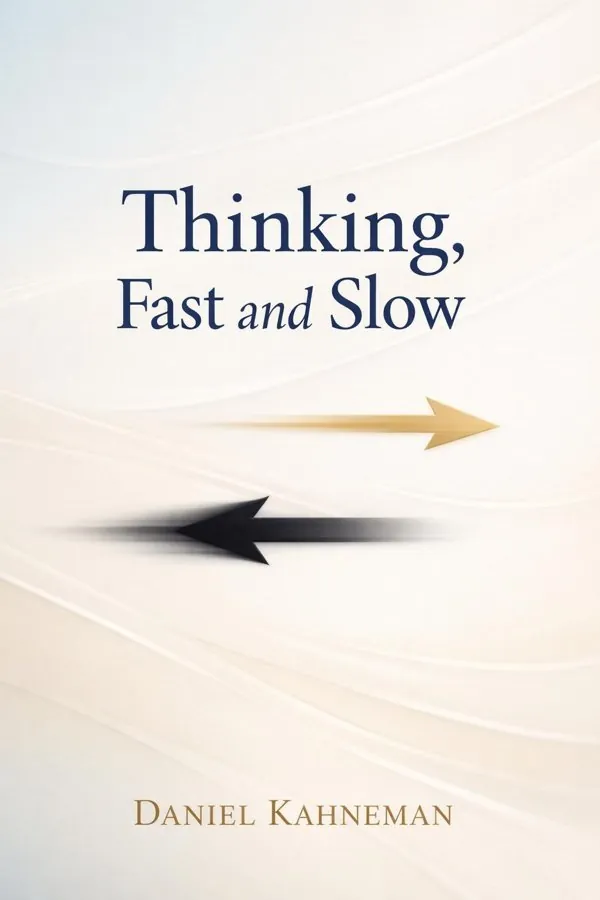
Thinking Fast and Slow
Thinking Fast and Slow is one of the most influential books ever written about how the human mind works. In it, Daniel Kahneman distills decades of groundbreaking research in psychology and behavioral...
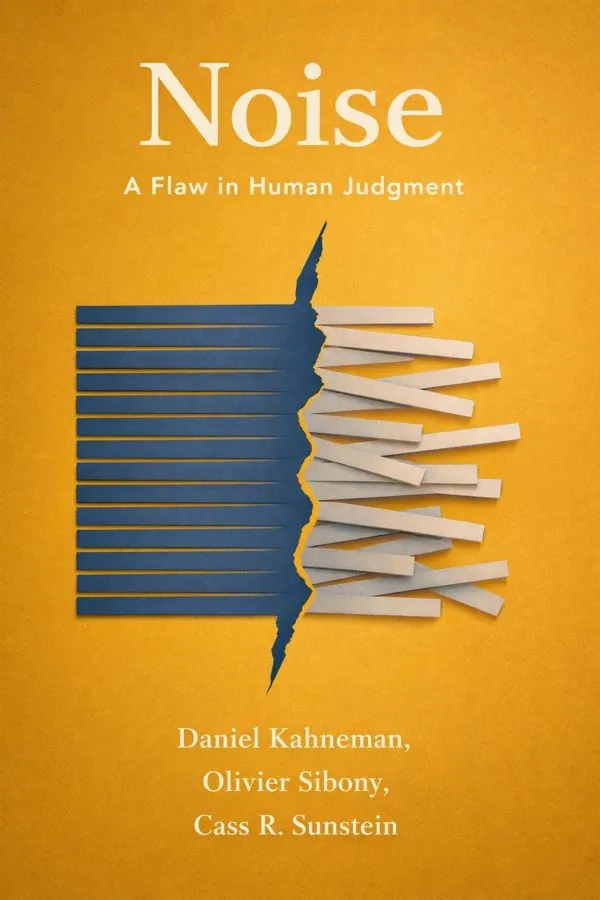
Noise
Noise: A Flaw in Human Judgment explores the concept of 'noise'—the unwanted variability in human judgments that leads to inconsistent decisions in fields such as law, medicine, and business. The auth...
Key Insights from Daniel Kahneman
The Two Systems That Shape Thought
Most of what you think feels deliberate, but much of it happens automatically. Kahneman’s most famous contribution is the distinction between System 1 and System 2, two modes of thinking that constantly interact. System 1 is fast, effortless, associative, and emotional. It helps you recognize a face...
From Thinking Fast and Slow
Heuristics Make Judgment Efficient and Flawed
The mind is built to simplify, not to calculate perfectly. To navigate uncertainty, we rely on heuristics, mental shortcuts that make judgment faster and easier. These shortcuts are often useful, but they also create systematic errors. Kahneman and Tversky showed that many of our mistakes are not ra...
From Thinking Fast and Slow
Confidence Often Exceeds What We Know
We are far better at creating explanations than at recognizing our ignorance. Kahneman shows that overconfidence is one of the most powerful and dangerous features of human judgment. People routinely believe they understand the past better than they do, predict the future more accurately than they c...
From Thinking Fast and Slow
We Fear Losses More Than Gains
A loss hurts more than an equivalent gain feels good. This asymmetry lies at the heart of prospect theory, the work for which Kahneman received the Nobel Prize. Traditional economics assumed that people make rational choices by evaluating final outcomes. Kahneman and Tversky showed instead that peop...
From Thinking Fast and Slow
True Expertise Requires Valid Environments
Intuition is not always irrational; sometimes it is the mark of deep skill. Kahneman makes an important distinction between valid intuition and misplaced confidence. Experts can develop trustworthy judgments when they operate in environments that are sufficiently regular and when they receive clear,...
From Thinking Fast and Slow
Optimism Distorts Plans and Forecasts
We routinely imagine the future as smoother, faster, and more controllable than it turns out to be. Kahneman calls this the planning fallacy: the tendency to underestimate time, cost, and difficulty while overestimating benefits. Even experienced people fall into it because they focus on the specifi...
From Thinking Fast and Slow
About Daniel Kahneman
Daniel Kahneman (1934–2024) was an Israeli-American psychologist and Nobel laureate in Economic Sciences, recognized for his pioneering work on the psychology of judgment, decision-making, and behavioral economics. He was a professor emeritus at Princeton University and co-founder of the field of be...
Read more
Daniel Kahneman (1934–2024) was an Israeli-American psychologist and Nobel laureate in Economic Sciences, recognized for his pioneering work on the psychology of judgment, decision-making, and behavioral economics. He was a professor emeritus at Princeton University and co-founder of the field of be...
Daniel Kahneman (1934–2024) was an Israeli-American psychologist and Nobel laureate in Economic Sciences, recognized for his pioneering work on the psychology of judgment, decision-making, and behavioral economics. He was a professor emeritus at Princeton University and co-founder of the field of behavioral economics.


Frequently Asked Questions
Daniel Kahneman (1934–2024) was an Israeli-American psychologist and Nobel laureate in Economic Sciences, recognized for his pioneering work on the psychology of judgment, decision-making, and behavioral economics. He was a professor emeritus at Princeton University and co-founder of the field of behavioral economics.
Read Daniel Kahneman's books in 15 minutes
Get AI-powered summaries with key insights from 2 books by Daniel Kahneman.