
Curzio Malaparte Books
Curzio Malaparte (born Kurt Erich Suckert, 1898–1957) was an Italian writer, journalist, and diplomat. A controversial and multifaceted figure, he participated in World War I and was initially close to fascism before distancing himself from it.
Known for: Kaputt
Books by Curzio Malaparte
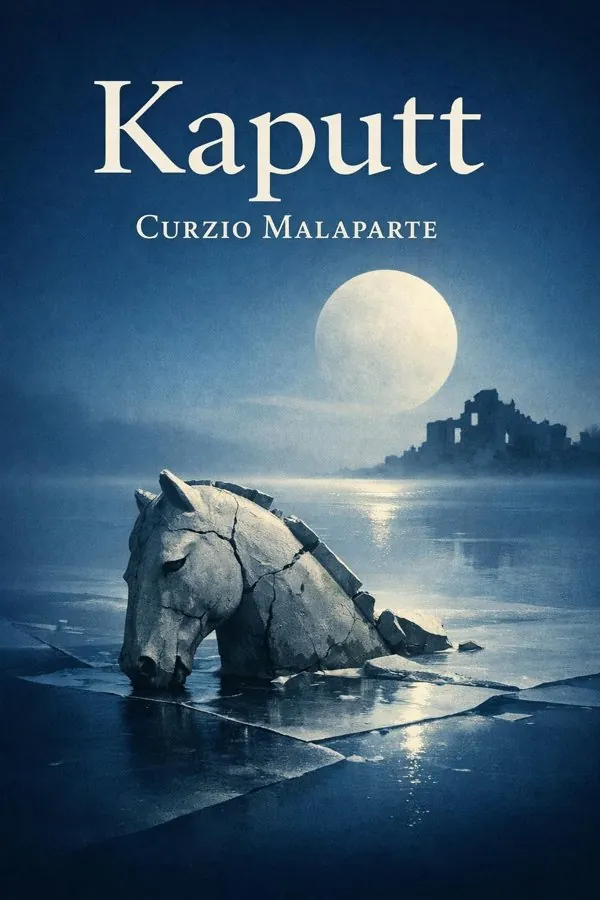
Kaputt
Kaputt is Curzio Malaparte’s unforgettable account of Europe’s moral collapse during the Second World War. First published in 1944, the book blends memoir, reportage, fiction, allegory, and nightmare into a single unsettling vision. Drawing on his experiences as an Italian journalist and war correspondent attached to Axis forces on the Eastern Front and across occupied Europe, Malaparte takes readers from the frozen landscapes near Leningrad to the Warsaw Ghetto, from aristocratic drawing rooms to battlefields soaked in blood and delusion. What makes the book remarkable is not simply what it describes, but how it describes it: with lyrical, hallucinatory prose that turns war into a theater of cruelty, absurdity, beauty, and decay. Malaparte writes with the authority of someone who saw power from the inside yet refused to reduce events to slogans or patriotic myth. Kaputt matters because it is not only a chronicle of wartime horror; it is a diagnosis of civilization in breakdown. It shows how cultured societies can normalize barbarism, and why witnessing honestly is itself an act of resistance.
Read SummaryKey Insights from Curzio Malaparte
The Horses Frozen Beneath History
One of the most unforgettable truths in Kaputt is that war destroys not only people, but the very idea of natural life. Malaparte’s vision of horses trapped beneath the ice near Leningrad captures this with eerie precision. Their bodies appear suspended in motion, as if still galloping under the fro...
From Kaputt
The Warsaw Ghetto and Moral Exposure
A society reveals its deepest truth in the way it treats the defenseless. Malaparte’s account of the Jews of Warsaw is among the most devastating parts of Kaputt because it strips away every illusion of European refinement. In the ghetto, he sees hunger, fear, humiliation, and abandonment concentrat...
From Kaputt
The Dogs of Finland and Loyalty
War deforms the meaning of loyalty. In Malaparte’s treatment of the dogs of Finland, animals become mirrors for human conduct under extreme pressure. Dogs usually symbolize faithfulness, companionship, and instinctive trust. But in Kaputt, even these familiar creatures are drawn into the distortion ...
From Kaputt
The Rats and the Spread of Corruption
Decay rarely arrives with dramatic fanfare; more often, it spreads quietly, like vermin in the walls. In Kaputt, the rats of the Balkans serve as a grotesque emblem of war’s hidden contagion. Rats thrive in ruin, feed on neglect, and multiply where systems collapse. Malaparte uses them not just as p...
From Kaputt
The Swedes and the Illusion of Distance
Neutrality can protect a nation, but it cannot fully protect a conscience. In Malaparte’s reflections on the Swedes, wartime Scandinavia becomes a lens through which to examine detachment, safety, and the illusion of standing outside history. Sweden appears comparatively sheltered from the devastati...
From Kaputt
The Germans and Cultured Barbarism
One of Kaputt’s harshest insights is that education, refinement, and artistic taste do not guarantee moral decency. Malaparte’s portrayal of the Germans is deeply unsettling because it repeatedly shows cultured people participating in or accommodating barbarism. Officers appreciate music, discuss li...
From Kaputt
About Curzio Malaparte
Curzio Malaparte (born Kurt Erich Suckert, 1898–1957) was an Italian writer, journalist, and diplomat. A controversial and multifaceted figure, he participated in World War I and was initially close to fascism before distancing himself from it. He is best known for works such as 'Kaputt' and 'The Sk...
Read more
Curzio Malaparte (born Kurt Erich Suckert, 1898–1957) was an Italian writer, journalist, and diplomat. A controversial and multifaceted figure, he participated in World War I and was initially close to fascism before distancing himself from it. He is best known for works such as 'Kaputt' and 'The Sk...
Curzio Malaparte (born Kurt Erich Suckert, 1898–1957) was an Italian writer, journalist, and diplomat. A controversial and multifaceted figure, he participated in World War I and was initially close to fascism before distancing himself from it. He is best known for works such as 'Kaputt' and 'The Skin', which explore the brutality and absurdity of war with a distinctive and provocative style.

Frequently Asked Questions
Curzio Malaparte (born Kurt Erich Suckert, 1898–1957) was an Italian writer, journalist, and diplomat. A controversial and multifaceted figure, he participated in World War I and was initially close to fascism before distancing himself from it.
Read Curzio Malaparte's books in 15 minutes
Get AI-powered summaries with key insights from 1 book by Curzio Malaparte.