
Charles Tilly Books
Charles Tilly is the author of "Coercion, Capital, and European States, AD 990–1992" and a recognized voice in the field of politics. Their work has reached millions of readers worldwide, offering practical insights and thought-provoking ideas.
Known for: Coercion, Capital, and European States, AD 990–1992
Books by Charles Tilly
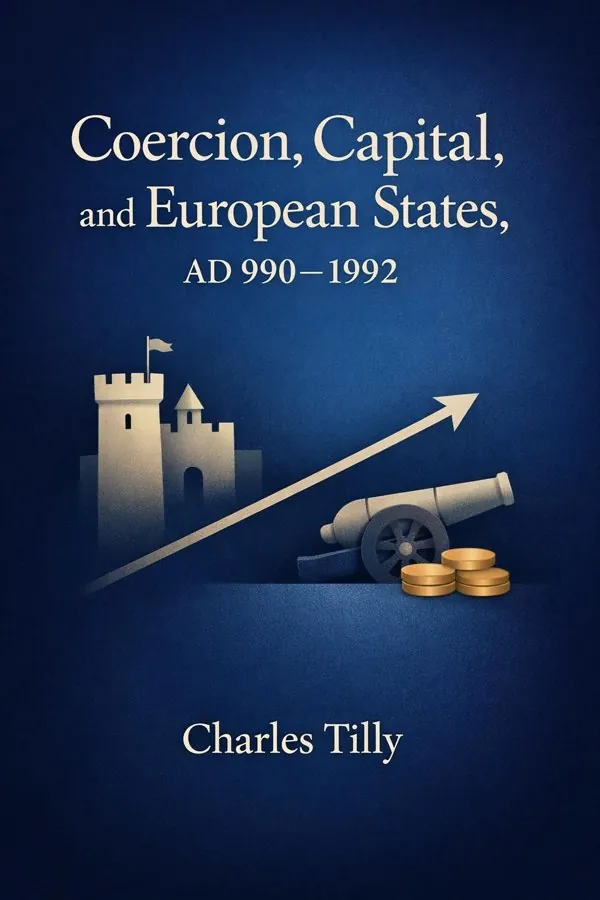
Coercion, Capital, and European States, AD 990–1992
Charles Tilly’s Coercion, Capital, and European States, AD 990–1992 is one of the most influential books ever written on how states are built, how power is organized, and why Europe developed the political map we know today. Rather than treating states as natural or inevitable institutions, Tilly shows that they were forged through centuries of war-making, taxation, bargaining, extraction, and competition. His central insight is both simple and unsettling: states did not emerge primarily from noble ideals, but from rulers’ efforts to secure territory, raise armies, and extract resources from populations. What makes this book matter is its combination of historical sweep and analytical clarity. Covering roughly a thousand years, Tilly explains how coercion, concentrated in armies and governments, interacted with capital, concentrated in cities, trade, and finance, to produce different kinds of states across Europe. Some became highly centralized military powers; others grew through negotiation with merchants and urban elites. Tilly was a leading historical sociologist whose work reshaped the study of politics, social movements, and state formation. This book remains essential for understanding modern government, war, taxation, citizenship, and the deep historical forces behind political order.
Read SummaryKey Insights from Charles Tilly
States Are Made, Not Given
A state looks permanent only after its violent origins have been forgotten. One of Tilly’s most important contributions is to reject the idea that states simply evolved as rational administrative solutions to social needs. Instead, he argues that European states were built through conflict, competit...
From Coercion, Capital, and European States, AD 990–1992
War Built the Modern State
Behind the polished language of sovereignty stands a hard truth: war was one of the greatest engines of state formation. Tilly’s famous argument is that war-making and state-making were deeply intertwined. Rulers needed armies to defend territory and fight rivals, but armies were expensive. To fund ...
From Coercion, Capital, and European States, AD 990–1992
Coercion and Capital Shape Different States
Not all states were built the same way because not all rulers relied on the same resources. Tilly’s framework revolves around two core forces: coercion and capital. Coercion refers to organized force, especially armies and the means of physical control. Capital refers to concentrated wealth, especia...
From Coercion, Capital, and European States, AD 990–1992
Taxation Creates Bargaining and Capacity
A tax system is never just about revenue; it is a map of political relationships. Tilly shows that the need to extract resources from populations pushed rulers to build durable administrative structures and, in many cases, to negotiate with social groups that controlled wealth. Taxation therefore be...
From Coercion, Capital, and European States, AD 990–1992
Cities and Merchants Changed Political Power
Political history is not only written on battlefields; it is also written in ports, markets, and counting houses. Tilly emphasizes that cities were crucial centers of capital concentration, and their economic power profoundly influenced the evolution of European states. Urban merchants, financiers, ...
From Coercion, Capital, and European States, AD 990–1992
State Formation Was Uneven and Contested
The map of Europe was not destined to become a world of nation-states; it was the residue of countless failed alternatives. Tilly insists that state formation was uneven across regions and deeply contested at every stage. Some rulers built durable central institutions. Others lost out to empires, fe...
From Coercion, Capital, and European States, AD 990–1992
About Charles Tilly
Charles Tilly is the author of "Coercion, Capital, and European States, AD 990–1992" and a recognized voice in the field of politics. Their work has reached millions of readers worldwide, offering practical insights and thought-provoking ideas. Through their writing, Charles Tilly combines research,...
Read more
Charles Tilly is the author of "Coercion, Capital, and European States, AD 990–1992" and a recognized voice in the field of politics. Their work has reached millions of readers worldwide, offering practical insights and thought-provoking ideas. Through their writing, Charles Tilly combines research,...
Charles Tilly is the author of "Coercion, Capital, and European States, AD 990–1992" and a recognized voice in the field of politics. Their work has reached millions of readers worldwide, offering practical insights and thought-provoking ideas. Through their writing, Charles Tilly combines research, real-world experience, and accessible storytelling to help readers understand complex topics and apply new perspectives to their daily lives.


Frequently Asked Questions
Charles Tilly is the author of "Coercion, Capital, and European States, AD 990–1992" and a recognized voice in the field of politics. Their work has reached millions of readers worldwide, offering practical insights and thought-provoking ideas.
Read Charles Tilly's books in 15 minutes
Get AI-powered summaries with key insights from 1 book by Charles Tilly.