
Carlo Ginzburg Books
Carlo Ginzburg (born 1939 in Turin, Italy) is an Italian historian and one of the founders of microhistory. His works, including The Cheese and the Worms and The Night Battles, have profoundly influenced historical methodology and the study of popular culture and religion in early modern Europe.
Known for: The Cheese and the Worms: The Cosmos of a Sixteenth-Century Miller
Books by Carlo Ginzburg
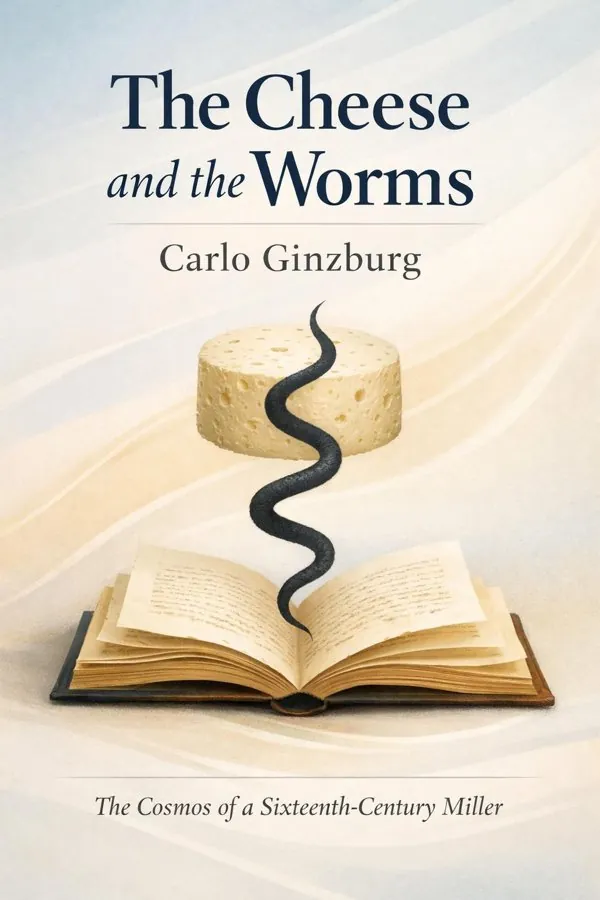
The Cheese and the Worms: The Cosmos of a Sixteenth-Century Miller
What happens when a historian stops looking at kings, popes, and generals and instead listens closely to a village miller? In The Cheese and the Worms, Carlo Ginzburg reconstructs the startling inner world of Domenico Scandella, called Menocchio, a sixteenth-century miller from Friuli whose unconventional religious ideas brought him before the Roman Inquisition. Drawing on trial records, depositions, and fragments of Menocchio’s reading life, Ginzburg uncovers a mind that blended biblical stories, popular folklore, oral culture, and stray printed texts into a deeply original vision of the cosmos. The book matters because it transforms one obscure heresy trial into a profound meditation on culture, power, literacy, and historical method. Rather than treating ordinary people as passive recipients of elite ideas, Ginzburg shows how they interpreted, reshaped, and resisted them. The result is one of the foundational works of microhistory: a study small in scale but enormous in implication. As one of the most influential historians of the twentieth century, Ginzburg brings both archival rigor and interpretive boldness, making this book essential for anyone interested in early modern Europe, religion, or the hidden complexity of everyday lives.
Read SummaryKey Insights from Carlo Ginzburg
A Small Village Opens a Big History
Sometimes the fastest way to understand an age is not to study its rulers, but to study one ordinary person caught in its machinery. Ginzburg places Menocchio within sixteenth-century Italy, a world shaped by rigid hierarchy, intense religious authority, and the expanding pressures of the Counter-Re...
From The Cheese and the Worms: The Cosmos of a Sixteenth-Century Miller
Inquisition Records as Unintended Windows
Historical evidence is rarely neutral; some of the richest archives survive because institutions wanted to control, punish, or silence people. Menocchio is known to us because inquisitors questioned him in detail and recorded his answers in order to identify heresy. Ginzburg’s methodological brillia...
From The Cheese and the Worms: The Cosmos of a Sixteenth-Century Miller
Menocchio Was No Simple Peasant
One of the book’s most unsettling insights is that “ordinary” people are often far more intellectually active than stereotypes allow. Menocchio was a miller, a local figure with modest status but unusual exposure to ideas. He was literate to a meaningful degree, held village offices, and occupied a ...
From The Cheese and the Worms: The Cosmos of a Sixteenth-Century Miller
The Cosmos of Cheese and Worms
A single metaphor can reveal an entire worldview. Menocchio’s most famous idea was his account of creation: he imagined the universe emerging like cheese from milk, with angels appearing within it as worms form in cheese. This startling cosmology has become iconic because it is so vivid, so earthy, ...
From The Cheese and the Worms: The Cosmos of a Sixteenth-Century Miller
Heresy as Independent Thinking
Institutions often label as heresy what, at the individual level, begins as interpretation. Menocchio challenged core teachings on creation, the Church, Christ, the sacraments, and religious authority. He questioned whether priests truly possessed spiritual superiority, criticized ecclesiastical wea...
From The Cheese and the Worms: The Cosmos of a Sixteenth-Century Miller
Oral Culture Meets Printed Books
Cultural change rarely replaces one medium with another; instead, old and new forms overlap, collide, and reshape each other. One of the book’s most influential arguments is that Menocchio’s worldview emerged from the interaction between oral tradition and print culture. He read books, but he did no...
From The Cheese and the Worms: The Cosmos of a Sixteenth-Century Miller
About Carlo Ginzburg
Carlo Ginzburg (born 1939 in Turin, Italy) is an Italian historian and one of the founders of microhistory. His works, including The Cheese and the Worms and The Night Battles, have profoundly influenced historical methodology and the study of popular culture and religion in early modern Europe. He ...
Read more
Carlo Ginzburg (born 1939 in Turin, Italy) is an Italian historian and one of the founders of microhistory. His works, including The Cheese and the Worms and The Night Battles, have profoundly influenced historical methodology and the study of popular culture and religion in early modern Europe. He ...
Carlo Ginzburg (born 1939 in Turin, Italy) is an Italian historian and one of the founders of microhistory. His works, including The Cheese and the Worms and The Night Battles, have profoundly influenced historical methodology and the study of popular culture and religion in early modern Europe. He has taught at several universities worldwide, including UCLA and the Scuola Normale Superiore in Pisa.



Frequently Asked Questions
Carlo Ginzburg (born 1939 in Turin, Italy) is an Italian historian and one of the founders of microhistory. His works, including The Cheese and the Worms and The Night Battles, have profoundly influenced historical methodology and the study of popular culture and religion in early modern Europe.
Read Carlo Ginzburg's books in 15 minutes
Get AI-powered summaries with key insights from 1 book by Carlo Ginzburg.