
C. V. Wedgwood Books
Cicely Veronica Wedgwood (1910–1997) was a British historian known for her accessible and literary style of writing history. Educated at Lady Margaret Hall, Oxford, she specialized in early modern European history and became one of the most respected narrative historians of her generation.
Known for: The Thirty Years War
Books by C. V. Wedgwood
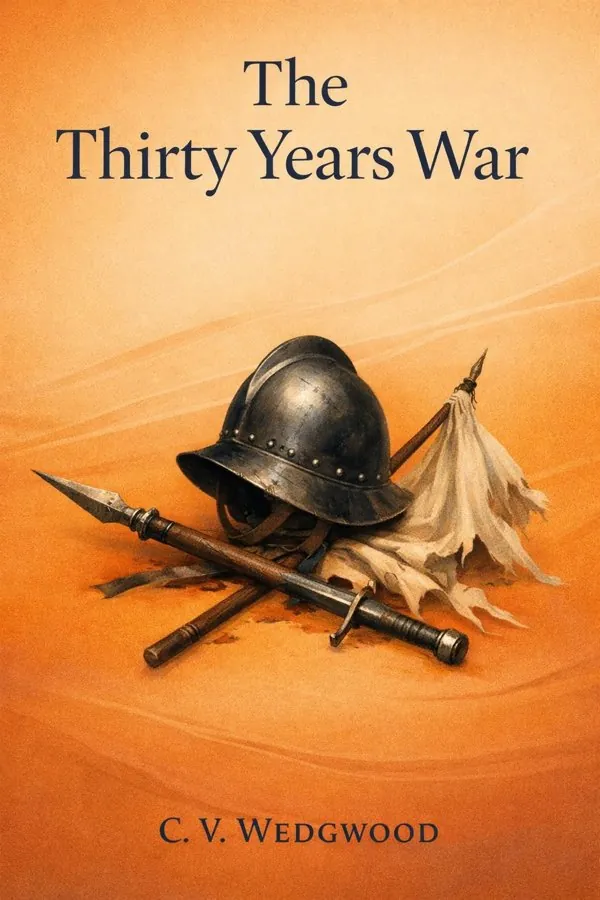
The Thirty Years War
C. V. Wedgwood’s The Thirty Years War is one of the most compelling narrative histories ever written about early modern Europe’s greatest catastrophe. Covering the conflict from the Bohemian Revolt in 1618 to the Peace of Westphalia in 1648, the book shows how a local constitutional crisis inside the Holy Roman Empire expanded into a continent-wide struggle involving religion, dynastic ambition, military entrepreneurship, and state survival. Wedgwood does not treat the war as a simple clash between Catholics and Protestants. Instead, she reveals a world in which faith, fear, pride, opportunism, and political necessity repeatedly reshaped alliances and prolonged suffering. What makes the book endure is its rare blend of scholarship and storytelling. Wedgwood brings emperors, generals, diplomats, and ordinary populations into the same frame, showing how high politics translated into burned villages, famine, plague, and social collapse. Her authority rests not only on deep historical knowledge but on her ability to explain complex events with clarity and moral seriousness. The result is a history that feels both intimate and sweeping. For readers trying to understand how ideological conflict becomes total war, this book remains profoundly relevant.
Read SummaryKey Insights from C. V. Wedgwood
The Bohemian Revolt Ignited Europe
Great wars often begin with a moment that seems local, almost containable, until hidden pressures make compromise impossible. Wedgwood begins in Bohemia, where Protestant nobles feared that their religious liberties would be crushed by the Habsburg monarchy. The famous Defenestration of Prague in 16...
From The Thirty Years War
Frederick V and Misjudged Ambition
Idealism without power can become a form of tragedy. In Wedgwood’s telling, Frederick V, later mocked as the “Winter King,” was not simply foolish; he was a figure swept up by hope, flattery, and the illusion that a righteous cause would automatically attract decisive support. By accepting the Bohem...
From The Thirty Years War
Danish Intervention Showed War’s Expansion
Conflicts widen when outside powers believe intervention will be limited, profitable, or politically manageable. Wedgwood presents the Danish phase, led by King Christian IV, as a warning against underestimating a conflict already gaining its own momentum. Christian entered the war partly as a Prote...
From The Thirty Years War
The Edict of Restitution Overreached
Victory often plants the seeds of future defeat when it tempts rulers into demanding more than the political system can bear. Wedgwood treats the Edict of Restitution of 1629 as one of the war’s decisive turning points. Issued by Emperor Ferdinand II after major imperial successes, the edict sought ...
From The Thirty Years War
Sweden Changed the War’s Balance
History can pivot when a disciplined outsider combines strategic clarity with political timing. Wedgwood’s account of the Swedish intervention centers on Gustavus Adolphus, whose arrival in 1630 altered both the military and psychological balance of the war. Sweden entered as a Protestant power defe...
From The Thirty Years War
France Put Reason of State First
One of Wedgwood’s most important insights is that the Thirty Years’ War ceased to be explainable as a purely religious conflict long before it ended. Nothing proves this better than the French intervention. Catholic France, under Cardinal Richelieu and later Mazarin, opposed the Catholic Habsburgs b...
From The Thirty Years War
About C. V. Wedgwood
Cicely Veronica Wedgwood (1910–1997) was a British historian known for her accessible and literary style of writing history. Educated at Lady Margaret Hall, Oxford, she specialized in early modern European history and became one of the most respected narrative historians of her generation.


Frequently Asked Questions
Cicely Veronica Wedgwood (1910–1997) was a British historian known for her accessible and literary style of writing history. Educated at Lady Margaret Hall, Oxford, she specialized in early modern European history and became one of the most respected narrative historians of her generation.
Read C. V. Wedgwood's books in 15 minutes
Get AI-powered summaries with key insights from 1 book by C. V. Wedgwood.