

Byung-Chul Han Books
Byung-Chul Han is a South Korean–German philosopher and cultural theorist who teaches philosophy and cultural studies at the Berlin University of the Arts. His work addresses themes such as power, technology, subjectivity, and digital culture, and he is known for concise essays that critically examine contemporary social phenomena.
Known for: The Burnout Society
Books by Byung-Chul Han
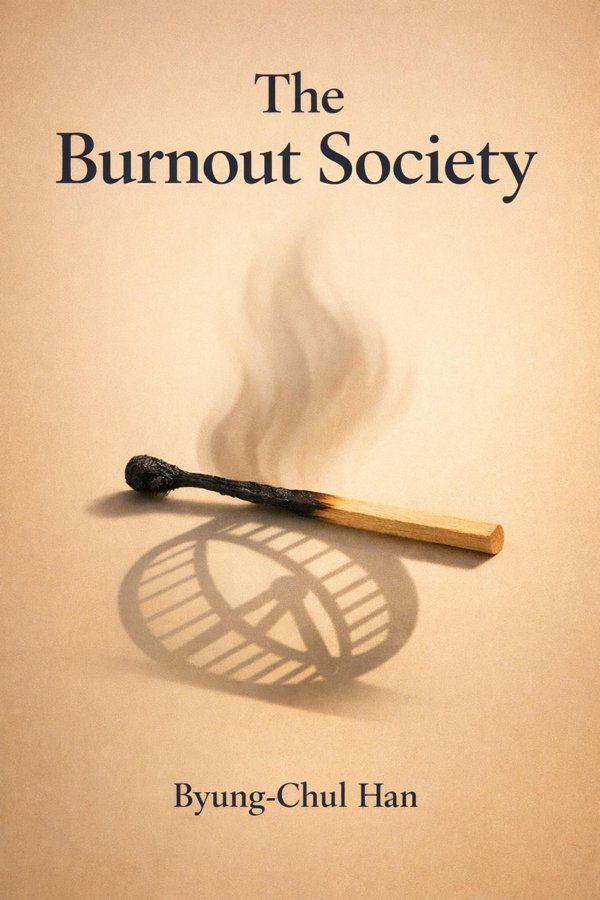
The Burnout Society
In The Burnout Society, Byung-Chul Han offers a sharp, unsettling diagnosis of modern life: we no longer live mainly under repression, but under the pressure to perform, improve, and optimize ourselves without end. Instead of being disciplined by external authority, we are driven by internalized demands to become more productive, more visible, more resilient, and more successful. What looks like freedom, Han argues, often turns into a subtler form of coercion—self-exploitation. The result is a society marked not by obedience, but by exhaustion, anxiety, depression, and burnout. Though brief, the book is remarkably influential because it gives language to experiences many people already feel but struggle to explain. Han connects work culture, digital communication, attention fragmentation, and the loss of contemplation into a broader philosophical critique of neoliberal life. As a South Korean–German philosopher known for his incisive cultural analysis, Han writes with unusual clarity and force. This book matters because it helps readers see that burnout is not merely a personal failure or productivity problem. It is a social condition rooted in the very ideals our era celebrates.
Read SummaryKey Insights from Byung-Chul Han
From Discipline to Performance
A society can oppress people not only by saying “no,” but also by relentlessly saying “you can.” Han’s central claim is that modern Western societies have shifted from what he calls a disciplinary model to a performance model. In the older framework, power worked through rules, prohibitions, institu...
From The Burnout Society
The Achievement Subject Exploits Itself
The most efficient system of control is one in which people believe they are acting freely while carrying out the system’s demands. Han calls the modern individual the achievement subject: a person who sees life as a project of continuous output, growth, and self-surpassing. Unlike the obedient subj...
From The Burnout Society
Burnout, Depression, and Invisible Violence
Not all violence is loud, direct, or visible; some forms appear as overstimulation, overexposure, and excessive positivity. Han argues that the pathologies of our time are not primarily infections from an outside enemy, but neuronal illnesses produced by too much pressure to perform. Depression, bur...
From The Burnout Society
Freedom Becomes a Subtle Coercion
The cruelest form of coercion may be the one we mistake for freedom. Han’s analysis turns on this paradox. Contemporary society celebrates autonomy, creativity, and self-direction. People are no longer simply ordered around; they are encouraged to choose, initiate, and express themselves. Yet the ve...
From The Burnout Society
Fatigue Reveals a Sick Culture
When exhaustion becomes normal, fatigue is no longer just a personal state; it becomes a social diagnosis. Han describes our era as a fatigue society, one in which tiredness is widespread because people are overstretched mentally, emotionally, and cognitively. This fatigue differs from the healthy t...
From The Burnout Society
The Decline of the Other
A healthy life requires encounter with what is truly other—what resists us, surprises us, and cannot be reduced to our preferences. Han argues that contemporary culture increasingly eliminates this otherness. In a performance society, difference is often flattened into sameness: people consume what ...
From The Burnout Society
About Byung-Chul Han
Byung-Chul Han is a South Korean–German philosopher and cultural theorist who teaches philosophy and cultural studies at the Berlin University of the Arts. His work addresses themes such as power, technology, subjectivity, and digital culture, and he is known for concise essays that critically exami...
Read more
Byung-Chul Han is a South Korean–German philosopher and cultural theorist who teaches philosophy and cultural studies at the Berlin University of the Arts. His work addresses themes such as power, technology, subjectivity, and digital culture, and he is known for concise essays that critically exami...
Byung-Chul Han is a South Korean–German philosopher and cultural theorist who teaches philosophy and cultural studies at the Berlin University of the Arts. His work addresses themes such as power, technology, subjectivity, and digital culture, and he is known for concise essays that critically examine contemporary social phenomena.





Frequently Asked Questions
Byung-Chul Han is a South Korean–German philosopher and cultural theorist who teaches philosophy and cultural studies at the Berlin University of the Arts. His work addresses themes such as power, technology, subjectivity, and digital culture, and he is known for concise essays that critically examine contemporary social phenomena.
Read Byung-Chul Han's books in 15 minutes
Get AI-powered summaries with key insights from 1 book by Byung-Chul Han.