
Anthony Grafton Books
Anthony Grafton is a renowned historian of Renaissance Europe and the history of scholarship, known for his work on the history of books and learning.
Known for: The Cartography of Time
Books by Anthony Grafton
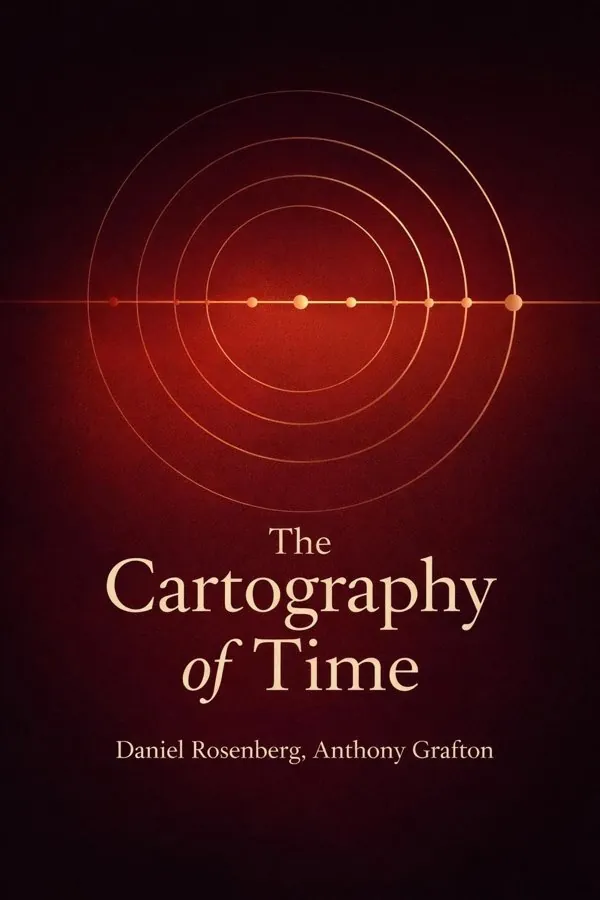
The Cartography of Time
Time feels invisible until someone draws it. That is the central fascination of The Cartography of Time, a richly illuminating study of how human beings have tried to picture history, chronology, and temporal order across centuries. Rather than treating dates as neutral facts, Daniel Rosenberg and Anthony Grafton show that every timeline, chart, table, and diagram carries assumptions about how the world works: whether history repeats, progresses, fractures, or converges. The book moves from ancient and medieval worldviews to Renaissance chronologies, Enlightenment timelines, modern scientific graphics, and contemporary digital forms, revealing that the visualization of time has shaped not just scholarship but politics, religion, identity, and memory. What makes this work especially valuable is the authority of its authors. Rosenberg, a historian of intellectual life and information systems, and Grafton, one of the foremost historians of Renaissance learning, combine visual analysis with deep historical scholarship. Together, they demonstrate that chronology is never merely technical. It is cultural imagination made visible. For readers interested in civilization, media, history, or the design of knowledge, this book offers a powerful new way to understand how societies organize the past in order to guide the future.
Read SummaryKey Insights from Anthony Grafton
Ancient and Medieval Conceptions of Time
Before time became a line, it was often experienced as a rhythm. One of the book’s most important insights is that ancient and medieval societies did not usually imagine time as a single, universal continuum stretching evenly from past to future. Instead, time was embedded in ritual, agriculture, co...
From The Cartography of Time
The Emergence of Linear Historical Time
A civilization changes when it starts to believe that history moves somewhere. Rosenberg and Grafton show that the Renaissance helped accelerate a major shift from cyclical and sacred temporal frameworks toward a more linear conception of time. Humanist scholars became increasingly concerned with se...
From The Cartography of Time
Early Modern Chronology as Intellectual Infrastructure
Dates are never just decorations; they are the scaffolding of historical thought. In the early modern period, chronology became a serious scholarly enterprise aimed at creating coherent temporal frameworks from scattered and often contradictory evidence. Rosenberg and Grafton show how scholars worke...
From The Cartography of Time
The Invention of the Timeline
The timeline seems so natural today that it is easy to forget it had to be invented. One of the book’s most memorable contributions is showing that the timeline is not an eternal or obvious form but a relatively modern graphic solution to a complex intellectual problem: how to make temporal sequence...
From The Cartography of Time
Graphic Innovation Changed Historical Understanding
How information looks changes what people are able to think. Rosenberg and Grafton argue that graphic innovations in historical representation did far more than beautify scholarship; they expanded cognitive possibilities. Charts, trees, scrolls, tables, bands, and synchronized columns allowed reader...
From The Cartography of Time
Time Became a Story of Progress
Once time is drawn as a line, it often becomes a ladder. A major theme in The Cartography of Time is the close relationship between modern temporal visualization and the idea of progress. Enlightenment and post-Enlightenment thinkers increasingly represented history as developmental: societies advan...
From The Cartography of Time
About Anthony Grafton
Anthony Grafton is a renowned historian of Renaissance Europe and the history of scholarship, known for his work on the history of books and learning.



Frequently Asked Questions
Anthony Grafton is a renowned historian of Renaissance Europe and the history of scholarship, known for his work on the history of books and learning.
Read Anthony Grafton's books in 15 minutes
Get AI-powered summaries with key insights from 1 book by Anthony Grafton.