
Amanda Little Books
Amanda Little is an American journalist and professor specializing in environmental and energy reporting. Her work has appeared in publications such as The New York Times, Bloomberg, and Wired.
Known for: The Fate of Food: What We'll Eat in a Bigger, Hotter, Smarter World
Books by Amanda Little
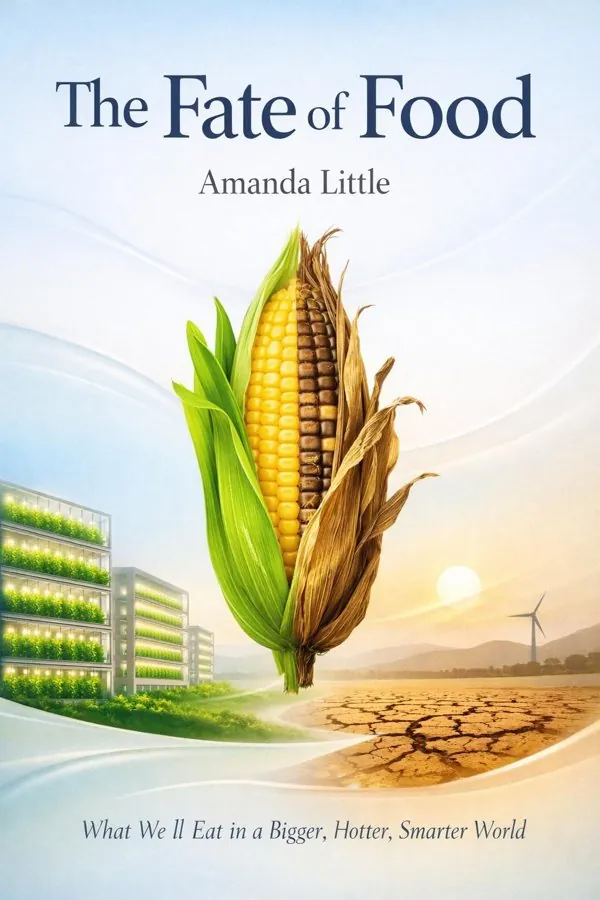
The Fate of Food: What We'll Eat in a Bigger, Hotter, Smarter World
What happens to dinner when the planet gets hotter, water grows scarcer, soils degrade, and extreme weather reshapes the geography of farming? In The Fate of Food, journalist Amanda Little investigates that question with urgency, curiosity, and surprising optimism. Rather than offering a simple climate warning, she travels across farms, laboratories, oceans, deserts, and cities to examine how food is already being transformed by environmental stress and technological innovation. Along the way, she explores drought-resistant crops, gene editing, vertical farming, aquaculture, cultured meat, and smarter supply chains, showing how each might help feed a growing global population. The book matters because food sits at the intersection of survival, politics, economics, culture, and climate. If food systems fail, every society feels it. But Little argues that crisis can also accelerate reinvention. As an experienced environmental and energy reporter, she brings both investigative rigor and narrative warmth, grounding big scientific questions in real human lives. The result is a vivid, accessible exploration of how we may eat in the future—and what choices today will determine whether that future is just, resilient, and sustainable.
Read SummaryKey Insights from Amanda Little
Agriculture Keeps Reinventing Itself
The future of food will not emerge from nowhere; it will grow out of centuries of agricultural reinvention. Amanda Little begins with a crucial insight: farming has always been a technological system, not a timeless pastoral ideal. From early irrigation to mechanical harvesters to the Green Revoluti...
From The Fate of Food: What We'll Eat in a Bigger, Hotter, Smarter World
Water Is the Hidden Food Crisis
We often think food shortages begin in fields, but they frequently begin in rivers, aquifers, and skies. One of Little’s strongest themes is that water scarcity may be the defining agricultural challenge of the century. Through reporting in places like Jordan and California, she illustrates how clim...
From The Fate of Food: What We'll Eat in a Bigger, Hotter, Smarter World
Resilient Crops Will Shape Survival
A seed is a technology, and in a warming world, it may be one of the most important technologies we have. Little explores how scientists are racing to develop crops that can survive heat, salinity, erratic rainfall, stronger pests, and degraded soils. This is not a futuristic side story—it is centra...
From The Fate of Food: What We'll Eat in a Bigger, Hotter, Smarter World
Protein Is Being Radically Reimagined
The question is no longer whether our protein system must change, but how fast and how fairly that change can happen. Little investigates one of the most visible frontiers in food innovation: alternatives to conventional meat. Industrial livestock production consumes vast amounts of land, water, fee...
From The Fate of Food: What We'll Eat in a Bigger, Hotter, Smarter World
Cities May Become Major Food Producers
As farmland grows more vulnerable, one of the most unexpected places to grow food is the city itself. Little explores the rise of urban agriculture and vertical farming, where crops are cultivated in stacked indoor systems under controlled light, temperature, humidity, and nutrient conditions. This ...
From The Fate of Food: What We'll Eat in a Bigger, Hotter, Smarter World
The Ocean Can Feed Us Wisely
The sea is often imagined as an endless pantry, but Little makes clear that it is anything but limitless. Wild fisheries have been strained by overfishing, warming waters, acidification, and habitat destruction. As climate change reshuffles marine ecosystems, seafood supplies become less predictable...
From The Fate of Food: What We'll Eat in a Bigger, Hotter, Smarter World
About Amanda Little
Amanda Little is an American journalist and professor specializing in environmental and energy reporting. Her work has appeared in publications such as The New York Times, Bloomberg, and Wired. She teaches investigative journalism at Vanderbilt University and is known for her focus on sustainability...
Read more
Amanda Little is an American journalist and professor specializing in environmental and energy reporting. Her work has appeared in publications such as The New York Times, Bloomberg, and Wired. She teaches investigative journalism at Vanderbilt University and is known for her focus on sustainability...
Amanda Little is an American journalist and professor specializing in environmental and energy reporting. Her work has appeared in publications such as The New York Times, Bloomberg, and Wired. She teaches investigative journalism at Vanderbilt University and is known for her focus on sustainability and innovation.


Frequently Asked Questions
Amanda Little is an American journalist and professor specializing in environmental and energy reporting. Her work has appeared in publications such as The New York Times, Bloomberg, and Wired.
Read Amanda Little's books in 15 minutes
Get AI-powered summaries with key insights from 1 book by Amanda Little.