
Alexander Zevin Books
Alexander Zevin is a historian and editor at New Left Review. He teaches history at the City University of New York and specializes in modern European intellectual and political history.
Known for: Liberalism at Large: The World According to the Economist
Books by Alexander Zevin
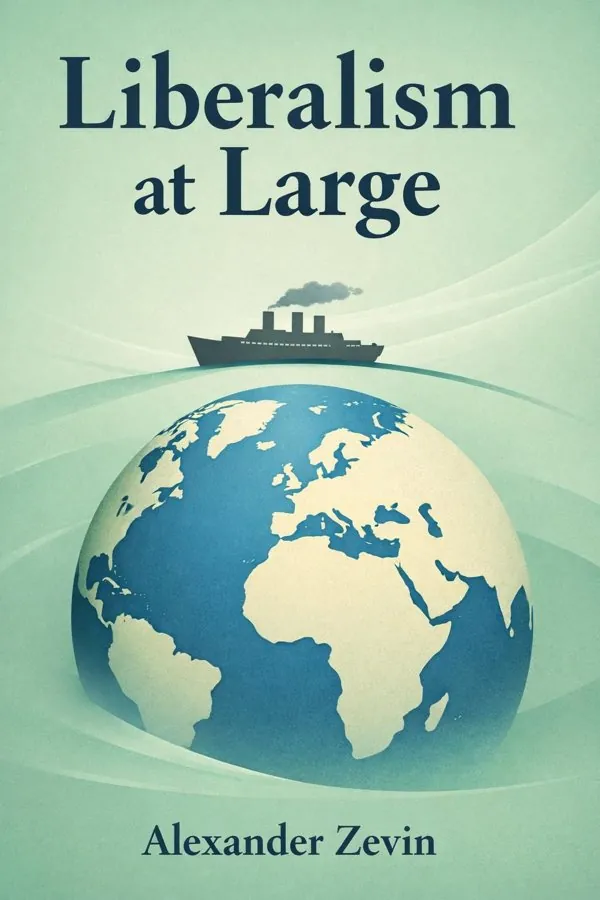
Liberalism at Large: The World According to the Economist
What if one of the world’s most influential magazines could also serve as a history of modern liberalism itself? In Liberalism at Large, historian Alexander Zevin uses The Economist as a revealing archive of political ideas, economic dogma, imperial ambition, and elite common sense from the nineteenth century to today. Rather than treating the magazine as a neutral observer of world events, Zevin shows how it actively shaped debates about free trade, democracy, empire, capitalism, war, decolonization, and globalization. The book matters because liberalism is often described in abstract moral terms—freedom, tolerance, progress—while its real historical record is far more entangled with class power, colonial rule, and market expansion. By tracing how The Economist responded to crises across two centuries, Zevin uncovers the gap between liberal ideals and liberal practice. His approach is especially powerful because it combines intellectual history, media history, and political economy in one sharp narrative. Zevin writes with the authority of a trained historian and editor deeply familiar with European political thought. The result is a vivid, unsettling account of how elite journalism helped normalize a global order built on markets, hierarchy, and the language of reason.
Read SummaryKey Insights from Alexander Zevin
The Economist began as moralized free trade
Big ideologies often begin by presenting themselves as simple common sense. Zevin shows that The Economist was founded in 1843 by James Wilson not merely as a business publication, but as a campaigning instrument in the battle against Britain’s Corn Laws. Wilson framed free trade as both economicall...
From Liberalism at Large: The World According to the Economist
Victorian liberalism marched alongside empire
A creed that speaks the language of freedom can still become an alibi for domination. One of Zevin’s most striking arguments is that The Economist’s nineteenth-century liberalism developed in step with British imperial expansion. The magazine treated empire less as a contradiction of liberal values ...
From Liberalism at Large: The World According to the Economist
Industrial capitalism shaped the magazine’s worldview
Media outlets do not float above economic life; they absorb the priorities of the world they interpret. Zevin shows that as industrial capitalism matured, The Economist became more than a voice for free trade. It became a chronicler and defender of a society organized around investors, manufacturers...
From Liberalism at Large: The World According to the Economist
Liberalism adapted without abandoning its core
Powerful ideologies survive not because they never change, but because they change strategically. As the nineteenth century gave way to the twentieth, The Economist adjusted to major shifts: mass politics, stronger labor movements, new imperial rivalries, and the growing complexity of global finance...
From Liberalism at Large: The World According to the Economist
Global expansion universalized a British perspective
An idea becomes globally influential when it stops looking local. Zevin argues that The Economist helped transform a historically specific British liberal outlook into a supposedly universal language of world order. As trade networks widened and Britain’s international reach deepened, the magazine i...
From Liberalism at Large: The World According to the Economist
Crises exposed the fragility of liberal order
Ideas appear strongest just before events reveal their limits. The interwar period is where Zevin most clearly shows liberalism under pressure. World War I shattered confidence in inevitable progress, the global economy destabilized, empires weakened, and new ideological challengers emerged from the...
From Liberalism at Large: The World According to the Economist
About Alexander Zevin
Alexander Zevin is a historian and editor at New Left Review. He teaches history at the City University of New York and specializes in modern European intellectual and political history.


Frequently Asked Questions
Alexander Zevin is a historian and editor at New Left Review. He teaches history at the City University of New York and specializes in modern European intellectual and political history.
Read Alexander Zevin's books in 15 minutes
Get AI-powered summaries with key insights from 1 book by Alexander Zevin.