
Alan Weisman Books
Alan Weisman is an American author and journalist known for his environmental and social reporting. His works often focus on humanity’s relationship with nature and sustainability.
Known for: The World Without Us
Books by Alan Weisman
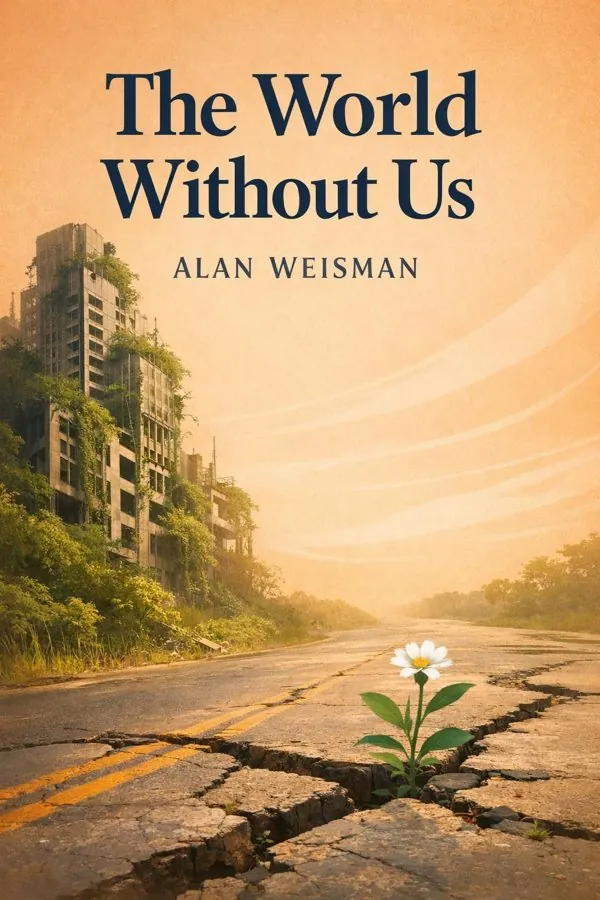
The World Without Us
What would happen if humanity disappeared tomorrow, while everything else on Earth remained? In The World Without Us, journalist Alan Weisman turns that unsettling question into a powerful investigation of ecology, infrastructure, climate, and time. Rather than writing a conventional disaster story, he constructs a thought experiment: if people vanished instantly, how long would our cities stand, our plastics endure, our chemicals linger, and our cultivated landscapes survive? The result is both scientifically grounded and deeply imaginative. Weisman draws on interviews with engineers, biologists, geologists, archaeologists, and conservationists to show that human influence reaches far beyond our own lives. Skyscrapers would crumble, subways would flood, farms would revert, wildlife would return in some places and struggle in others, and the atmosphere would slowly respond to the end of industry. At the same time, many of our marks on the planet would persist for centuries or longer. The book matters because it offers a fresh way to think about sustainability. By imagining a world after us, Weisman helps us see more clearly the world we are shaping now—and the responsibility that comes with it.
Read SummaryKey Insights from Alan Weisman
Our Footprint Outlasts Our Presence
The most revealing way to measure humanity may be to imagine Earth after we are gone. Weisman's central insight is that humans do not simply occupy the planet; we reorganize it. Roads, dams, pipelines, ports, mines, landfills, drained wetlands, artificial fertilizers, synthetic chemicals, and orbiti...
From The World Without Us
Cities Depend on Constant Care
A city feels permanent only because someone is always fixing it. One of Weisman's most vivid examples is New York City. If humans vanished, electricity would fail almost immediately, and the pumps that keep the subway dry would stop. Water would pour into tunnels, corroding rails and electrical syst...
From The World Without Us
Toxic Inheritance Would Not Vanish
When humans disappear, pollution does not politely leave with us. One of Weisman's most sobering arguments is that industrial society has created chemical and radioactive legacies that can outlast the civilization that produced them. Factories may shut down instantly, but stored wastes, contaminated...
From The World Without Us
Wildlife Returns, But Not Uniformly
Nature is resilient, but it is not magical. Weisman's exploration of wildlife recovery avoids a simplistic fantasy in which the instant absence of humans restores a perfect Eden. Many species would rebound rapidly if hunting, habitat destruction, traffic, and noise ceased. Large mammals could reclai...
From The World Without Us
Farmland Would Revert to Ecosystems
Agriculture can look timeless, but most modern farmland is a highly maintained interruption of ecological succession. Weisman asks what happens when the plows stop, irrigation ends, fences fail, and fertilizers are no longer applied. The answer is that fields begin returning to something else. First...
From The World Without Us
The Atmosphere Slowly Remembers Less
Human absence would change the atmosphere, but not instantly. Weisman's treatment of climate is striking because it balances relief with warning. If all people vanished, fossil-fuel combustion would largely stop, causing emissions to plunge. Over time, atmospheric pollutants like nitrogen oxides and...
From The World Without Us
About Alan Weisman
Alan Weisman is an American author and journalist known for his environmental and social reporting. His works often focus on humanity’s relationship with nature and sustainability. He has written for major publications and taught journalism at the University of Arizona.


Frequently Asked Questions
Alan Weisman is an American author and journalist known for his environmental and social reporting. His works often focus on humanity’s relationship with nature and sustainability.
Read Alan Weisman's books in 15 minutes
Get AI-powered summaries with key insights from 1 book by Alan Weisman.