
A. J. Arberry Books
Arthur John Arberry (1905–1969) was a British Orientalist and scholar of Arabic and Persian literature. He served as Professor of Arabic at the University of Cambridge and translated numerous classical works, including the Qur'an and Persian poetry.
Known for: The Arabs: A Short History
Books by A. J. Arberry
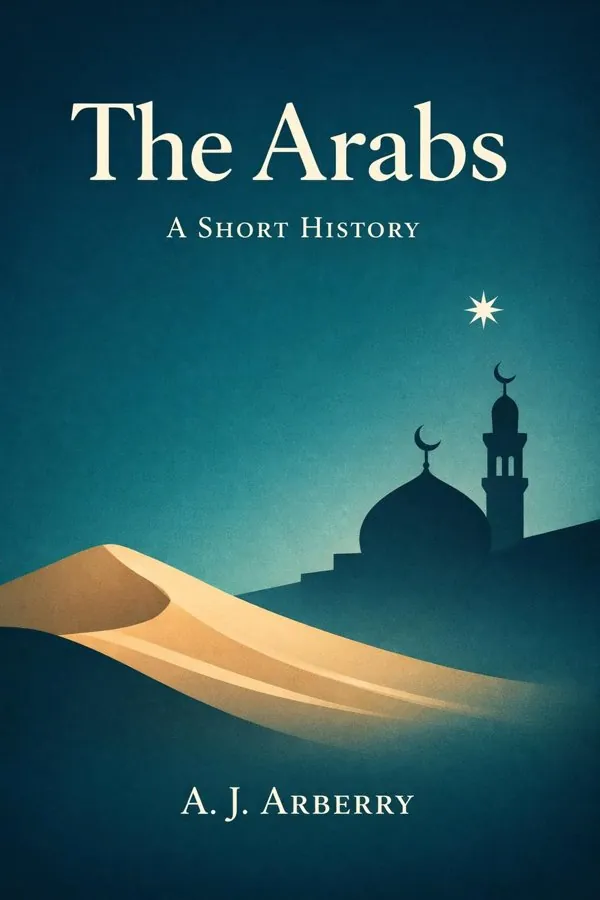
The Arabs: A Short History
A civilization is never defined only by its conquests or beliefs; it is also shaped by the language, memory, and imagination that hold its people together. In The Arabs: A Short History, A. J. Arberry offers a concise yet far-reaching account of Arab history, tracing the story of the Arabs from the tribal societies of pre-Islamic Arabia to the political complexities of the modern Middle East. Rather than reducing Arab history to a simple tale of empire or religion, Arberry presents it as a dynamic cultural journey in which poetry, faith, scholarship, trade, and political ambition all play central roles. The book matters because it helps readers see the Arab world not as a distant abstraction, but as one of the foundational forces in world civilization. Arberry was exceptionally qualified to write such a study. One of the twentieth century’s leading British scholars of Arabic and Persian literature, he brought to the subject both deep linguistic expertise and a serious respect for Islamic intellectual traditions. His history remains valuable for readers seeking a clear, thoughtful introduction to Arab identity, achievement, and historical change.
Read SummaryKey Insights from A. J. Arberry
Arabia Before Islam Was Already Complex
Great civilizations rarely emerge from emptiness; they rise from landscapes already rich in tensions, traditions, and social habits. Arberry begins by showing that pre-Islamic Arabia was not a cultural void waiting for history to begin. It was a region of deserts, caravan routes, market towns, oasis...
From The Arabs: A Short History
Islam United What Tribe Had Divided
The most transformative ideas in history do more than inspire belief; they reorganize society. Arberry presents the rise of Islam as exactly this kind of turning point. Muhammad emerged in Mecca not simply as a preacher of private piety, but as a leader whose message challenged the moral and social ...
From The Arabs: A Short History
The Caliphate Expanded Through Faith and Administration
Empires do not endure through military momentum alone; they last when conquest is followed by organization. After Muhammad’s death, the early caliphs faced an enormous test: could the unity he created survive him? Arberry explains how the Rashidun and later Umayyad rulers transformed a newly consoli...
From The Arabs: A Short History
Arabic Became a Civilization-Building Language
A people’s deepest influence often travels through language before it travels through armies. One of Arberry’s most important insights is that Arabic became far more than the speech of the Arabian Peninsula. With the spread of Islam and the consolidation of Arab power, Arabic developed into a langua...
From The Arabs: A Short History
Islamic Civilization Became an Intellectual Powerhouse
History is often distorted when societies are remembered only for political conflict and not for what they created. Arberry strongly emphasizes the cultural and scientific flourishing of the Arab-Islamic world, especially under the Abbasids and in other major centers of learning. Baghdad, Cairo, Cor...
From The Arabs: A Short History
Political Fragmentation Weakened Arab Unity
Civilizations are most vulnerable not only when attacked from outside, but when internal cohesion begins to fracture. Arberry traces how the early unity of the Arab-Islamic world gradually gave way to political fragmentation. Dynasties rose and fell, regional rulers asserted independence, and the ca...
From The Arabs: A Short History
About A. J. Arberry
Arthur John Arberry (1905–1969) was a British Orientalist and scholar of Arabic and Persian literature. He served as Professor of Arabic at the University of Cambridge and translated numerous classical works, including the Qur'an and Persian poetry. His scholarship helped introduce Islamic culture a...
Read more
Arthur John Arberry (1905–1969) was a British Orientalist and scholar of Arabic and Persian literature. He served as Professor of Arabic at the University of Cambridge and translated numerous classical works, including the Qur'an and Persian poetry. His scholarship helped introduce Islamic culture a...
Arthur John Arberry (1905–1969) was a British Orientalist and scholar of Arabic and Persian literature. He served as Professor of Arabic at the University of Cambridge and translated numerous classical works, including the Qur'an and Persian poetry. His scholarship helped introduce Islamic culture and literature to Western audiences.


Frequently Asked Questions
Arthur John Arberry (1905–1969) was a British Orientalist and scholar of Arabic and Persian literature. He served as Professor of Arabic at the University of Cambridge and translated numerous classical works, including the Qur'an and Persian poetry.
Read A. J. Arberry's books in 15 minutes
Get AI-powered summaries with key insights from 1 book by A. J. Arberry.