
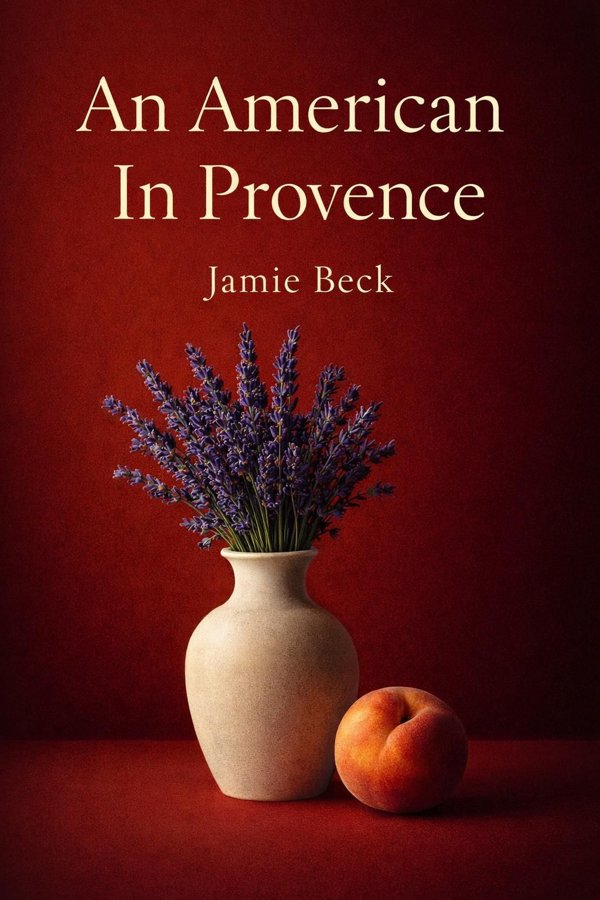
An American In Provence: Summary & Key Insights
by Jamie Beck
 10 min9 chaptersAudio available
Key Takeaways from An American In Provence
The rarest creative skill is not technical mastery but sustained attention.
Sometimes changing your surroundings changes the story you tell about yourself.
Reinvention is often romanticized, but in reality it is built through uncertainty, repetition, and long stretches without clear validation.
Modern life often flattens time into a single endless season of urgency.
A home is never just where life happens; it also shapes how life is felt.
What Is An American In Provence About?
An American In Provence by Jamie Beck is a photography book. An American In Provence by Jamie Beck is far more than a photography book or a stylish memoir. It is an intimate record of choosing a slower, more intentional life and learning to see beauty with greater patience. Best known for her influential visual work and refined aesthetic, Beck left a fast-paced career in New York and built a new life in the South of France. In this book, she combines luminous photographs with personal storytelling, seasonal reflections, recipes, and observations about home, creativity, and belonging. What makes the book matter is not simply its visual elegance, but the deeper philosophy behind it. Beck shows that beauty is not something reserved for special occasions, luxury settings, or extraordinary talent. It can be cultivated through attention, ritual, and openness to place. Provence becomes both a real landscape and a symbol of transformation: a setting in which art, domestic life, grief, motherhood, food, and nature are woven together. For readers interested in photography, lifestyle design, travel, or creative reinvention, An American In Provence offers inspiration with substance. It invites us to reconsider how we live, what we notice, and how daily life itself can become a meaningful creative practice.
This FizzRead summary covers all 9 key chapters of An American In Provence in approximately 10 minutes, distilling the most important ideas, arguments, and takeaways from Jamie Beck's work. Also available as an audio summary and Key Quotes Podcast.
An American In Provence
An American In Provence by Jamie Beck is far more than a photography book or a stylish memoir. It is an intimate record of choosing a slower, more intentional life and learning to see beauty with greater patience. Best known for her influential visual work and refined aesthetic, Beck left a fast-paced career in New York and built a new life in the South of France. In this book, she combines luminous photographs with personal storytelling, seasonal reflections, recipes, and observations about home, creativity, and belonging.
What makes the book matter is not simply its visual elegance, but the deeper philosophy behind it. Beck shows that beauty is not something reserved for special occasions, luxury settings, or extraordinary talent. It can be cultivated through attention, ritual, and openness to place. Provence becomes both a real landscape and a symbol of transformation: a setting in which art, domestic life, grief, motherhood, food, and nature are woven together.
For readers interested in photography, lifestyle design, travel, or creative reinvention, An American In Provence offers inspiration with substance. It invites us to reconsider how we live, what we notice, and how daily life itself can become a meaningful creative practice.
Who Should Read An American In Provence?
This book is perfect for anyone interested in photography and looking to gain actionable insights in a short read. Whether you're a student, professional, or lifelong learner, the key ideas from An American In Provence by Jamie Beck will help you think differently.
- ✓Readers who enjoy photography and want practical takeaways
- ✓Professionals looking to apply new ideas to their work and life
- ✓Anyone who wants the core insights of An American In Provence in just 10 minutes
Want the full summary?
Get instant access to this book summary and 100K+ more with Fizz Moment.
Get Free SummaryAvailable on App Store • Free to download
Key Chapters
The rarest creative skill is not technical mastery but sustained attention. One of the central ideas in An American In Provence is that beauty reveals itself to those who learn how to notice. Jamie Beck does not portray Provence as magical simply because it is picturesque; she shows that its richness emerges through patient observation of shifting light, flowers at different stages of bloom, changing markets, family rituals, and humble domestic details. Her work suggests that much of what people call a beautiful life is actually a deeply observed life.
This matters because many readers assume beauty depends on money, location, or innate artistic talent. Beck challenges that assumption. Her photography and storytelling demonstrate that everyday scenes become emotionally resonant when approached with care. A table set with fruit, linen, and afternoon light is not important because it is extravagant. It becomes memorable because someone took time to compose it, inhabit it, and appreciate it. In that sense, photography becomes a discipline of presence rather than mere image-making.
This idea has practical application well beyond art. A person can begin paying attention to morning light in their kitchen, the colors at a neighborhood market, the textures of objects they already own, or the pace of seasonal change outside their window. Writers can keep a notebook of visual details. Photographers can revisit the same subject in different weather and times of day. Anyone can create small rituals that heighten awareness, such as arranging flowers, preparing meals slowly, or taking a short daily walk without headphones.
The larger lesson is that attention enriches experience before it improves output. A more observant person does not just create better photographs; they live more fully. Actionable takeaway: choose one ordinary space in your home or neighborhood and observe it for a week at different times of day, recording what changes and what you had previously missed.
Sometimes changing your surroundings changes the story you tell about yourself. In An American In Provence, Jamie Beck’s relocation from New York to Provence is not framed as escapist fantasy but as a profound encounter with a different rhythm of living. Place is not merely backdrop here; it is a formative force. The architecture, food culture, markets, agriculture, seasons, and pace of village life all press on the way she works, parents, cooks, hosts, and creates. Provence becomes a collaborator in her transformation.
Beck’s experience highlights a powerful truth: environments shape habits, values, and imagination. A fast-moving urban setting may reward speed, novelty, ambition, and productivity. A rural or small-town setting may invite repetition, seasonality, handwork, and greater contact with nature. Neither is inherently superior, but each encourages different versions of the self. By immersing herself in Provençal life, Beck learns to build identity less around performance and more around practice, home, and sensory experience.
Readers do not have to move internationally to apply this idea. They can ask how their current environment influences mood and priorities. Does their workspace encourage distraction or focus? Does their home support hospitality, creativity, and rest? Can they borrow qualities from places they admire, such as slower meals, more time outdoors, fresh flowers, or stronger seasonal rituals? Even small adjustments in layout, routine, and community can shift identity over time.
This concept is especially relevant for photographers and creatives who often seek inspiration solely through internal motivation. Beck shows that external conditions matter. Light, local materials, architecture, and community traditions can become powerful creative inputs if we let them. Actionable takeaway: identify one quality of a place you admire—slowness, elegance, seasonal living, communal meals—and redesign one part of your daily routine to embody that quality where you already live.
Reinvention is often romanticized, but in reality it is built through uncertainty, repetition, and long stretches without clear validation. An American In Provence captures this more honest side of transformation. Jamie Beck’s move and creative evolution were not simply aesthetic upgrades; they involved risk, adaptation, and the willingness to leave behind familiar forms of success. Her story shows that building a new life also means tolerating discomfort while your identity catches up with your choices.
A key insight in the book is that reinvention is not an event. It is a gradual accumulation of habits, experiments, failures, and refined instincts. Beck does not arrive in Provence instantly fluent in its rhythms or fully formed in her new artistic voice. Instead, she learns through immersion—photographing flowers repeatedly, refining domestic rituals, observing local customs, and developing a body of work rooted in place. Patience becomes a creative strategy. Rather than chasing constant novelty, she allows depth to emerge from returning to themes over time.
This idea is useful for anyone considering a major shift, whether artistic, professional, or personal. A writer changing genres, a professional changing careers, or a family moving to a new city can expect a gap between aspiration and embodiment. That gap is not evidence of failure; it is the normal terrain of growth. Beck’s example encourages readers to value process over immediate polish. Small consistent acts—shooting every day, cooking from local produce, studying light, cultivating home—eventually become a new way of being.
The practical application is to replace dramatic expectations with durable practices. Reinvention stabilizes when it is tied to routine rather than mood. Actionable takeaway: if you are pursuing a new identity, define three weekly practices that make it real—such as photographing daily, hosting a simple meal, or spending time in nature—and commit to them for ninety days before judging results.
Modern life often flattens time into a single endless season of urgency. One of the most appealing ideas in An American In Provence is the recovery of seasonal awareness. Jamie Beck’s photographs and reflections are deeply tied to cycles of bloom, harvest, weather, light, and domestic rituals. Provence is experienced not as a fixed postcard image but as an evolving world with moods and textures that change month by month. This attention to season gives life both structure and richness.
Seasonal living matters because it reconnects human activity with natural variation. Instead of expecting the same energy, food, aesthetics, and productivity all year, Beck’s work suggests that different times invite different priorities. Spring may awaken experimentation and planting. Summer may emphasize abundance, outdoor meals, and social gatherings. Autumn may bring preservation, reflection, and earthier tones. Winter may encourage simplicity, rest, and interior warmth. This cyclical approach creates a healthier and more grounded relationship to time.
For photographers, seasonal living sharpens visual sensitivity. The same garden, window, or landscape can become an entirely different subject across the year. For households, it can influence menus, décor, routines, and celebrations. Readers might visit local markets to buy produce in season, decorate with branches or flowers available at that moment, or plan activities according to changing weather and light. Even journaling about seasonal observations can cultivate a stronger sense of place.
The deeper benefit is psychological. Seasonal awareness helps people accept flux rather than resist it. Life feels less monotonous and less mechanical when one learns to participate in cycles. Creativity, too, becomes more humane when it honors phases of dormancy and bloom. Actionable takeaway: create a simple seasonal ritual for the next three months—such as cooking one market-inspired meal each week, photographing one recurring scene, or updating your home with natural elements that reflect the current season.
A home is never just where life happens; it also shapes how life is felt. In An American In Provence, Jamie Beck treats the domestic sphere as a site of imagination, meaning, and artistic expression. Tables, kitchens, gardens, linens, flowers, and family routines are not incidental details. They are part of a broader philosophy in which home becomes both sanctuary and studio. The book suggests that domestic life, when approached intentionally, can nourish creativity rather than compete with it.
This is an important corrective to the belief that serious creative work must be separated from ordinary responsibilities. Beck shows that setting a table, choosing a vessel for flowers, baking with seasonal fruit, or arranging objects in natural light can all become acts of composition. Domestic practices train the eye in color, balance, texture, and mood. More importantly, they help create an environment where inspiration can arise naturally because the space itself reflects care and attention.
The idea is especially relevant for readers balancing family, work, and artistic goals. Not everyone has access to a dedicated studio, abundant travel, or uninterrupted creative time. But many can shape corners of daily life into creative zones: a kitchen counter with beautiful ingredients, a breakfast table arranged with intention, a small balcony garden, or a reading chair near good light. These spaces need not be expensive. They need coherence, function, and sensory appeal.
By elevating the home, Beck does not endorse perfectionism. Rather, she invites readers to consider the emotional consequences of their surroundings. A well-loved home supports presence, hospitality, and observation. It gives creativity a place to land. Actionable takeaway: choose one small area of your home—a table, windowsill, shelf, or kitchen corner—and redesign it this week using only what you already own so that it feels both useful and visually inspiring.
The most memorable photographs do more than document appearances; they transmit a state of mind. An American In Provence makes this clear by presenting photography not merely as technical capture but as emotional interpretation. Jamie Beck’s images are rich with atmosphere, softness, and sensitivity to fleeting moments. Her work reminds readers that the camera is not only an instrument of record. It is a tool for translating how a place feels, how a season moves, and how memory gathers around visual detail.
This distinction changes the practice of photography. When photographers focus only on correctness—sharpness, exposure, trends, equipment—they may produce competent images that say very little. Beck’s approach emphasizes mood, narrative, and intimacy. A bowl of cherries, a rumpled tablecloth, or a child moving through a garden can become evocative because the image captures relationship rather than mere subject matter. The photograph becomes an invitation to inhabit a moment.
For practical application, photographers can begin by asking emotional questions before technical ones. What sensation am I trying to preserve here: abundance, stillness, nostalgia, warmth, anticipation? That answer can guide framing, light, color, and timing. Even non-photographers can use this mindset when documenting family life or travel. Instead of only taking landmark shots, they can photograph the details that actually held emotional weight: breakfast remnants, market bouquets, rain on shutters, hands preparing food, or evening shadows in a room.
The broader lesson is that visual storytelling depends on interior clarity. To create images with feeling, one must become aware of feeling. Photography then becomes a practice of emotional literacy as much as aesthetics. Actionable takeaway: during your next photo session, choose one emotion you want to convey and limit yourself to ten images that express that feeling through light, composition, and detail rather than obvious subject matter.
A meaningful life is rarely built from dramatic milestones alone; it is shaped by repeated acts that become personal rituals. Throughout An American In Provence, Jamie Beck pays close attention to recurring practices—market visits, flower arranging, cooking, sharing meals, observing gardens, and marking seasons. These rituals anchor daily life and transform ordinary routines into sources of beauty, stability, and identity. What appears elegant in the book is often simply ritualized attention.
Ritual matters because it turns abstraction into embodiment. Many people say they value family, beauty, gratitude, or creativity, but those values remain vague unless attached to repeated behaviors. Beck’s life in Provence demonstrates how ritual can make ideals tangible. Setting the table well says that meals matter. Buying local produce says that seasonality matters. Pausing to photograph a flower says that observation matters. These actions become forms of self-definition.
Readers can apply this idea in ways that fit their own circumstances. A weekday breakfast served on real plates instead of eaten hurriedly over a sink can become a grounding ritual. Fresh flowers from a grocery store can mark the start of the weekend. A Sunday soup, an evening walk at sunset, a monthly dinner with friends, or a seasonal recipe can restore rhythm to life. The point is not grandeur but repetition with intention.
Ritual is particularly powerful during periods of change or instability. It creates continuity when larger circumstances are uncertain. For creatives, rituals also reduce friction by making inspiration more accessible through habit. Over time, the repeated act becomes both comfort and catalyst. Actionable takeaway: choose one daily or weekly ritual that reflects the kind of life you want—such as a candlelit dinner, market visit, photo walk, or fresh-flower arrangement—and practice it consistently for one month.
True elegance is often the result of editing rather than adding. An American In Provence reflects a sensibility in which beauty emerges through restraint, coherence, and sensitivity to essentials. Jamie Beck’s visual world is rich but not cluttered. Her photographs and domestic scenes suggest that atmosphere is created through thoughtful combinations of light, texture, color, and natural materials instead of excess decoration. This is one of the book’s most useful lessons for readers drawn to aesthetic living.
The significance of this idea lies in its accessibility. Many people assume a refined life requires expensive objects, perfect homes, or constant acquisition. Beck’s work points in another direction. A simple linen cloth, ripe fruit, wildflowers, weathered pottery, and good light can produce greater impact than an overcrowded display of luxury items. Restraint allows each element to breathe. It also creates calm, making space for appreciation rather than overstimulation.
In practical terms, this approach can shape how people dress, decorate, cook, and photograph. In the home, it may mean clearing surfaces, choosing fewer but more meaningful objects, and letting natural materials lead. In photography, it may mean simplifying backgrounds, limiting color palettes, and focusing attention on one strong subject. In entertaining, it may mean preparing one beautiful dish well instead of attempting abundance without intention.
Restraint also has emotional value. It encourages discernment and gratitude, helping people engage more deeply with what they already have. Instead of chasing endless novelty, they learn to refine perception and arrangement. Simplicity, in this sense, is not deprivation but concentration. Actionable takeaway: choose one room, outfit, or photographic setup and remove one-third of the visual elements, then notice whether the remaining details feel more expressive, peaceful, and memorable.
Belonging does not arrive the moment you enter a beautiful place; it grows through participation. In An American In Provence, Jamie Beck’s relationship to Provence deepens not just because she admires it, but because she begins to live within its rhythms. Markets, gardens, food traditions, local customs, and seasonal patterns slowly move her from observer to participant. The book suggests that genuine connection to a place requires humility, repetition, and willingness to be shaped by what already exists there.
This is a valuable idea in an era of surface-level travel and highly curated lifestyle aspiration. It is easy to consume places visually without entering into reciprocal relationship with them. Beck’s story points toward a more rooted approach. She pays attention, learns, adapts, and builds a life in dialogue with her environment. That process creates authenticity. Provence is not a fantasy set; it becomes a lived world with obligations, lessons, and intimacy.
Readers can apply this insight wherever they are. Belonging in a neighborhood, city, or creative community grows through regular participation: shopping at local businesses, learning regional foods, observing seasonal events, attending gatherings, meeting neighbors, walking familiar routes, and contributing rather than merely consuming. Even in one’s own hometown, a deeper sense of place often emerges only when one engages with local culture intentionally.
For artists and photographers, participation also improves work. Images become more nuanced when they arise from relationship instead of novelty-seeking. The creator understands context, timing, and subtle meaning. In life more broadly, participation transforms admiration into attachment. Actionable takeaway: strengthen your sense of place by choosing one local ritual this month—such as visiting a market, supporting a nearby artisan, or documenting a neighborhood season—and repeat it until familiarity turns into connection.
All Chapters in An American In Provence
About the Author
Jamie Beck is an American photographer, author, and visual storyteller known for her elegant, atmospheric imagery and her distinctive ability to merge fine art, lifestyle, and personal narrative. She first built a prominent creative career in New York before relocating to Provence, where her work took on an even deeper connection to seasonality, flowers, food, motherhood, and place. Beck has earned international recognition for photographs that feel painterly yet intimate, often capturing the emotional texture of daily life. Her creative voice blends technical skill with a devotion to beauty, ritual, and observation. In An American In Provence, she draws on both her artistic expertise and lived experience to reflect on reinvention, home, and the transformative power of seeing the world more attentively.
Get This Summary in Your Preferred Format
Read or listen to the An American In Provence summary by Jamie Beck anytime, anywhere. FizzRead offers multiple formats so you can learn on your terms — all free.
Available formats: App · Audio · PDF · EPUB — All included free with FizzRead
Download An American In Provence PDF and EPUB Summary
Key Quotes from An American In Provence
“The rarest creative skill is not technical mastery but sustained attention.”
“Sometimes changing your surroundings changes the story you tell about yourself.”
“Reinvention is often romanticized, but in reality it is built through uncertainty, repetition, and long stretches without clear validation.”
“Modern life often flattens time into a single endless season of urgency.”
“A home is never just where life happens; it also shapes how life is felt.”
Frequently Asked Questions about An American In Provence
An American In Provence by Jamie Beck is a photography book that explores key ideas across 9 chapters. An American In Provence by Jamie Beck is far more than a photography book or a stylish memoir. It is an intimate record of choosing a slower, more intentional life and learning to see beauty with greater patience. Best known for her influential visual work and refined aesthetic, Beck left a fast-paced career in New York and built a new life in the South of France. In this book, she combines luminous photographs with personal storytelling, seasonal reflections, recipes, and observations about home, creativity, and belonging. What makes the book matter is not simply its visual elegance, but the deeper philosophy behind it. Beck shows that beauty is not something reserved for special occasions, luxury settings, or extraordinary talent. It can be cultivated through attention, ritual, and openness to place. Provence becomes both a real landscape and a symbol of transformation: a setting in which art, domestic life, grief, motherhood, food, and nature are woven together. For readers interested in photography, lifestyle design, travel, or creative reinvention, An American In Provence offers inspiration with substance. It invites us to reconsider how we live, what we notice, and how daily life itself can become a meaningful creative practice.
You Might Also Like
Camera Lucida: Reflections on Photography
Roland Barthes
10 min
Girl on Girl: Art and Photography in the Age of the Female Gaze
Charlotte Jansen
10 min
Mastering Composition: The Definitive Guide for Photographers
Richard Garvey-Williams
10 min
On Photography
Susan Sontag
10 min
Photography Q&A: Real Questions. Real Answers.
Zack Arias
10 min
Picture Perfect Practice: A Self-Training Guide to Mastering the Challenges of Taking World-Class Photographs
Roberto Valenzuela
10 minBrowse by Category
Ready to read An American In Provence?
Get the full summary and 100K+ more books with Fizz Moment.