
A Passage To India: Summary & Key Insights
 10 min6 chaptersAudio available
What Is A Passage To India About?
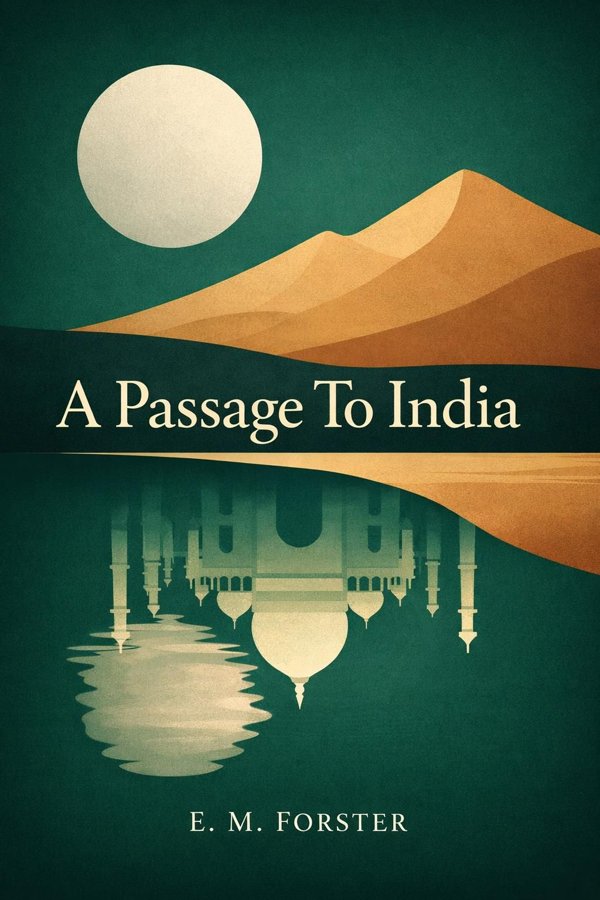
A Passage To India by E. M. Forster is a classics book spanning 6 pages. Set in British-ruled India during the 1920s, the novel explores the tensions and misunderstandings between the British colonizers and the Indian population. Through the story of Dr. Aziz, an Indian Muslim physician, and his interactions with English visitors Mrs. Moore and Adela Quested, the book examines themes of friendship, cultural conflict, and the limits of human connection under imperial rule.
This FizzRead summary covers all 6 key chapters of A Passage To India in approximately 10 minutes, distilling the most important ideas, arguments, and takeaways from E. M. Forster's work. Also available as an audio summary and Key Quotes Podcast.
A Passage To India
Set in British-ruled India during the 1920s, the novel explores the tensions and misunderstandings between the British colonizers and the Indian population. Through the story of Dr. Aziz, an Indian Muslim physician, and his interactions with English visitors Mrs. Moore and Adela Quested, the book examines themes of friendship, cultural conflict, and the limits of human connection under imperial rule.
Who Should Read A Passage To India?
This book is perfect for anyone interested in classics and looking to gain actionable insights in a short read. Whether you're a student, professional, or lifelong learner, the key ideas from A Passage To India by E. M. Forster will help you think differently.
- ✓Readers who enjoy classics and want practical takeaways
- ✓Professionals looking to apply new ideas to their work and life
- ✓Anyone who wants the core insights of A Passage To India in just 10 minutes
Want the full summary?
Get instant access to this book summary and 100K+ more with Fizz Moment.
Get Free SummaryAvailable on App Store • Free to download
Key Chapters
When the novel opens, we arrive in Chandrapore—a town split into two worlds. On one side lies the British colonial compound, neat, sanitized, and self-contained; on the other, the chaotic and vivid life of the native city, rich in color, sound, and contradiction. This division embodies the entire truth of colonial existence. It is not mere geography; it is a metaphor for how human beings organize themselves around fear and difference.
The British live apart, believing themselves the agents of civilization, carrying the burden of governance and control. The Indians, meanwhile, experience this rule as intrusion, condescension—a weight pressing upon their dignity. In their interactions, every gesture is shadowed by suspicion. A handshake can never be simply a handshake; it becomes a measure of equality or insult.
From my perspective, Chandrapore symbolizes the fragmentation of the human spirit when power imposes separation. I wanted readers to sense how daily life itself becomes theater for misunderstanding. Even the landscape—the distant Marabar Hills with their mysterious caves—offers a silent commentary. They loom over the town, indifferent yet portentous, hinting that beneath political divisions lies something older and more inscrutable. Chandrapore’s reality thus sets the stage for all that follows: an exploration of connection against the backdrop of inevitable estrangement.
Dr. Aziz enters the story as a man of pride and impulsive warmth. He is educated, eloquent, and deeply aware of the barriers that colonial society raises against him. Yet he is not an ideologue; he longs to be recognized as a gentleman, to belong in a world that constantly reminds him of his inferiority. I created Aziz as both symbol and soul—a representation of the colonized, but also a deeply human being capable of affection, imagination, and wounded pride.
His first encounter with Mrs. Moore in the mosque is one of quiet revelation. When she treats the sacred space with respect, Aziz feels a surge of connection—a rare moment when an English person sees him not as a representative of a race, but as a fellow believer in something higher. This moment of recognition is delicate but profound; it marks the beginning of what the novel will test relentlessly: can human feeling transcend empire?
Their friendship, and Adela Quested’s curiosity about the 'real India,' expose the distance between perception and reality. The British, even in liberal guise, seek to ‘know’ India as an experience, yet their knowledge is filtered through superiority. Aziz’s eagerness to please them, to embody all that is noble and gracious in his culture, only deepens the tragedy—because every gesture of goodwill exists within a system that denies equality. What begins as mutual curiosity carries the seeds of disillusion, for empire poisons even the best intentions by making trust fragile, and dignity conditional.
+ 4 more chapters — available in the FizzRead app
All Chapters in A Passage To India
About the Author
Edward Morgan Forster (1879–1970) was an English novelist, essayist, and critic known for his explorations of class difference and hypocrisy in early 20th-century British society. His notable works include 'A Room with a View', 'Howards End', and 'A Passage to India'. Forster’s writing is celebrated for its humanism, wit, and insight into social and moral issues.
Get This Summary in Your Preferred Format
Read or listen to the A Passage To India summary by E. M. Forster anytime, anywhere. FizzRead offers multiple formats so you can learn on your terms — all free.
Available formats: App · Audio · PDF · EPUB — All included free with FizzRead
Download A Passage To India PDF and EPUB Summary
Key Quotes from A Passage To India
“When the novel opens, we arrive in Chandrapore—a town split into two worlds.”
“Aziz enters the story as a man of pride and impulsive warmth.”
Frequently Asked Questions about A Passage To India
A Passage To India by E. M. Forster is a classics book that explores key ideas across 6 chapters. Set in British-ruled India during the 1920s, the novel explores the tensions and misunderstandings between the British colonizers and the Indian population. Through the story of Dr. Aziz, an Indian Muslim physician, and his interactions with English visitors Mrs. Moore and Adela Quested, the book examines themes of friendship, cultural conflict, and the limits of human connection under imperial rule.
More by E. M. Forster

You Might Also Like






Browse by Category
Ready to read A Passage To India?
Get the full summary and 100K+ more books with Fizz Moment.