
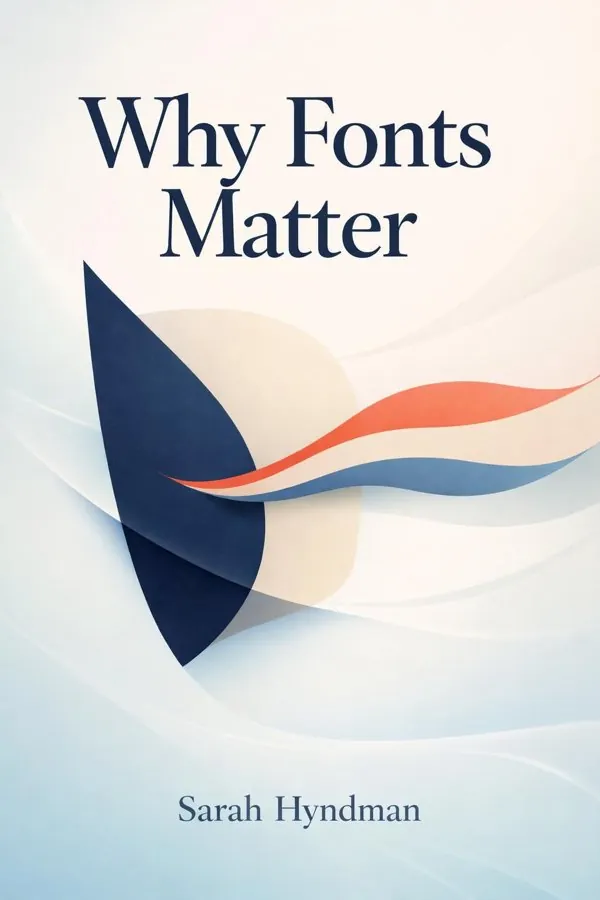
Why Fonts Matter: Summary & Key Insights
 10 min5 chaptersAudio available
What Is Why Fonts Matter About?
Why Fonts Matter by Sarah Hyndman is a design book spanning 5 pages. ‘Why Fonts Matter’ explores how typography influences our emotions, perceptions, and behavior. Sarah Hyndman, a graphic designer and researcher, demonstrates how fonts communicate personality, evoke memories, and even affect taste and trust. The book combines psychology, design, and storytelling to reveal the hidden power of type in everyday life.
This FizzRead summary covers all 5 key chapters of Why Fonts Matter in approximately 10 minutes, distilling the most important ideas, arguments, and takeaways from Sarah Hyndman's work. Also available as an audio summary and Key Quotes Podcast.
Why Fonts Matter
‘Why Fonts Matter’ explores how typography influences our emotions, perceptions, and behavior. Sarah Hyndman, a graphic designer and researcher, demonstrates how fonts communicate personality, evoke memories, and even affect taste and trust. The book combines psychology, design, and storytelling to reveal the hidden power of type in everyday life.
Who Should Read Why Fonts Matter?
This book is perfect for anyone interested in design and looking to gain actionable insights in a short read. Whether you're a student, professional, or lifelong learner, the key ideas from Why Fonts Matter by Sarah Hyndman will help you think differently.
- ✓Readers who enjoy design and want practical takeaways
- ✓Professionals looking to apply new ideas to their work and life
- ✓Anyone who wants the core insights of Why Fonts Matter in just 10 minutes
Want the full summary?
Get instant access to this book summary and 100K+ more with Fizz Moment.
Get Free SummaryAvailable on App Store • Free to download
Key Chapters
Our reaction to fonts is visceral. You might not notice it, but your moods shift subtly with different type styles. *Why Fonts Matter* delves into how typography evokes emotions through associations formed across your lifetime. Certain fonts trigger trust because they resemble forms used in official documents or books; others provoke nostalgia because they recall childhood packaging or school handwriting.
Through interactive experiments, I encouraged readers to connect type with feelings—asking them how certain fonts tasted or sounded. These exercises demonstrated what I call cross-modal perception: the brain’s ability to translate one sensory impression into another. Fonts with soft curves often evoke sweet flavors or gentle voices, while angular, condensed fonts might suggest sharpness or bitterness. The implication is striking—typography doesn’t just influence visual attention; it modulates multisensory experience.
This emotional palette explains why brands carefully curate type combinations. When a luxury brand adopts minimalist typography, it signals refinement and discretion; when a snack company uses bouncy letters, it communicates fun and flavor. Our trust, enjoyment, and emotional connection often rest on these subtle signals. That’s why typographic design transcends aesthetics—it becomes psychological design.
In the book, I argue that emotional typography is not manipulation; it’s empathy in visual form. The designer listens to how people feel and translates those emotions into shapes that resonate. Once we start treating fonts as emotional messengers rather than mere style, we design with deeper authenticity.
+ 3 more chapters — available in the FizzRead app
All Chapters in Why Fonts Matter
About the Author
Sarah Hyndman is a British graphic designer, author, and founder of Type Tasting, a studio dedicated to exploring the psychology of typography. She is known for her engaging research on how fonts influence perception and behavior, and she has collaborated with major brands and spoken at international design events.
Get This Summary in Your Preferred Format
Read or listen to the Why Fonts Matter summary by Sarah Hyndman anytime, anywhere. FizzRead offers multiple formats so you can learn on your terms — all free.
Available formats: App · Audio · PDF · EPUB — All included free with FizzRead
Download Why Fonts Matter PDF and EPUB Summary
Key Quotes from Why Fonts Matter
“In our daily communication, typefaces act as voices, carrying personality cues similar to facial expressions or gestures.”
“You might not notice it, but your moods shift subtly with different type styles.”
Frequently Asked Questions about Why Fonts Matter
Why Fonts Matter by Sarah Hyndman is a design book that explores key ideas across 5 chapters. ‘Why Fonts Matter’ explores how typography influences our emotions, perceptions, and behavior. Sarah Hyndman, a graphic designer and researcher, demonstrates how fonts communicate personality, evoke memories, and even affect taste and trust. The book combines psychology, design, and storytelling to reveal the hidden power of type in everyday life.
You Might Also Like
The Design of Everyday Things
Don Norman
10 min
The Better Angels of Our Nature
Steven Pinker
10 min
A Designer's Art
Paul Rand
10 min
Architects' Sketchbooks
Various Editors
10 min
Architectural Graphic Standards
The American Institute of Architects
10 min
Design Is Storytelling
Ellen Lupton
10 minBrowse by Category
Ready to read Why Fonts Matter?
Get the full summary and 100K+ more books with Fizz Moment.