
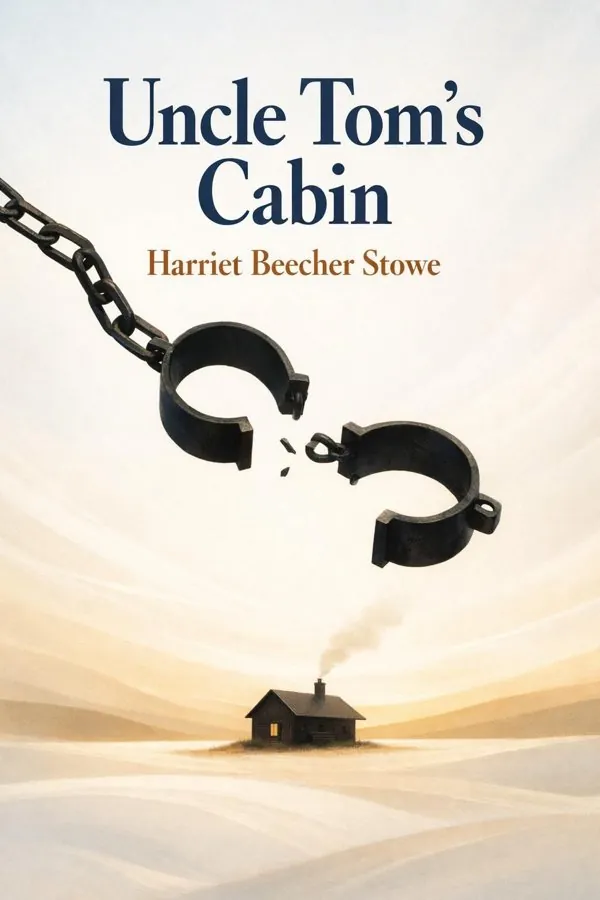
Uncle Tom's Cabin: Summary & Key Insights
 10 min6 chaptersAudio available
What Is Uncle Tom's Cabin About?
Uncle Tom's Cabin by Harriet Beecher Stowe is a classics book spanning 6 pages. Uncle Tom's Cabin is an anti-slavery novel by American author Harriet Beecher Stowe. First published in 1852, it depicts the harsh realities of slavery in the United States through the story of Uncle Tom, a long-suffering enslaved man, and the people he encounters. The novel played a significant role in shaping public opinion against slavery and is considered one of the most influential works in American literature.
This FizzRead summary covers all 6 key chapters of Uncle Tom's Cabin in approximately 10 minutes, distilling the most important ideas, arguments, and takeaways from Harriet Beecher Stowe's work. Also available as an audio summary and Key Quotes Podcast.
Uncle Tom's Cabin
Uncle Tom's Cabin is an anti-slavery novel by American author Harriet Beecher Stowe. First published in 1852, it depicts the harsh realities of slavery in the United States through the story of Uncle Tom, a long-suffering enslaved man, and the people he encounters. The novel played a significant role in shaping public opinion against slavery and is considered one of the most influential works in American literature.
Who Should Read Uncle Tom's Cabin?
This book is perfect for anyone interested in classics and looking to gain actionable insights in a short read. Whether you're a student, professional, or lifelong learner, the key ideas from Uncle Tom's Cabin by Harriet Beecher Stowe will help you think differently.
- ✓Readers who enjoy classics and want practical takeaways
- ✓Professionals looking to apply new ideas to their work and life
- ✓Anyone who wants the core insights of Uncle Tom's Cabin in just 10 minutes
Want the full summary?
Get instant access to this book summary and 100K+ more with Fizz Moment.
Get Free SummaryAvailable on App Store • Free to download
Key Chapters
On the Shelby plantation in Kentucky, I painted a surface of comfort and civility—white columns, mild gentlemen, and gentle-mannered slaves—to expose the moral contradiction underpinning American slavery. Mr. Shelby is considered a kind master, and his household seems marked by decency and order. Yet beneath this veneer lies the fundamental injustice of property over person. Uncle Tom, loyal and steadfast, and Eliza, devoted wife and mother, live under a system that can destroy their world at the stroke of a pen.
In depicting this plantation, I wanted readers to feel the complexity of slavery’s everyday life. Many Americans, especially in the North, excused it by imagining there were humane masters and contented servants. But kindness cannot sanctify bondage—moral wrong remains wrong, no matter how gently enforced. When Mr. Shelby’s debts force him to sell Tom and young Harry to a trader, Haley, the illusion of safety shatters. Eliza’s tears, Tom’s calm acceptance, and Shelby’s helpless remorse reveal the deep rot at the heart of this system: human beings treated as liquidity, affection subordinated to economics.
This opening is not an indictment of one man’s weakness, but of a social order that makes moral goodness impossible. Shelby’s moral failure is society’s failure. And through it, I wanted readers to sense the inevitability of action—if goodness cannot survive within slavery, it must rise against it.
Eliza’s desperate escape is one of the most vivid passages I ever wrote, because I wished to bring abstraction—‘fugitive slave’—into beating, trembling life. With her child clasped to her breast, she flees through the Kentucky night, hearing the shouts of her pursuers, feeling the icy wind sting her face. When she reaches the frozen Ohio River, her path becomes a spiritual trial. Each leap across the shifting ice is a leap of faith—a mother defying the laws of property, the barriers of geography, and the chains of fear.
I wanted this scene to speak to every parent, every child, every sentient soul: what would you do if your child were to be taken from you, not because of crime but because of skin color? By rendering Eliza’s flight in sensory detail—her bleeding feet, her trembling courage—I hoped to melt the reader’s indifference. Her salvation through the help of abolitionist families and Quakers reveals another truth: that ordinary goodness, when joined with courage, can become divine.
Eliza’s journey north was my plea to Americans to see beyond politics and legality. It was a testament that compassion transcends borders and doctrine. To those who worshiped law above love, I asked: is not human dignity the higher command?
+ 4 more chapters — available in the FizzRead app
All Chapters in Uncle Tom's Cabin
About the Author
Harriet Beecher Stowe (1811–1896) was an American author and abolitionist best known for her novel Uncle Tom's Cabin, which galvanized anti-slavery sentiment in the 19th century. She wrote more than 30 books, including novels, travel memoirs, and collections of articles and letters, and was a prominent voice in the movement to end slavery.
Get This Summary in Your Preferred Format
Read or listen to the Uncle Tom's Cabin summary by Harriet Beecher Stowe anytime, anywhere. FizzRead offers multiple formats so you can learn on your terms — all free.
Available formats: App · Audio · PDF · EPUB — All included free with FizzRead
Download Uncle Tom's Cabin PDF and EPUB Summary
Key Quotes from Uncle Tom's Cabin
“Eliza’s desperate escape is one of the most vivid passages I ever wrote, because I wished to bring abstraction—‘fugitive slave’—into beating, trembling life.”
Frequently Asked Questions about Uncle Tom's Cabin
Uncle Tom's Cabin by Harriet Beecher Stowe is a classics book that explores key ideas across 6 chapters. Uncle Tom's Cabin is an anti-slavery novel by American author Harriet Beecher Stowe. First published in 1852, it depicts the harsh realities of slavery in the United States through the story of Uncle Tom, a long-suffering enslaved man, and the people he encounters. The novel played a significant role in shaping public opinion against slavery and is considered one of the most influential works in American literature.
You Might Also Like




Browse by Category
Ready to read Uncle Tom's Cabin?
Get the full summary and 100K+ more books with Fizz Moment.