
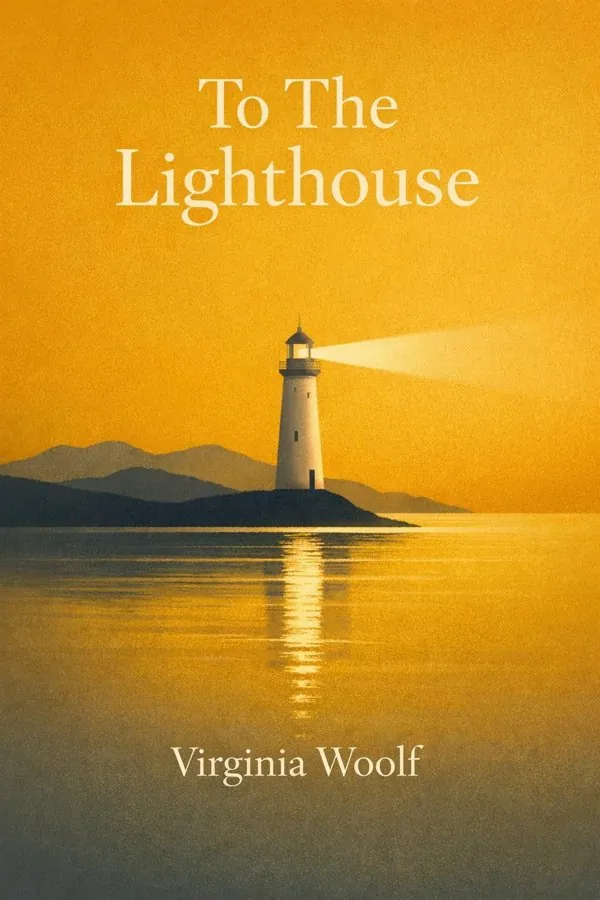
To The Lighthouse: Summary & Key Insights
 10 min3 chaptersAudio available
What Is To The Lighthouse About?
To The Lighthouse by Virginia Woolf is a classics book spanning 3 pages. A modernist novel that explores the complexities of time, memory, and perception through the experiences of the Ramsay family and their guests during visits to their summer home on the Isle of Skye. The narrative shifts fluidly between characters’ inner thoughts, revealing the passage of time and the impermanence of human relationships.
This FizzRead summary covers all 3 key chapters of To The Lighthouse in approximately 10 minutes, distilling the most important ideas, arguments, and takeaways from Virginia Woolf's work. Also available as an audio summary and Key Quotes Podcast.
To The Lighthouse
A modernist novel that explores the complexities of time, memory, and perception through the experiences of the Ramsay family and their guests during visits to their summer home on the Isle of Skye. The narrative shifts fluidly between characters’ inner thoughts, revealing the passage of time and the impermanence of human relationships.
Who Should Read To The Lighthouse?
This book is perfect for anyone interested in classics and looking to gain actionable insights in a short read. Whether you're a student, professional, or lifelong learner, the key ideas from To The Lighthouse by Virginia Woolf will help you think differently.
- ✓Readers who enjoy classics and want practical takeaways
- ✓Professionals looking to apply new ideas to their work and life
- ✓Anyone who wants the core insights of To The Lighthouse in just 10 minutes
Want the full summary?
Get instant access to this book summary and 100K+ more with Fizz Moment.
Get Free SummaryAvailable on App Store • Free to download
Key Chapters
The story opens on a bright summer morning as the Ramsay family and their guests gather at their home on the Isle of Skye. Light flickers through the windows, the sea breathes in the distance, and all seems serene. But that harmony is fleeting. Mrs. Ramsay, gentle and perceptive, is the heart of the household. With a smile or a brief word, she softens tension and creates warmth, holding the family together through quiet emotional intelligence. She is not merely a mother; she is the moral and emotional axis around which the household turns. Her kindness arises not only from empathy but from an intimate awareness of time’s fragile passage and human loneliness.
In contrast, Mr. Ramsay embodies intellect, authority, and the insecurity that often shadows both. A philosopher by trade, he wrestles with self-doubt and fears that his intellectual achievements will fade into obscurity. Beneath his stern rationalism lies a man desperate for affirmation, especially from his wife and children. His denial of their son’s wish to visit the lighthouse—claiming the weather will not allow it—reveals more than practicality; it exposes the frustration of a mind constrained by its own logic, the human inability to fully reconcile ideals with reality.
Among their guests is Lily Briscoe, a young painter who serves as both witness and seeker. She watches the Ramsays, studies the patterns of light and feeling that surround them, and questions her own place as a woman artist in a world that doubts her worth. The remark that “women can’t paint” lingers like a wound, propelling her to persist. As she struggles with her composition—trying to balance Mrs. Ramsay’s presence, the sea, and the sky—her unfinished canvas becomes a symbol of inner conflict and awakening. Every brushstroke is an attempt to capture life’s fleeting harmony, to wrest meaning from the flow of time.
Thus, the novel’s first part transforms the routine moments of family life into a quiet storm of perception. Children’s hopes, parents’ silences, the smallest gestures—all move like waves across the surface of time. Mrs. Ramsay longs to take the children to the lighthouse, but weather and her husband’s rational restraint prevent it. The journey remains unfulfilled, becoming a symbol of every human yearning that resists completion. The lighthouse, far off yet constant, glows not just as a destination but as faith itself—a reminder that even through mist and distance, we continue to move toward the light.
This section stands as the quietest and most haunting of the novel. The Ramsays have left the island, and their summer house sits abandoned for years. War, death, and the steady advance of time reshape all that once was. News of Mrs. Ramsay’s death is delivered with austere brevity, almost as if time itself is indifferent to human loss. Woolf’s language turns nearly poetic here, allowing time—not people—to speak. The walls absorb moisture, the garden is overtaken by weeds, and the wind drifts through empty rooms, carrying change without sentiment.
What the reader senses is the fragility of memory, the ephemeral nature of life. No one pauses to mourn; sorrow exists as an echo rather than an event. War has dulled youthful dreams, and death has erased the warmth of family gatherings, yet the house still stands as a silent witness. In this passage, the stream of consciousness dissolves into a “stream of time.” There is no human center—only the endless, impersonal rhythm of decay and renewal.
Here Woolf achieves profound philosophical resonance: time does not belong to us; it moves at its own pace, indifferent to our desires. Dust becomes its inscription, damp walls its fossils. Mrs. Ramsay’s kindness, the laughter of children, Lily’s canvas—these survive only as fading reverberations. Humanity wants mastery over life, but time remains the ultimate master.
And still, within that silence lies a subtle truth: life’s continuity is an illusion, yet in each fleeting moment of awareness, we harbor eternity. Death is not an end but another form of movement. The empty house seems to wait—not only for the family’s return but for meaning to take root once more. The beacon on the horizon keeps shining, a quiet testament that even amid impermanence, something endures.
+ 1 more chapters — available in the FizzRead app
All Chapters in To The Lighthouse
About the Author
Virginia Woolf (1882–1941) was an English writer and one of the foremost modernist literary figures of the twentieth century. She was a central member of the Bloomsbury Group and is known for her innovative narrative techniques and exploration of consciousness in works such as 'Mrs Dalloway', 'Orlando', and 'A Room of One’s Own'.
Get This Summary in Your Preferred Format
Read or listen to the To The Lighthouse summary by Virginia Woolf anytime, anywhere. FizzRead offers multiple formats so you can learn on your terms — all free.
Available formats: App · Audio · PDF · EPUB — All included free with FizzRead
Download To The Lighthouse PDF and EPUB Summary
Key Quotes from To The Lighthouse
“The story opens on a bright summer morning as the Ramsay family and their guests gather at their home on the Isle of Skye.”
“This section stands as the quietest and most haunting of the novel.”
Frequently Asked Questions about To The Lighthouse
To The Lighthouse by Virginia Woolf is a classics book that explores key ideas across 3 chapters. A modernist novel that explores the complexities of time, memory, and perception through the experiences of the Ramsay family and their guests during visits to their summer home on the Isle of Skye. The narrative shifts fluidly between characters’ inner thoughts, revealing the passage of time and the impermanence of human relationships.
You Might Also Like



Browse by Category
Ready to read To The Lighthouse?
Get the full summary and 100K+ more books with Fizz Moment.