
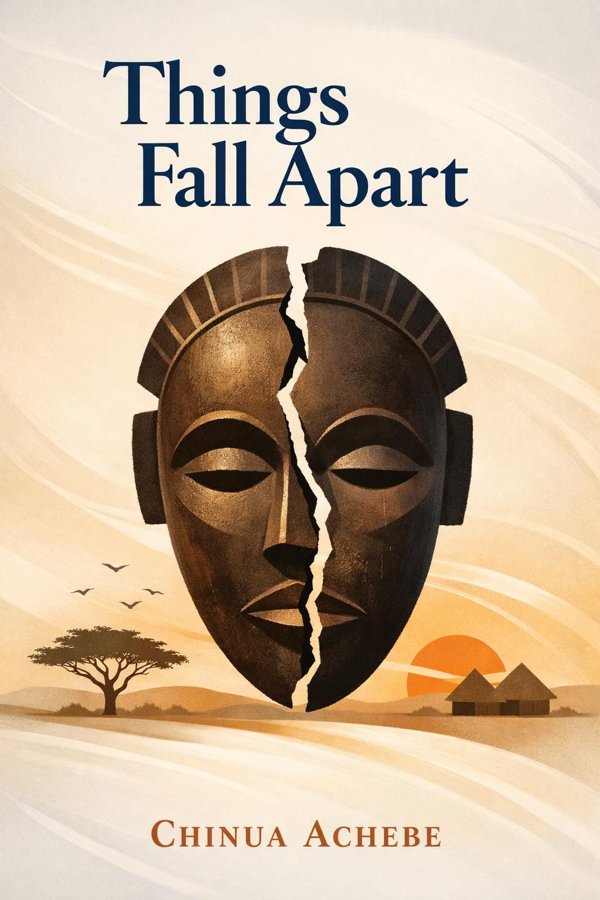
Things Fall Apart: Summary & Key Insights
 10 min9 chaptersAudio available
What Is Things Fall Apart About?
Things Fall Apart by Chinua Achebe is a classics book spanning 9 pages. Set in pre-colonial Nigeria, this novel tells the story of Okonkwo, a respected leader and warrior in the Igbo village of Umuofia. As British colonialism and Christian missionaries begin to encroach upon traditional life, Okonkwo struggles to maintain his cultural identity and authority. The book explores themes of tradition, change, masculinity, and the clash between indigenous African culture and Western influence.
This FizzRead summary covers all 9 key chapters of Things Fall Apart in approximately 10 minutes, distilling the most important ideas, arguments, and takeaways from Chinua Achebe's work. Also available as an audio summary and Key Quotes Podcast.
Things Fall Apart
Set in pre-colonial Nigeria, this novel tells the story of Okonkwo, a respected leader and warrior in the Igbo village of Umuofia. As British colonialism and Christian missionaries begin to encroach upon traditional life, Okonkwo struggles to maintain his cultural identity and authority. The book explores themes of tradition, change, masculinity, and the clash between indigenous African culture and Western influence.
Who Should Read Things Fall Apart?
This book is perfect for anyone interested in classics and looking to gain actionable insights in a short read. Whether you're a student, professional, or lifelong learner, the key ideas from Things Fall Apart by Chinua Achebe will help you think differently.
- ✓Readers who enjoy classics and want practical takeaways
- ✓Professionals looking to apply new ideas to their work and life
- ✓Anyone who wants the core insights of Things Fall Apart in just 10 minutes
Want the full summary?
Get instant access to this book summary and 100K+ more with Fizz Moment.
Get Free SummaryAvailable on App Store • Free to download
Key Chapters
Okonkwo stands at the center of Umuofia as the image of success—celebrated for his prowess in wrestling, feared for his temper, respected for his wealth and titles. Yet beneath his strength lies terror. His father, Unoka, was gentle but poor, fond of music and conversation yet unable to provide or fight. Okonkwo learned to despise that softness and built himself upon its negation. From his youth, he vowed that weakness would never stain his name. This fear shapes every action he takes, constricting his humanity and dictating his destiny.
In creating Okonkwo, I wanted readers to see the tension within strength—the way fear can masquerade as courage. His success is undeniable, but his soul is restless. He beats his wives, scorns his son’s sensitivity, refuses joy because joy seems dangerous. He cannot laugh at himself, and that inability isolates him. In his village, however, the rhythm of life around him remains balanced. People honor the gods with dances and sacrifices, exchange kola nuts in friendship, and resolve disputes before elders under the watchful gaze of ancestors. Through this harmony, I tried to paint the integrity of Igbo civilization—its system of justice, spirituality, and community cohesion long before Europe arrived.
The society of Umuofia is not chaotic; it is ordered by ritual and reciprocity. Titles are earned through achievement, not inheritance. Power moves through consensus, not tyranny. Children learn through songs and proverbs the values of respect and diligence. The earth goddess Ani governs morality, and the ancestors remind the living that all actions echo beyond death.
As I describe festivals, trials, and ceremonies, my purpose was ethnographic as well as humanistic—to let readers feel the warmth and complexity of a people too often erased by colonial narratives. Before the strangers came, Umuofia had its judiciary, its religion, its councils, and its justice. Life was not idyllic, but it was coherent. Women worked hard, men sought honor, and balance—this principle of duality—kept society whole.
In that world, Okonkwo represents both the best and the perilous extreme. He preserves tradition but forgets its gentleness. The wisdom of his elders often counsels moderation, but he listens only to the voice of conquest. Thus, even before foreign interference, fissures begin to show. Moral rigidity can make a man blind, and Okonkwo’s blindness foreshadows the collapse to come.
+ 7 more chapters — available in the FizzRead app
All Chapters in Things Fall Apart
About the Author
Chinua Achebe (1930–2013) was a Nigerian novelist, poet, and critic, widely regarded as the father of modern African literature. His works, including 'Things Fall Apart', 'No Longer at Ease', and 'Arrow of God', examine the impact of colonialism and the complexities of African identity. Achebe was also a professor and a key voice in postcolonial discourse.
Get This Summary in Your Preferred Format
Read or listen to the Things Fall Apart summary by Chinua Achebe anytime, anywhere. FizzRead offers multiple formats so you can learn on your terms — all free.
Available formats: App · Audio · PDF · EPUB — All included free with FizzRead
Download Things Fall Apart PDF and EPUB Summary
Key Quotes from Things Fall Apart
“Okonkwo stands at the center of Umuofia as the image of success—celebrated for his prowess in wrestling, feared for his temper, respected for his wealth and titles.”
“The society of Umuofia is not chaotic; it is ordered by ritual and reciprocity.”
Frequently Asked Questions about Things Fall Apart
Things Fall Apart by Chinua Achebe is a classics book that explores key ideas across 9 chapters. Set in pre-colonial Nigeria, this novel tells the story of Okonkwo, a respected leader and warrior in the Igbo village of Umuofia. As British colonialism and Christian missionaries begin to encroach upon traditional life, Okonkwo struggles to maintain his cultural identity and authority. The book explores themes of tradition, change, masculinity, and the clash between indigenous African culture and Western influence.
You Might Also Like

Browse by Category
Ready to read Things Fall Apart?
Get the full summary and 100K+ more books with Fizz Moment.