
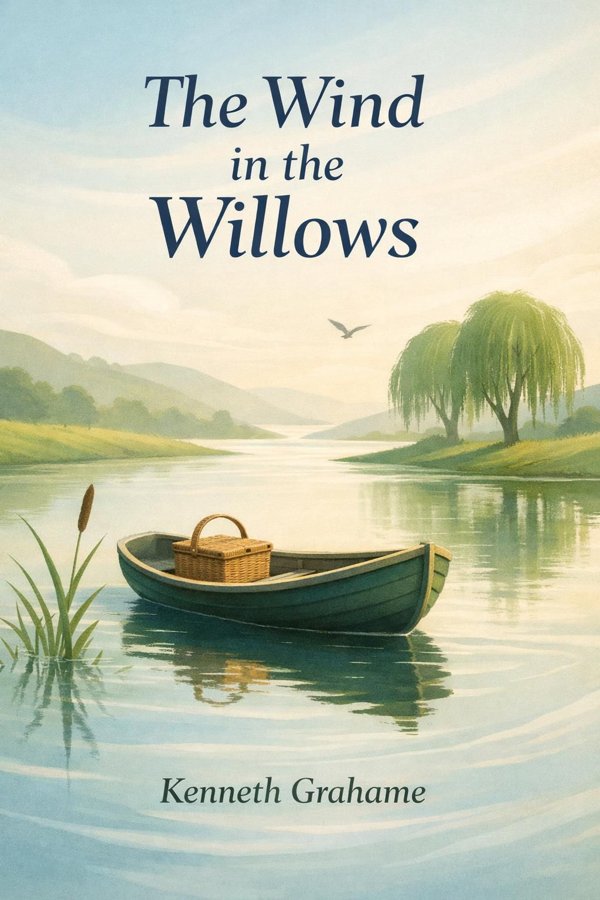
The Wind in the Willows: Summary & Key Insights
 10 min9 chaptersAudio available
Key Takeaways from The Wind in the Willows
Real change often begins not with a plan, but with a sudden refusal to go on living too narrowly.
Friendship is often formed less by dramatic declarations than by the quiet habit of noticing the same things together.
Character is often revealed most clearly when comfort disappears.
Not every appetite for excitement is a sign of vitality; sometimes it is a refusal to become responsible.
A meaningful life needs more than comfort and more than adventure; it also needs moments of reverence that cannot be fully explained.
What Is The Wind in the Willows About?
The Wind in the Willows by Kenneth Grahame is a classics book spanning 8 pages. First published in 1908, The Wind in the Willows is one of the most beloved works in English children’s literature, yet its appeal reaches far beyond childhood. Kenneth Grahame’s novel follows Mole, Rat, Toad, and Badger through a world of rivers, woods, roads, feasts, dangers, and homecomings. On the surface, it is a gentle animal fantasy full of comic mishaps and pastoral charm. Beneath that surface, it is a meditation on friendship, belonging, change, and the competing pulls of adventure and domestic peace. Grahame gives each character a distinct moral and emotional shape: Mole’s curiosity, Rat’s loyalty, Badger’s steadiness, and Toad’s reckless appetite for novelty. Together, they create a portrait of community that feels timeless. Grahame wrote with unusual authority about both the enchantment of nature and the fragility of civilized life. His prose can be playful, lyrical, and reflective within a single chapter, which helps explain why the book endures. The Wind in the Willows matters because it reminds readers that comfort, courage, and companionship are not small things. They are the foundations of a meaningful life.
This FizzRead summary covers all 9 key chapters of The Wind in the Willows in approximately 10 minutes, distilling the most important ideas, arguments, and takeaways from Kenneth Grahame's work. Also available as an audio summary and Key Quotes Podcast.
The Wind in the Willows
First published in 1908, The Wind in the Willows is one of the most beloved works in English children’s literature, yet its appeal reaches far beyond childhood. Kenneth Grahame’s novel follows Mole, Rat, Toad, and Badger through a world of rivers, woods, roads, feasts, dangers, and homecomings. On the surface, it is a gentle animal fantasy full of comic mishaps and pastoral charm. Beneath that surface, it is a meditation on friendship, belonging, change, and the competing pulls of adventure and domestic peace. Grahame gives each character a distinct moral and emotional shape: Mole’s curiosity, Rat’s loyalty, Badger’s steadiness, and Toad’s reckless appetite for novelty. Together, they create a portrait of community that feels timeless. Grahame wrote with unusual authority about both the enchantment of nature and the fragility of civilized life. His prose can be playful, lyrical, and reflective within a single chapter, which helps explain why the book endures. The Wind in the Willows matters because it reminds readers that comfort, courage, and companionship are not small things. They are the foundations of a meaningful life.
Who Should Read The Wind in the Willows?
This book is perfect for anyone interested in classics and looking to gain actionable insights in a short read. Whether you're a student, professional, or lifelong learner, the key ideas from The Wind in the Willows by Kenneth Grahame will help you think differently.
- ✓Readers who enjoy classics and want practical takeaways
- ✓Professionals looking to apply new ideas to their work and life
- ✓Anyone who wants the core insights of The Wind in the Willows in just 10 minutes
Want the full summary?
Get instant access to this book summary and 100K+ more with Fizz Moment.
Get Free SummaryAvailable on App Store • Free to download
Key Chapters
Real change often begins not with a plan, but with a sudden refusal to go on living too narrowly. That is how The Wind in the Willows opens: Mole, exhausted by spring cleaning in his underground home, feels an irresistible urge to leave behind routine and step into the open air. This moment is more than a charming beginning. It introduces one of the book’s central ideas: life expands when curiosity overcomes habit. Mole does not know exactly what he is seeking; he simply senses that the world above holds something his sheltered existence lacks.
His first encounter with the river is transformative. He has never seen one before, and Grahame presents this discovery with awe, as if Mole is meeting not merely a landscape feature but a new mode of being. The river is motion, beauty, companionship, and possibility. Through Mole’s innocent eyes, readers are reminded how quickly the familiar can become magical when approached without cynicism.
This idea has practical force beyond the novel. Many people live in patterns so established that they stop questioning whether those routines still fit them. Mole’s leap outward suggests that growth requires discomfort, but not recklessness. He leaves one world and gradually learns another with help from wiser companions. A modern example might be moving to a new city, trying a creative pursuit, or simply choosing to explore beyond one’s usual social and intellectual boundaries.
Mole’s awakening also shows that vulnerability is not weakness. His uncertainty makes him teachable, and that teachability opens the door to friendship and belonging. Actionable takeaway: when routine begins to feel spiritually airless, follow curiosity in one small, concrete way and let that first step introduce you to a larger world.
Character is often revealed most clearly when comfort disappears. The Wild Wood episode introduces a darker, colder world than the sunny riverbank, and it forces Mole to confront his own fear. Drawn by a mixture of impulse and insecurity, he enters a place he does not understand, where the atmosphere feels hostile and every sound carries threat. Grahame uses the Wild Wood to show that innocence alone is not enough for survival; courage must be educated by experience.
Mole’s danger also creates an opportunity for Rat’s loyalty to shine. Rat does not abandon his friend to the consequences of foolishness. He goes after him, facing the same risks in order to help him. Their struggle through the snow toward Badger’s hidden home becomes one of the novel’s great demonstrations of practical friendship. Loyalty here is not sentimental. It is inconvenient, cold, tiring, and necessary.
Badger’s house then offers another lesson: wisdom often lives quietly, away from noise and display. Badger is stern but dependable, a figure of authority grounded in long experience. He understands the dangers of the Wild Wood because he respects reality rather than romanticizing it. He embodies the mature perspective that younger or more impulsive characters need.
In life, the Wild Wood can stand for any confusing and intimidating environment: a personal crisis, an unfamiliar institution, a season of loss, or even the emotional terrain of anxiety. Mole’s mistake is not that he lacks bravery, but that he enters without preparation. Rat’s example shows that support networks matter, and Badger’s home suggests that wise counsel should be sought before fear becomes disaster.
The episode teaches that courage is not pretending danger does not exist; it is facing danger with humility, companionship, and guidance. Actionable takeaway: when entering an uncertain situation, do not rely on willpower alone; seek one experienced guide and one loyal companion before you proceed.
Not every appetite for excitement is a sign of vitality; sometimes it is a refusal to become responsible. Mr. Toad is among literature’s most unforgettable comic figures because he turns vanity, enthusiasm, and self-deception into a whirlwind. He is rich, charming, energetic, and incapable of moderation. One craze replaces another with astonishing speed: boating, caravanning, and then, most fatefully, motorcars. Grahame makes Toad hilarious, but the humor never hides the serious point. A life governed by impulse becomes destructive to self and others.
Toad’s obsession with motorcars symbolizes intoxication with novelty. He does not love the machine for any thoughtful reason; he loves speed, display, and the thrill of being carried away by something bigger than judgment. His friends see what he cannot: his desires are not harmless quirks but habits leading toward ruin. They try persuasion, confinement, and stern intervention, yet Toad repeatedly escapes both literal and moral restraint.
This pattern remains strikingly modern. People can become consumed by trends, status symbols, addictions, or self-reinforcing narratives of exceptionalism. Like Toad, they may reinterpret every setback as proof of their dramatic importance rather than as a call to change. The novel’s genius is that it does not flatten him into a villain. Toad is foolish, exasperating, and lovable, which makes the warning more realistic. Dangerous immaturity often appears entertaining before its costs become undeniable.
At the same time, Toad’s story raises questions about how communities respond to self-destructive behavior. His friends intervene because they care, but they cannot change him by force alone. Real transformation requires some inner awakening, however incomplete.
Toad reminds readers that charm does not excuse irresponsibility, and excitement does not equal meaning. Actionable takeaway: identify one recurring impulse that repeatedly creates trouble in your life, and put one concrete limit around it before it grows into a larger pattern of self-sabotage.
A meaningful life needs more than comfort and more than adventure; it also needs moments of reverence that cannot be fully explained. In the chapter often remembered as “The Piper at the Gates of Dawn,” Grahame shifts from comedy and domesticity into a brief, luminous encounter with the sacred. Rat and Mole, searching by night for the lost son of Otter, move through a world transformed by moonlight, stillness, and expectancy. What they find is not merely the missing child but a visionary presence that leaves them awed and humbled.
This episode matters because it enlarges the moral and emotional scale of the novel. The countryside is not only picturesque; it is mysterious. Grahame suggests that beneath the ordinary patterns of river, field, and wood there exists a deeper order, one glimpsed rather than possessed. The sacred encounter is fleeting, and the memory of it fades, but its effects remain. Rat and Mole are changed not because they can explain what happened, but because they have felt the world become holy.
In practical terms, this chapter speaks to a modern hunger for transcendence. Many people live amid constant stimulation yet rarely experience awe. Grahame implies that reverence often arrives not through force or argument but through attentiveness, stillness, and openness. Whether one interprets the scene spiritually, poetically, or psychologically, its message is clear: life becomes richer when we acknowledge dimensions beyond utility and control.
Moments like this can occur in many forms: listening to music that suspends thought, walking alone at dawn, caring for a child, or encountering beauty that temporarily quiets the self. The point is not to manufacture mystical experiences but to remain receptive.
The novel teaches that wonder is not separate from everyday life; it glimmers within it. Actionable takeaway: create a regular period of quiet, device-free attention to nature, art, or reflection, and allow yourself to notice what cannot be reduced to productivity.
We often understand the value of home most clearly when we are separated from it. For Mole, this truth emerges powerfully when he and Rat set out on a winter expedition and unexpectedly pass near his old dwelling. At first Mole is embarrassed by it, even sorrowful, sensing the distance between his earlier life and his present one. Yet once he reenters the neglected little house, memory and affection return in full force. The scene becomes one of the warmest in the novel because it reveals home as a place where identity, memory, and tenderness meet.
Rat’s response is equally important. He does not dismiss Mole’s longing as sentimental or inconvenient. Instead, he helps restore the home, improvises comfort, and turns a potentially melancholy pause into a celebration. This is friendship at its finest: not merely accompanying someone through exciting experiences, but honoring what matters to them emotionally.
The episode suggests that home is not defined by size, prestige, or novelty. Mole’s house is modest, even humble, but it carries the imprint of belonging. In a world that often prizes constant upgrading and outward success, Grahame quietly insists that familiarity and rootedness have their own dignity. Home can be a literal place, but it can also refer to relationships, routines, communities, and memories that let a person feel recognizable to themselves.
At the same time, the novel does not idealize stagnation. Mole has grown by leaving home, yet that growth does not require contempt for where he began. Maturity can include both exploration and return.
This has practical relevance for modern readers navigating mobility, ambition, and change. Progress need not mean severing oneself from sources of genuine belonging. Actionable takeaway: revisit one place, practice, or relationship that once grounded you, and deliberately restore some small part of its presence in your current life.
People rarely change simply because consequences arrive, but consequences can strip away illusions. Toad’s imprisonment after stealing a motorcar and insulting the social order he has recklessly ignored marks a turning point in the novel. His stay in jail is comic, especially in the way he dramatizes his own suffering, yet it also exposes the emptiness of his self-image. No wealth, title, or bravado can exempt him from the results of his behavior.
His escape in disguise adds another layer to the story. Dressed as a washerwoman, Toad survives through improvisation, deceit, and luck. Grahame uses the episode for farce, but it also destabilizes identity. Toad, who loves posturing, is forced into a role he would normally consider beneath him. In this strange reversal, he glimpses a world outside his vanity, even if he does not fully absorb the lesson. The chase across railway lines, roads, and waterways becomes both adventure and exposure: the grand Toad is, in fact, vulnerable, dependent, and absurd.
For readers, this section raises a useful question: what finally pushes a person toward maturity? External restraint can stop immediate harm, but it does not guarantee inner transformation. Toad does show flashes of gratitude and awareness after his ordeal, though they remain unstable. Grahame’s realism lies in this partiality. Change is uneven. People often improve not all at once, but through humiliations that puncture their self-deceptions.
The practical application is not to wait for catastrophe before reflecting. Pride often prevents people from seeing how fragile their identities are until a setback, failure, or public embarrassment reveals it. Those moments, painful as they are, can become openings for honesty.
The novel suggests that reform begins when performance gives way to self-recognition. Actionable takeaway: examine one role or image you work hard to maintain, and ask what a recent setback may be revealing about who you really are and how you need to grow.
Peace is precious, but it survives only when good people are willing to protect it. The climactic struggle to reclaim Toad Hall from the weasels and stoats brings together many of the novel’s themes: loyalty, courage, stewardship, and the rightful defense of home. Toad’s recklessness has created the crisis, yet Mole, Rat, and Badger do not abandon him. Once Badger learns that Toad Hall has been seized by undesirable invaders, he immediately begins planning a response. Calm competence, not bluster, drives the action.
The retaking of Toad Hall is satisfying because it is collective rather than individualistic. Each character contributes according to temperament and strength. Badger leads with authority, Rat supports with steady courage, Mole proves unexpectedly brave, and even Toad, for all his flaws, participates in the restoration of his own household. Grahame shows that communities endure when members accept responsibility not only for themselves but for shared institutions and spaces.
Importantly, the battle is not glorified for violence’s sake. Its purpose is restorative. The goal is not conquest but the recovery of order, safety, and rightful belonging. This distinction matters. The novel recognizes that gentleness alone cannot answer every threat. There are moments when firmness is necessary to preserve what is good.
In modern terms, Toad Hall can stand for any valued common life: a family system, neighborhood, school, tradition, or moral culture. When neglected or endangered, it cannot be sustained by nostalgia alone. Someone must organize, act, and defend it. At the same time, Badger’s example warns against panic. Effective defense requires preparation, clarity, and cooperation.
This chapter reminds readers that love of home is active, not merely emotional. Actionable takeaway: identify one community, institution, or shared space you care about, and take one specific step to strengthen or protect it rather than assuming someone else will.
One of the novel’s deepest achievements is that it treats time not as a race, but as a rhythm. The seasons in The Wind in the Willows are not decorative background; they shape mood, behavior, and moral emphasis. Spring brings awakening and movement, summer offers fellowship and abundance, autumn introduces reflection, and winter calls for shelter, memory, and endurance. Grahame’s characters live in relation to these cycles, and in doing so they model a more humane pace of existence.
This rhythm matters because the book resists the idea that life should be permanently exciting. Rat can delight in travel and then long for home. Mole can explore and then cherish stillness. Even the narrative alternates between episodes of action and scenes of domestic calm. Grahame understands that flourishing depends on balance. Constant novelty, as Toad demonstrates, is exhausting and destabilizing. On the other hand, total withdrawal would impoverish experience. A healthy life contains both outward movement and inward return.
For contemporary readers, this may be one of the book’s most relevant insights. Modern life often flattens time into productivity, urgency, and endless access. The result is not richness but overstimulation. Grahame proposes another way: let activity have its season, rest its season, celebration its season, and grief its season. Such pacing allows people to remain emotionally alive without burning out.
The novel also links rhythm with friendship. Shared meals, visits, outings, and winter evenings by the fire create a pattern of life that nourishes community. Happiness emerges less from rare triumphs than from repeated, embodied forms of togetherness.
In this sense, The Wind in the Willows is not only a story but a philosophy of living. It asks readers to notice what tempo makes them kind, attentive, and whole. Actionable takeaway: review your current routines and intentionally build one recurring rhythm of rest, reflection, or companionship that protects you from living at the speed of constant distraction.
All Chapters in The Wind in the Willows
About the Author
Kenneth Grahame (1859–1932) was a Scottish-born writer whose name is permanently linked with The Wind in the Willows, one of the great classics of English literature. Although he is best remembered as a children’s author, Grahame first built his reputation through essays and short prose sketches marked by wit, nostalgia, and a deep sensitivity to place. He spent many years working at the Bank of England, an unlikely career for a writer so associated with pastoral imagination. His most famous book, published in 1908, grew partly out of stories created for his son and combined humor, lyrical nature writing, and quiet philosophical depth. Grahame’s work continues to endure because it speaks to both children and adults, offering not just fantasy, but a lasting vision of friendship, home, and the moral texture of everyday life.
Get This Summary in Your Preferred Format
Read or listen to the The Wind in the Willows summary by Kenneth Grahame anytime, anywhere. FizzRead offers multiple formats so you can learn on your terms — all free.
Available formats: App · Audio · PDF · EPUB — All included free with FizzRead
Download The Wind in the Willows PDF and EPUB Summary
Key Quotes from The Wind in the Willows
“Real change often begins not with a plan, but with a sudden refusal to go on living too narrowly.”
“Friendship is often formed less by dramatic declarations than by the quiet habit of noticing the same things together.”
“Character is often revealed most clearly when comfort disappears.”
“Not every appetite for excitement is a sign of vitality; sometimes it is a refusal to become responsible.”
“A meaningful life needs more than comfort and more than adventure; it also needs moments of reverence that cannot be fully explained.”
Frequently Asked Questions about The Wind in the Willows
The Wind in the Willows by Kenneth Grahame is a classics book that explores key ideas across 9 chapters. First published in 1908, The Wind in the Willows is one of the most beloved works in English children’s literature, yet its appeal reaches far beyond childhood. Kenneth Grahame’s novel follows Mole, Rat, Toad, and Badger through a world of rivers, woods, roads, feasts, dangers, and homecomings. On the surface, it is a gentle animal fantasy full of comic mishaps and pastoral charm. Beneath that surface, it is a meditation on friendship, belonging, change, and the competing pulls of adventure and domestic peace. Grahame gives each character a distinct moral and emotional shape: Mole’s curiosity, Rat’s loyalty, Badger’s steadiness, and Toad’s reckless appetite for novelty. Together, they create a portrait of community that feels timeless. Grahame wrote with unusual authority about both the enchantment of nature and the fragility of civilized life. His prose can be playful, lyrical, and reflective within a single chapter, which helps explain why the book endures. The Wind in the Willows matters because it reminds readers that comfort, courage, and companionship are not small things. They are the foundations of a meaningful life.
You Might Also Like




Browse by Category
Ready to read The Wind in the Willows?
Get the full summary and 100K+ more books with Fizz Moment.