
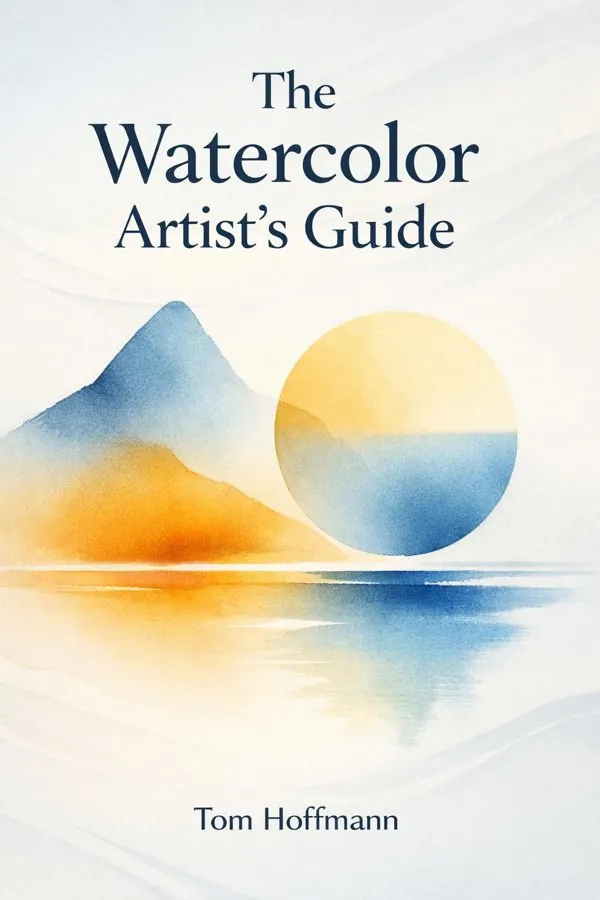
The Watercolor Artist's Guide: Summary & Key Insights
by Tom Hoffmann
 10 min12 chaptersAudio available
What Is The Watercolor Artist's Guide About?
The Watercolor Artist's Guide by Tom Hoffmann is a design book spanning 12 pages. This comprehensive guide by Tom Hoffmann offers practical instruction and artistic insight into watercolor painting. It covers essential techniques such as color mixing, composition, and brushwork, while emphasizing the importance of observation and creative expression. The book is designed for both beginners and experienced artists seeking to refine their watercolor skills.
This FizzRead summary covers all 12 key chapters of The Watercolor Artist's Guide in approximately 10 minutes, distilling the most important ideas, arguments, and takeaways from Tom Hoffmann's work. Also available as an audio summary and Key Quotes Podcast.
The Watercolor Artist's Guide
This comprehensive guide by Tom Hoffmann offers practical instruction and artistic insight into watercolor painting. It covers essential techniques such as color mixing, composition, and brushwork, while emphasizing the importance of observation and creative expression. The book is designed for both beginners and experienced artists seeking to refine their watercolor skills.
Who Should Read The Watercolor Artist's Guide?
This book is perfect for anyone interested in design and looking to gain actionable insights in a short read. Whether you're a student, professional, or lifelong learner, the key ideas from The Watercolor Artist's Guide by Tom Hoffmann will help you think differently.
- ✓Readers who enjoy design and want practical takeaways
- ✓Professionals looking to apply new ideas to their work and life
- ✓Anyone who wants the core insights of The Watercolor Artist's Guide in just 10 minutes
Want the full summary?
Get instant access to this book summary and 100K+ more with Fizz Moment.
Get Free SummaryAvailable on App Store • Free to download
Key Chapters
Every successful watercolor painting begins long before the brush meets the paper. It begins in the act of observation. I urge my students to slow down—to look not merely at objects but at relationships, edges, light, and tone. Observation is not copying; it is interpretation. In watercolor, you cannot describe everything, so you must learn to choose. The process becomes one of editing as much as expressing.
Observation teaches you to value simplicity. Watercolor, by its very nature, rewards restraint. Heavy-handedness muddies color; overworking kills spontaneity. Instead, I advocate for leaving space in your work—for suggestion rather than explanation. The blank paper becomes as essential to the painting as the pigment itself. When you let the viewer’s imagination complete the story, your painting breathes.
This philosophy stems from the realization that in watercolor, accidents are allies. The edge of a drying wash may bloom unpredictably, or a pigment may settle into texture in ways you didn’t plan. When you learn to observe these occurrences not as failures but as expressions of natural order, you align yourself with the medium’s truth. Watercolor demands a partnership with chance, and when you embrace that partnership, your interpretation of the world becomes richer, more alive, and infinitely more personal.
Paper, brushes, and pigments are the watercolorist’s language—the physical means through which perception becomes image. The paper’s surface determines texture and absorption; a cold-pressed sheet may yield a balance between control and flow, while rough paper allows light to refract through pigment granulation, giving terrain to your tones. Understanding how each type of paper drinks water or reveals pigments is fundamental to achieving consistency and deliberation.
Brushes act as extensions of gesture. A sable round holds a generous load while maintaining precision; a flat brush lays even washes and defines planes; riggers and mops provide variety in mark-making. Each brush, like a sentence of different cadence, speaks uniquely. Mastery comes from acquainting yourself with their grammar—to know when to whisper in soft wet blends or declare with dry, assertive strokes.
Pigments, too, each carry character. Transparent pigments glow because light passes through and reflects off the paper beneath. Opaque pigments offer solidity and immediacy. Learning their differences lets you build tonal harmony instead of accidental discord. I encourage painting charts, testing mixes, and observing how pigments behave when diluted or layered. True expression begins with respect for these subtle material interactions. The better you know your tools, the more fluently you can translate emotion into image.
+ 10 more chapters — available in the FizzRead app
All Chapters in The Watercolor Artist's Guide
About the Author
Tom Hoffmann is an American watercolor artist known for his expressive landscapes and teaching expertise. He has exhibited widely and taught watercolor painting for many years, sharing his deep understanding of the medium through workshops and publications.
Get This Summary in Your Preferred Format
Read or listen to the The Watercolor Artist's Guide summary by Tom Hoffmann anytime, anywhere. FizzRead offers multiple formats so you can learn on your terms — all free.
Available formats: App · Audio · PDF · EPUB — All included free with FizzRead
Download The Watercolor Artist's Guide PDF and EPUB Summary
Key Quotes from The Watercolor Artist's Guide
“Every successful watercolor painting begins long before the brush meets the paper.”
“Paper, brushes, and pigments are the watercolorist’s language—the physical means through which perception becomes image.”
Frequently Asked Questions about The Watercolor Artist's Guide
The Watercolor Artist's Guide by Tom Hoffmann is a design book that explores key ideas across 12 chapters. This comprehensive guide by Tom Hoffmann offers practical instruction and artistic insight into watercolor painting. It covers essential techniques such as color mixing, composition, and brushwork, while emphasizing the importance of observation and creative expression. The book is designed for both beginners and experienced artists seeking to refine their watercolor skills.
You Might Also Like
The Design of Everyday Things
Don Norman
10 min
The Better Angels of Our Nature
Steven Pinker
10 min
A Designer's Art
Paul Rand
10 min
Architects' Sketchbooks
Various Editors
10 min
Architectural Graphic Standards
The American Institute of Architects
10 min
Design Is Storytelling
Ellen Lupton
10 minBrowse by Category
Ready to read The Watercolor Artist's Guide?
Get the full summary and 100K+ more books with Fizz Moment.