
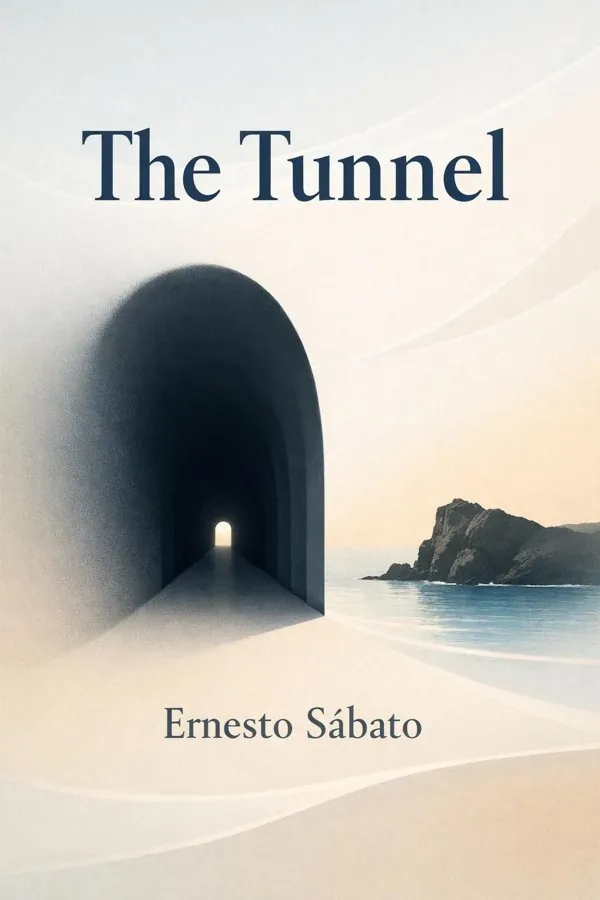
The Tunnel: Summary & Key Insights
 10 min4 chapters
What Is The Tunnel About?
The Tunnel by Ernesto Sábato is a classics book spanning 4 pages. An unforgettable psychological novel of obsessive love, The Tunnel was championed by Albert Camus, Thomas Mann, and Graham Greene upon its publication in 1948. It tells the story of Juan Pablo Castel, a painter who confesses from prison the reasons that led him to murder María Iribarne, the woman he loved. Through his confession, Sábato explores themes of isolation, obsession, and the existential anguish of modern life.
This FizzRead summary covers all 4 key chapters of The Tunnel in approximately 10 minutes, distilling the most important ideas, arguments, and takeaways from Ernesto Sábato's work.
The Tunnel
An unforgettable psychological novel of obsessive love, The Tunnel was championed by Albert Camus, Thomas Mann, and Graham Greene upon its publication in 1948. It tells the story of Juan Pablo Castel, a painter who confesses from prison the reasons that led him to murder María Iribarne, the woman he loved. Through his confession, Sábato explores themes of isolation, obsession, and the existential anguish of modern life.
Who Should Read The Tunnel?
This book is perfect for anyone interested in classics and looking to gain actionable insights in a short read. Whether you're a student, professional, or lifelong learner, the key ideas from The Tunnel by Ernesto Sábato will help you think differently.
- ✓Readers who enjoy classics and want practical takeaways
- ✓Professionals looking to apply new ideas to their work and life
- ✓Anyone who wants the core insights of The Tunnel in just 10 minutes
Want the full summary?
Get instant access to this book summary and 100K+ more with Fizz Moment.
Get Free SummaryAvailable on App Store • Free to download
Key Chapters
It began with a single glance at an art exhibition—an ordinary moment charged with extraordinary meaning. My painting, *Maternity*, hung among dozens of others, overlooked by critics and visitors alike. Yet María Iribarne lingered before it, not merely admiring the whole canvas, but focusing her attention on a small, nearly hidden detail: a woman gazing with melancholy out a small window—a gesture most had ignored entirely. She understood what others could not perceive; she saw the silent anguish behind the painted scene. In that instant, I believed that between us existed a unique bond—a profound recognition of truth.
This moment was not just the beginning of love; it was the genesis of obsession. To be understood so intimately felt like salvation. I imagined that María was the only soul capable of penetrating the labyrinth of my loneliness. When she left without speaking to me, the absence became intolerable, and my thoughts coiled around her image like vines seeking sunlight. I pursued her not as a man chases affection but as one who seeks redemption through another’s gaze.
Sábato constructs this encounter to reveal how art can act as a mirror of existential longing. Through my fixation, he exposes a crucial paradox: the artist creates a world to communicate, yet often ends up more isolated, more misunderstood. María, by seeing the hidden window, validated my belief that absolute understanding was possible—but it was precisely this ideal that doomed us both.
In those early days, my pursuit was still tinged with hope. I envisioned conversations about truth and solitude, imagined that through her insight we could coexist in purity. Yet every moment of contact only deepened my dependence on that illusion. I learned that to be seen profoundly by another person is to risk annihilation, for their gaze becomes the only measure of self. Thus the painting’s hidden window became the symbol of our fated connection—a glimpse that would never open fully into light.
When María and I finally began to speak, the reality did not match the clarity I had imagined. She was affectionate yet elusive, faithful yet mysterious. Every word that passed between us multiplied my confusion. I wanted to possess the purity of her understanding entirely; I wanted her to inhabit only the world that my painting had opened. But she belonged to others—the husband she barely loved, friends who claimed parts of her story I could not penetrate. Each encounter revealed the impossibility of absolute union.
I scrutinized everything—her gestures, her silences, her absences. In each tiny ambiguity, I perceived betrayal. The loneliness that had driven me to create art now consumed my relationship. My thoughts spiraled inward; I analyzed and re-interpreted her intentions until meaning dissolved into paranoia. I felt trapped in the same tunnel that my painting had foreshadowed—an infinite passage toward truth that never reached the surface.
Sábato’s narrative merges psychological realism with existential philosophy. My obsession embodies the modern condition: a desire for total authenticity in human contact that necessarily fails because truth is fragmented. María, in her complexity, becomes the embodiment of all that escapes comprehension. My jealousy is not merely emotional but metaphysical—it arises from the fear that reality itself cannot be known in its entirety.
In this stage, my love became indistinguishable from hatred. I clung to María even as my suspicion poisoned every moment together. I demanded from her what no human could give: absolute transparency. As I interrogated her past and her feelings, she withdrew into silence, and I mistook silence for deceit. Isolated even within intimacy, I realized that the tunnel of my consciousness had no exit. The more I attempted to bridge the gap, the deeper into solitude I sank.
+ 2 more chapters — available in the FizzRead app
All Chapters in The Tunnel
About the Author
Ernesto Sábato (1911–2011) was an Argentine novelist, essayist, and physicist. He left science to devote himself to literature, becoming one of the most important figures in Argentine letters. His major works include The Tunnel, On Heroes and Tombs, and The Angel of Darkness. His writing is known for its exploration of human existence, moral conflict, and the search for meaning in a fragmented world.
Get This Summary in Your Preferred Format
Read or listen to the The Tunnel summary by Ernesto Sábato anytime, anywhere. FizzRead offers multiple formats so you can learn on your terms — all free.
Available formats: App · Audio · PDF · EPUB — All included free with FizzRead
Download The Tunnel PDF and EPUB Summary
Key Quotes from The Tunnel
“It began with a single glance at an art exhibition—an ordinary moment charged with extraordinary meaning.”
“When María and I finally began to speak, the reality did not match the clarity I had imagined.”
Frequently Asked Questions about The Tunnel
The Tunnel by Ernesto Sábato is a classics book that explores key ideas across 4 chapters. An unforgettable psychological novel of obsessive love, The Tunnel was championed by Albert Camus, Thomas Mann, and Graham Greene upon its publication in 1948. It tells the story of Juan Pablo Castel, a painter who confesses from prison the reasons that led him to murder María Iribarne, the woman he loved. Through his confession, Sábato explores themes of isolation, obsession, and the existential anguish of modern life.
You Might Also Like


Browse by Category
Ready to read The Tunnel?
Get the full summary and 100K+ more books with Fizz Moment.