
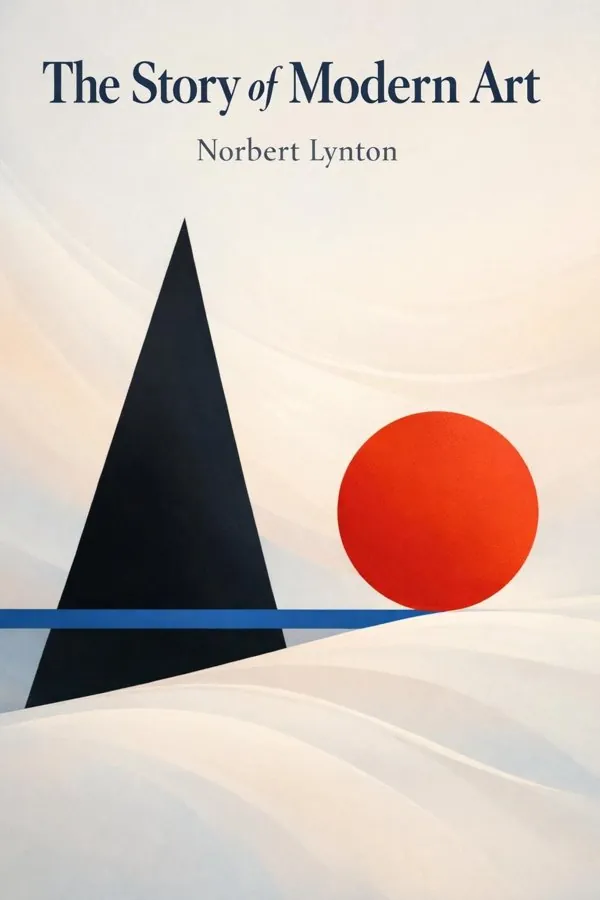
The Story of Modern Art: Summary & Key Insights
 10 min10 chaptersAudio available
What Is The Story of Modern Art About?
The Story of Modern Art by Norbert Lynton is a design book spanning 10 pages. This book offers a comprehensive overview of modern art from the late nineteenth century to the late twentieth century. Norbert Lynton traces the evolution of artistic movements, styles, and ideas, exploring how artists responded to social, political, and technological changes. The work provides critical insights into major figures such as Picasso, Matisse, Kandinsky, and Pollock, and examines the broader cultural context that shaped modern art’s development.
This FizzRead summary covers all 10 key chapters of The Story of Modern Art in approximately 10 minutes, distilling the most important ideas, arguments, and takeaways from Norbert Lynton's work. Also available as an audio summary and Key Quotes Podcast.
The Story of Modern Art
This book offers a comprehensive overview of modern art from the late nineteenth century to the late twentieth century. Norbert Lynton traces the evolution of artistic movements, styles, and ideas, exploring how artists responded to social, political, and technological changes. The work provides critical insights into major figures such as Picasso, Matisse, Kandinsky, and Pollock, and examines the broader cultural context that shaped modern art’s development.
Who Should Read The Story of Modern Art?
This book is perfect for anyone interested in design and looking to gain actionable insights in a short read. Whether you're a student, professional, or lifelong learner, the key ideas from The Story of Modern Art by Norbert Lynton will help you think differently.
- ✓Readers who enjoy design and want practical takeaways
- ✓Professionals looking to apply new ideas to their work and life
- ✓Anyone who wants the core insights of The Story of Modern Art in just 10 minutes
Want the full summary?
Get instant access to this book summary and 100K+ more with Fizz Moment.
Get Free SummaryAvailable on App Store • Free to download
Key Chapters
The late nineteenth century was a time when art began to turn inward and outward simultaneously. In France, academies still dictated what a painting should look like—its subjects noble, its execution smooth, its meaning moral. Yet a group of painters, later called the Impressionists, began to reject these conventions. In the quicksilver brushwork of Monet and Renoir, and in the sunlight that danced across Degas’s ballerinas or Pissarro’s rural scenes, we find a new mode of seeing. They were painting not history, but perception itself.
This was not merely rebellion for its own sake; it was a quest to render experience as it truly feels. When Monet painted the Rouen Cathedral at different times of day, he was painting the impermanence of vision, the modern condition of a world transformed by time and atmosphere. In Post-Impressionism, painters such as Van Gogh, Gauguin, and Cézanne pushed these experiments further inward. Van Gogh transformed color into emotion, paint into confession. Gauguin sought spiritual depth in a materialistic age through his Tahitian scenes. Cézanne, more quietly yet radically, restructured the act of seeing itself, turning nature into planes of color and geometry—the very foundation of modernism to come.
From these artists emerged a truth that would guide the twentieth century: art need not imitate the visible world; it could reveal the invisible structure of thought and feeling.
As the twentieth century opened, the spirit of innovation accelerated. The world was changing—industrialization, photography, travel, and psychoanalysis disrupted all certainties. Artists like Matisse and Picasso felt compelled to invent new visual languages capable of matching this complexity. In Fauvism, Matisse embraced pure color as emotional force, liberating it from descriptive duty. His vibrant compositions declared that a painting’s truth resided in its harmony and impact, not its faithfulness to nature.
With Picasso and Braque, Cubism shattered the last remnants of Renaissance perspective. Objects were splintered and rearranged to depict how we truly perceive—not from a single, immobile eye, but through shifting, simultaneous views. In my reading of these developments, Cubism represents a profound intellectual breakthrough: the realization that representation itself could be a construction, an idea.
Kandinsky, moving further into the realm of spirit, abandoned representation altogether. His abstract forms sought to mirror an inner necessity—painting as music, rhythm, and emotion. Modernism, in essence, was born at this moment when art ceased to describe and began to propose. The artist became a seer rather than a servant, navigating the boundaries between vision and thought.
+ 8 more chapters — available in the FizzRead app
All Chapters in The Story of Modern Art
About the Author
Norbert Lynton (1927–2007) was a British art historian and critic known for his expertise in modern and contemporary art. He served as Professor of the History of Art at the University of Sussex and wrote extensively on twentieth-century art and architecture.
Get This Summary in Your Preferred Format
Read or listen to the The Story of Modern Art summary by Norbert Lynton anytime, anywhere. FizzRead offers multiple formats so you can learn on your terms — all free.
Available formats: App · Audio · PDF · EPUB — All included free with FizzRead
Download The Story of Modern Art PDF and EPUB Summary
Key Quotes from The Story of Modern Art
“The late nineteenth century was a time when art began to turn inward and outward simultaneously.”
“As the twentieth century opened, the spirit of innovation accelerated.”
Frequently Asked Questions about The Story of Modern Art
The Story of Modern Art by Norbert Lynton is a design book that explores key ideas across 10 chapters. This book offers a comprehensive overview of modern art from the late nineteenth century to the late twentieth century. Norbert Lynton traces the evolution of artistic movements, styles, and ideas, exploring how artists responded to social, political, and technological changes. The work provides critical insights into major figures such as Picasso, Matisse, Kandinsky, and Pollock, and examines the broader cultural context that shaped modern art’s development.
You Might Also Like
The Design of Everyday Things
Don Norman
10 min
The Better Angels of Our Nature
Steven Pinker
10 min
A Designer's Art
Paul Rand
10 min
Architects' Sketchbooks
Various Editors
10 min
Architectural Graphic Standards
The American Institute of Architects
10 min
Design Is Storytelling
Ellen Lupton
10 minBrowse by Category
Ready to read The Story of Modern Art?
Get the full summary and 100K+ more books with Fizz Moment.