
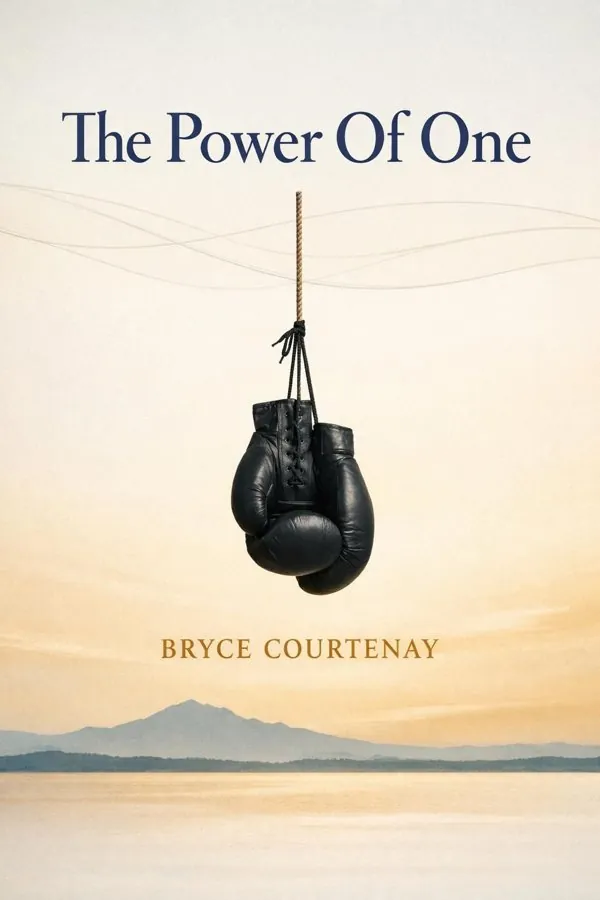
The Power Of One: Summary & Key Insights
 10 min8 chaptersAudio available
Key Takeaways from The Power Of One
One of the novel’s sharpest truths is that adversity does not automatically make a person strong, but it can awaken a refusal to be broken.
A life can change when someone lends you a larger vision of yourself than you currently possess.
In a divided society, one of the greatest acts of resistance is developing a mind that cannot be colonized by fear.
No one becomes themselves entirely alone.
Systems of injustice survive by teaching people that separation is natural.
What Is The Power Of One About?
The Power Of One by Bryce Courtenay is a classics book spanning 5 pages. Set against the brutal inequalities of South Africa in the 1930s and 1940s, The Power Of One is both an unforgettable coming-of-age story and a meditation on what it means to preserve your humanity in a broken world. Bryce Courtenay follows Peekay, a small, vulnerable English boy who grows up surrounded by violence, humiliation, and racial division, yet gradually learns to shape himself through discipline, intelligence, friendship, and inner conviction. His dream of becoming a welterweight boxing champion gives the novel its momentum, but the book’s deeper subject is moral independence: how one person learns not to be defined by the hatred around him. What makes the novel endure is its emotional range. It is at once tender, painful, idealistic, and unsparing in its portrait of injustice. Courtenay, born in South Africa and later one of Australia’s best-known novelists, writes with intimate knowledge of the country’s cultural tensions and with a storyteller’s gift for making large political realities feel personal. The result is a classic novel about resilience, mentorship, courage, and the life-changing force of self-belief.
This FizzRead summary covers all 8 key chapters of The Power Of One in approximately 10 minutes, distilling the most important ideas, arguments, and takeaways from Bryce Courtenay's work. Also available as an audio summary and Key Quotes Podcast.
The Power Of One
Set against the brutal inequalities of South Africa in the 1930s and 1940s, The Power Of One is both an unforgettable coming-of-age story and a meditation on what it means to preserve your humanity in a broken world. Bryce Courtenay follows Peekay, a small, vulnerable English boy who grows up surrounded by violence, humiliation, and racial division, yet gradually learns to shape himself through discipline, intelligence, friendship, and inner conviction. His dream of becoming a welterweight boxing champion gives the novel its momentum, but the book’s deeper subject is moral independence: how one person learns not to be defined by the hatred around him. What makes the novel endure is its emotional range. It is at once tender, painful, idealistic, and unsparing in its portrait of injustice. Courtenay, born in South Africa and later one of Australia’s best-known novelists, writes with intimate knowledge of the country’s cultural tensions and with a storyteller’s gift for making large political realities feel personal. The result is a classic novel about resilience, mentorship, courage, and the life-changing force of self-belief.
Who Should Read The Power Of One?
This book is perfect for anyone interested in classics and looking to gain actionable insights in a short read. Whether you're a student, professional, or lifelong learner, the key ideas from The Power Of One by Bryce Courtenay will help you think differently.
- ✓Readers who enjoy classics and want practical takeaways
- ✓Professionals looking to apply new ideas to their work and life
- ✓Anyone who wants the core insights of The Power Of One in just 10 minutes
Want the full summary?
Get instant access to this book summary and 100K+ more with Fizz Moment.
Get Free SummaryAvailable on App Store • Free to download
Key Chapters
One of the novel’s sharpest truths is that adversity does not automatically make a person strong, but it can awaken a refusal to be broken. Peekay’s childhood begins under crushing conditions. As a young English-speaking boy at a South African boarding school dominated by Afrikaner nationalism, he becomes an easy target. He is mocked, beaten, and isolated, treated as less than human by boys who absorb hatred from the adult world around them. These scenes are difficult because they show how cruelty becomes normal when institutions fail to protect the vulnerable. Yet they are essential, because they plant the first seed of Peekay’s identity: he realizes that survival begins inwardly, with the decision not to accept another person’s version of who you are.
Courtenay does not romanticize suffering. Peekay is terrified, lonely, and often powerless. But the experience teaches him to observe people closely, to think strategically, and to build an inner life that cannot be easily invaded. Instead of allowing humiliation to define him permanently, he slowly turns pain into alertness and alertness into purpose. This pattern appears throughout life beyond the novel. A child who is underestimated may become highly perceptive. A person shut out of one world may build the skills to create another. The key is not pretending hardship is good, but recognizing that our response to hardship can become a source of direction.
In practical terms, this idea applies whenever you are judged unfairly, dismissed, or placed at a disadvantage. Rather than spending all your energy proving your worth to hostile people, you can invest in building competence, confidence, and clarity. Peekay’s early suffering becomes the beginning of self-possession. Actionable takeaway: when life exposes your vulnerability, use the experience to identify one inner strength you can deliberately develop instead of letting the wound define you.
A life can change when someone lends you a larger vision of yourself than you currently possess. That is what happens when Peekay meets Hoppie Groenewald, the famous railway guard whose confidence, physical command, and calm authority mesmerize the boy. Hoppie teaches Peekay one of the novel’s most enduring lessons: first with the head, then with the heart. In other words, conviction precedes performance. Before Peekay can become anything in the world, he must first believe that he can. Boxing enters his imagination not simply as a sport, but as a disciplined path toward self-mastery.
What makes this lesson powerful is that Hoppie does not offer empty encouragement. He embodies a practical kind of faith. He understands that winning starts with posture, preparation, and the disciplined control of fear. For Peekay, boxing becomes more than fantasy; it becomes structure. It gives his suffering a future tense. He is no longer just a victim of circumstance. He is an apprentice to an idea of strength. This matters because many people wait to feel ready before they begin. Courtenay suggests the reverse: readiness is often built by acting in the direction of a chosen identity.
In everyday life, this principle shows up whenever you pursue a difficult goal: starting a business, returning to school, changing careers, training for a marathon, or speaking up in a room where you feel outmatched. You may not yet have the evidence to justify confidence. But a disciplined belief, reinforced through daily practice, can become evidence over time. Hoppie gives Peekay permission to imagine greatness before he has earned it. That permission is transformative.
Actionable takeaway: choose one goal that intimidates you and begin acting as a serious student of it today, even if your confidence still lags behind your ambition.
In a divided society, one of the greatest acts of resistance is developing a mind that cannot be colonized by fear. Peekay’s friendship with Doc, the elderly German musician and intellectual imprisoned during the war, introduces him to a wider understanding of power. Doc teaches him about music, language, beauty, observation, and the discipline of thought. Through this relationship, Peekay discovers that strength is not only physical. It is also intellectual, emotional, and spiritual. Boxing may train his body, but Doc helps him become a whole person.
Their bond matters because it broadens the novel beyond sports ambition. Doc gives Peekay a refuge from brutality without encouraging escape from reality. Instead, he shows him how to remain fully aware of suffering while still cultivating wonder. He teaches him to name birds, appreciate piano music, read deeply, and think independently. In doing so, he protects Peekay from becoming narrow, reactive, or defined solely by conflict. This is one of the book’s central insights: people who build an inner world of learning and reflection are harder to manipulate.
The lesson is timeless. In any era of polarization, noise, or social pressure, education is more than achievement; it is moral equipment. Reading widely, learning across disciplines, and spending time with thoughtful mentors can help you resist simplistic thinking. A strong inner life also increases resilience. When external circumstances become harsh, your ability to think, interpret, and create meaning becomes a form of survival.
For modern readers, Doc’s influence is a reminder not to reduce growth to visible success. Career milestones and physical goals matter, but so do the quieter habits that deepen judgment and character. Actionable takeaway: create one weekly ritual that develops your inner life, such as reading literature, learning music, journaling, or seeking conversation with someone wiser than you.
No one becomes themselves entirely alone. The Power Of One is filled with mentors, and that is no accident. Courtenay shows that identity is often shaped through borrowed wisdom before it becomes personal conviction. Hoppie awakens ambition, Doc expands consciousness, and later figures help sharpen Peekay’s discipline and courage. These relationships do not make his path easy, but they give him language, models, and standards that he could never have invented in isolation. In a world fractured by prejudice and violence, mentorship becomes a counterforce to chaos.
What is striking is that each mentor offers something different. None is a complete guide. That reflects real life. One person may teach confidence, another moral seriousness, another craft, another emotional steadiness. Peekay’s growth comes from integrating these influences rather than copying any one person entirely. This matters because many people either over-romanticize mentors or avoid seeking them out altogether. Courtenay presents a more useful picture: mentors are not saviors. They are catalysts. They help us discover capacities that remain dormant without challenge and encouragement.
This idea has practical force in adulthood too. A manager can mentor not only by giving instructions but by noticing potential. A teacher can change a student’s self-concept with a single vote of confidence. A coach can provide structure that turns vague talent into repeatable performance. Even peers can serve mentoring roles by modeling seriousness and integrity.
The other side of the lesson is responsibility. Once we have been shaped by guidance, we inherit the chance to do the same for others. Peekay becomes stronger partly because others invest in him when he is still uncertain and small. Actionable takeaway: identify one person who could help you grow and one person you could encourage this month, then act on both relationships deliberately.
Systems of injustice survive by teaching people that separation is natural. Peekay’s relationship with Geel Piet and his growing awareness of Black South Africans expose that lie. Through these connections, he sees more clearly that apartheid-era thinking is not merely unfair policy but a daily assault on dignity. Geel Piet, in particular, becomes far more than a helper or side character. He is a source of affection, loyalty, practical wisdom, and emotional grounding. Through him, Peekay experiences a level of human closeness that contradicts the racial hierarchies surrounding them.
Courtenay uses this relationship to show how prejudice depends on distance. It is easy to accept degrading social narratives about people you do not know. It becomes much harder when those people are your teachers, friends, protectors, and companions in struggle. Peekay’s moral education deepens because he does not remain abstractly opposed to injustice; he encounters its human cost through real relationships. This makes his compassion less sentimental and more demanding. He learns that decency is not a feeling. It requires loyalty, risk, and a willingness to see clearly when the wider culture prefers blindness.
This idea remains relevant wherever social divisions are normalized, whether by race, class, religion, nationality, or ideology. Personal relationships do not solve structural injustice on their own, but they can puncture inherited prejudice and make moral evasion harder. In workplaces, schools, and communities, meaningful contact across lines of difference can challenge stereotypes and build courage for fairer action.
Actionable takeaway: move beyond passive agreement with equality by building one genuine relationship or concrete act of support across a social divide you have previously kept at a distance.
Dreams are cheap until they are organized by habit. Peekay’s pursuit of boxing greatness is compelling not because he merely wants to win, but because he learns to submit his ambition to discipline. Training teaches him timing, endurance, humility, and emotional control. He comes to understand that strength is not loud aggression. It is the ability to stay composed under pressure, absorb setbacks, and keep refining technique. This is where the novel’s title gains additional meaning: the power of one is not just individuality but concentrated, disciplined effort.
Courtenay avoids making boxing a simple metaphor for domination. Instead, the sport becomes a school of character. Peekay must learn patience as well as daring. He must respect the craft, not just the glory. He must measure progress over time rather than through fantasy. These lessons translate easily beyond athletics. Most meaningful achievements depend less on sporadic inspiration than on repetitive, often invisible work. Writers draft. Entrepreneurs iterate. Students revise. Leaders prepare when no one is watching.
The novel also highlights how discipline stabilizes identity. For someone who has known fear and instability, training creates rhythm. It allows Peekay to convert anxiety into action. That is a useful model for anyone facing uncertainty. Structure can be healing. A routine does not eliminate hardship, but it gives hardship boundaries. It keeps the future from dissolving into chaos.
For modern readers overwhelmed by large goals, the lesson is practical: stop worshipping the end result and start respecting the daily process that could produce it. Confidence grows when competence has evidence behind it. Actionable takeaway: take one long-term ambition and reduce it to a daily practice you can maintain consistently for the next thirty days.
Much of Peekay’s journey is a struggle against labels imposed by family history, schoolyard cruelty, nationalism, and race politics. Others try repeatedly to tell him what he is: weak, foreign, lesser, naive, or out of place. The novel’s deeper argument is that identity becomes powerful when it is consciously constructed rather than passively inherited. Peekay does not deny where he comes from, but he refuses to let hostile categories become destiny. He chooses values, mentors, practices, and commitments that gradually shape a self larger than any stereotype.
This is especially important in the South African setting, where identity categories are politically weaponized. People are sorted, judged, and limited according to rigid social scripts. Against this backdrop, Peekay’s self-formation becomes quietly radical. He learns to belong to himself before he belongs anywhere else. That does not mean he becomes detached or selfish. On the contrary, his strongest self emerges through connection, responsibility, and moral awareness. But the source of his integrity is internal. He acts from conviction rather than from the need to fit into a tribal narrative.
In contemporary life, many people still feel trapped by assigned identities: family expectations, professional roles, cultural assumptions, online branding, or early failures that seem to define them forever. The novel offers a useful corrective. Identity is not infinitely flexible, but it is far less fixed than fear suggests. By repeatedly choosing what you practice, what you believe, and what you serve, you shape the person you become.
Actionable takeaway: write down three labels you have accepted from others and replace each with one chosen principle or habit that better reflects who you want to become.
A powerful boxer can win a match, but a courageous person can refuse the logic of hatred. As The Power Of One develops, it becomes clear that the story is not ultimately about becoming champion in the narrow athletic sense. It is about learning what kind of strength deserves admiration. Peekay’s boxing journey matters, but the novel asks a larger question: what is the use of strength if it does not deepen justice, dignity, and compassion? The answer emerges through his encounters with cruelty, corruption, and loss. Physical competence gives him confidence, yet moral courage gives that confidence direction.
This distinction is crucial. Many societies celebrate toughness while neglecting conscience. Courtenay insists that real power is measured by what you protect, not only by what you can defeat. Peekay’s growth is meaningful because he does not become hardened into indifference. He learns to remain sensitive without becoming fragile, and forceful without becoming brutal. That balance is rare. It requires not only confidence but ethical clarity.
The lesson extends far beyond the novel. In professional life, moral courage may mean refusing to participate in dishonest practices. In friendships, it may mean standing by someone when their status has fallen. In public life, it may mean speaking against prejudice when silence would be easier. Physical or social power can impress, but moral courage earns trust and leaves a cleaner legacy.
By the end, the title points toward a final truth: one person’s integrity can matter enormously, especially in a culture that rewards conformity. Actionable takeaway: define one non-negotiable value you will protect this week, and commit to one concrete action that proves you mean it when pressure arrives.
All Chapters in The Power Of One
About the Author
Bryce Courtenay (1933–2012) was a South African-born Australian novelist who became one of Australia’s most popular and commercially successful writers. Before turning to fiction, he worked in advertising, an experience that sharpened his instinct for storytelling and audience connection. His debut novel, The Power Of One, brought him international recognition and remains his signature work. Courtenay’s fiction is known for its emotional intensity, large historical backdrops, and recurring focus on outsiders, endurance, justice, and self-invention. Born in South Africa, he drew on the country’s social tensions and landscapes in some of his most memorable writing. Over the course of his career, he published numerous bestselling novels, including Jessica and Tandia, and built a reputation for accessible, sweeping narratives that combined drama, hope, and moral conviction.
Get This Summary in Your Preferred Format
Read or listen to the The Power Of One summary by Bryce Courtenay anytime, anywhere. FizzRead offers multiple formats so you can learn on your terms — all free.
Available formats: App · Audio · PDF · EPUB — All included free with FizzRead
Download The Power Of One PDF and EPUB Summary
Key Quotes from The Power Of One
“One of the novel’s sharpest truths is that adversity does not automatically make a person strong, but it can awaken a refusal to be broken.”
“A life can change when someone lends you a larger vision of yourself than you currently possess.”
“In a divided society, one of the greatest acts of resistance is developing a mind that cannot be colonized by fear.”
“No one becomes themselves entirely alone.”
“Systems of injustice survive by teaching people that separation is natural.”
Frequently Asked Questions about The Power Of One
The Power Of One by Bryce Courtenay is a classics book that explores key ideas across 8 chapters. Set against the brutal inequalities of South Africa in the 1930s and 1940s, The Power Of One is both an unforgettable coming-of-age story and a meditation on what it means to preserve your humanity in a broken world. Bryce Courtenay follows Peekay, a small, vulnerable English boy who grows up surrounded by violence, humiliation, and racial division, yet gradually learns to shape himself through discipline, intelligence, friendship, and inner conviction. His dream of becoming a welterweight boxing champion gives the novel its momentum, but the book’s deeper subject is moral independence: how one person learns not to be defined by the hatred around him. What makes the novel endure is its emotional range. It is at once tender, painful, idealistic, and unsparing in its portrait of injustice. Courtenay, born in South Africa and later one of Australia’s best-known novelists, writes with intimate knowledge of the country’s cultural tensions and with a storyteller’s gift for making large political realities feel personal. The result is a classic novel about resilience, mentorship, courage, and the life-changing force of self-belief.
You Might Also Like



Browse by Category
Ready to read The Power Of One?
Get the full summary and 100K+ more books with Fizz Moment.