
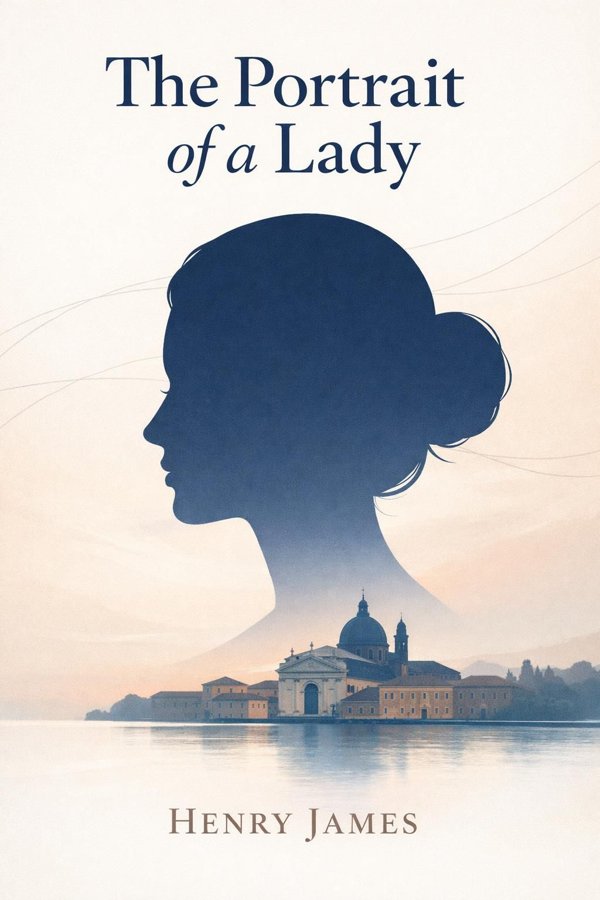
The Portrait of a Lady: Summary & Key Insights
by Henry James
 10 min4 chaptersAudio available
What Is The Portrait of a Lady About?
The Portrait of a Lady by Henry James is a classics book spanning 4 pages. The Portrait of a Lady es una novela de Henry James publicada por primera vez como serie en The Atlantic Monthly y Macmillan's Magazine entre 1880 y 1881, y luego como libro en tres volúmenes por Macmillan & Co. en Londres en noviembre de 1881. La obra narra la historia de Isabel Archer, una joven estadounidense que viaja a Europa y se enfrenta a las complejidades de la libertad, la identidad y las convenciones sociales. Es considerada una de las obras maestras de James y un hito en la novela psicológica moderna.
This FizzRead summary covers all 4 key chapters of The Portrait of a Lady in approximately 10 minutes, distilling the most important ideas, arguments, and takeaways from Henry James's work. Also available as an audio summary and Key Quotes Podcast.
The Portrait of a Lady
The Portrait of a Lady es una novela de Henry James publicada por primera vez como serie en The Atlantic Monthly y Macmillan's Magazine entre 1880 y 1881, y luego como libro en tres volúmenes por Macmillan & Co. en Londres en noviembre de 1881. La obra narra la historia de Isabel Archer, una joven estadounidense que viaja a Europa y se enfrenta a las complejidades de la libertad, la identidad y las convenciones sociales. Es considerada una de las obras maestras de James y un hito en la novela psicológica moderna.
Who Should Read The Portrait of a Lady?
This book is perfect for anyone interested in classics and looking to gain actionable insights in a short read. Whether you're a student, professional, or lifelong learner, the key ideas from The Portrait of a Lady by Henry James will help you think differently.
- ✓Readers who enjoy classics and want practical takeaways
- ✓Professionals looking to apply new ideas to their work and life
- ✓Anyone who wants the core insights of The Portrait of a Lady in just 10 minutes
Want the full summary?
Get instant access to this book summary and 100K+ more with Fizz Moment.
Get Free SummaryAvailable on App Store • Free to download
Key Chapters
When Isabel Archer first steps into Mrs. Touchett’s orbit, she is brimming with curiosity and conviction. Her father’s recent death has left her materially uncertain but spiritually awake. In England, at Gardencourt—the Touchetts’ gracious home—she encounters a world that seems to exist entirely for observation. The great rooms, filled with portraits and sunlight, become the setting for Isabel’s inward expansion; she begins to sense that life can be lived not merely reactively but imaginatively.
Ralph Touchett, her cousin, becomes the gentle mirror in which she sees herself more clearly. He admires her independence, her refusal to be subdued by convention. He encourages her to remain a spectator for a time, believing that what she most needs is the freedom to experiment, to *see*. Ralph’s father, Mr. Touchett, represents the older generation of pragmatic American expatriates, content to coexist with Europe’s forms rather than question them. Isabel feels affection for him, yet it is Ralph’s philosophical sympathy that truly liberates her. He sees in her what he himself lacks: vitality unclouded by cynicism.
As Isabel begins to navigate drawing rooms and conversations, the contrast between her American spontaneity and Europe’s cultivated restraint fascinates her. She senses the invisible rules of decorum, the social choreography through which intention and appearance must negotiate endlessly. Yet Isabel’s charm lies in her disregard for such choreography. To her, every encounter is an opportunity to test understanding—to measure people not by their station but by their minds.
These early chapters form the seed of her tragedy: her conviction that she can move freely among systems designed to enclose her. She does not yet see that Europe’s beauty is inseparable from its moral intricacies. For now, she believes her clear-sightedness can protect her. I wanted her to stand, luminous and naïve, in a world ready to teach her what even beauty can demand in exchange for admiration.
Lord Warburton appears first as the emblem of everything stable and admirable in England—a nobleman with good sense, good fortune, and genuine affection. Caspar Goodwood, by contrast, embodies American persistence, a raw energy that Isabel recognizes but resists. Each man offers her a different version of safety: Warburton through his title and culture, Goodwood through his devotion and passion. Yet Isabel’s idea of life is not safety, but exploration.
Her refusals become acts of affirmation. She does not reject these suitors out of pride, nor because she undervalues love, but because she dares to protect her untested possibilities. When Warburton speaks of offering her everything, Isabel sees the danger in ‘everything’—it would leave her nothing more to discover. When Goodwood insists on his love’s constancy, she feels his intensity as encroachment rather than delight. To be loved too much, she senses, can be a form of possession.
From my authorial vantage, these refusals are Isabel’s moral victories. They reveal the courage to sustain one’s aloneness in a world that insists on completion through others. Ralph, observing all this, admires her even more deeply. He calls her his ‘experiment,’ but his intentions are innocent—he wishes only that she may live as few women are permitted to live, guided not by fear or dependence but by inner judgment.
When his father dies and Ralph convinces him to bequeath Isabel a large inheritance, he imagines it as an emancipation. Money, in his mind, becomes a moral instrument—a guarantee that Isabel’s independence will survive the pressures of society and marriage. Yet in the logic of human nature, freedom once institutionalized becomes vulnerable to manipulation. Ralph’s generous gesture will give Isabel not only liberty but a fate. Her fortune will make her visible to those whose talent lies in conversion, in turning light into advantage.
Still, in this moment, before Europe claims her fully, Isabel stands radiant on the threshold of choice. She sees life as literature, a plot she can compose. And perhaps that is her most dangerous illusion: to believe that authorship of self is immune to the designs of others.
+ 2 more chapters — available in the FizzRead app
All Chapters in The Portrait of a Lady
About the Author
Henry James (1843–1916) fue un novelista y crítico literario estadounidense, considerado uno de los grandes maestros de la narrativa moderna. Su obra explora las relaciones entre América y Europa, la conciencia individual y la percepción moral. Entre sus novelas más destacadas se encuentran 'The Portrait of a Lady', 'The Wings of the Dove' y 'The Ambassadors'.
Get This Summary in Your Preferred Format
Read or listen to the The Portrait of a Lady summary by Henry James anytime, anywhere. FizzRead offers multiple formats so you can learn on your terms — all free.
Available formats: App · Audio · PDF · EPUB — All included free with FizzRead
Download The Portrait of a Lady PDF and EPUB Summary
Key Quotes from The Portrait of a Lady
“When Isabel Archer first steps into Mrs.”
“Lord Warburton appears first as the emblem of everything stable and admirable in England—a nobleman with good sense, good fortune, and genuine affection.”
Frequently Asked Questions about The Portrait of a Lady
The Portrait of a Lady by Henry James is a classics book that explores key ideas across 4 chapters. The Portrait of a Lady es una novela de Henry James publicada por primera vez como serie en The Atlantic Monthly y Macmillan's Magazine entre 1880 y 1881, y luego como libro en tres volúmenes por Macmillan & Co. en Londres en noviembre de 1881. La obra narra la historia de Isabel Archer, una joven estadounidense que viaja a Europa y se enfrenta a las complejidades de la libertad, la identidad y las convenciones sociales. Es considerada una de las obras maestras de James y un hito en la novela psicológica moderna.
You Might Also Like




Browse by Category
Ready to read The Portrait of a Lady?
Get the full summary and 100K+ more books with Fizz Moment.