
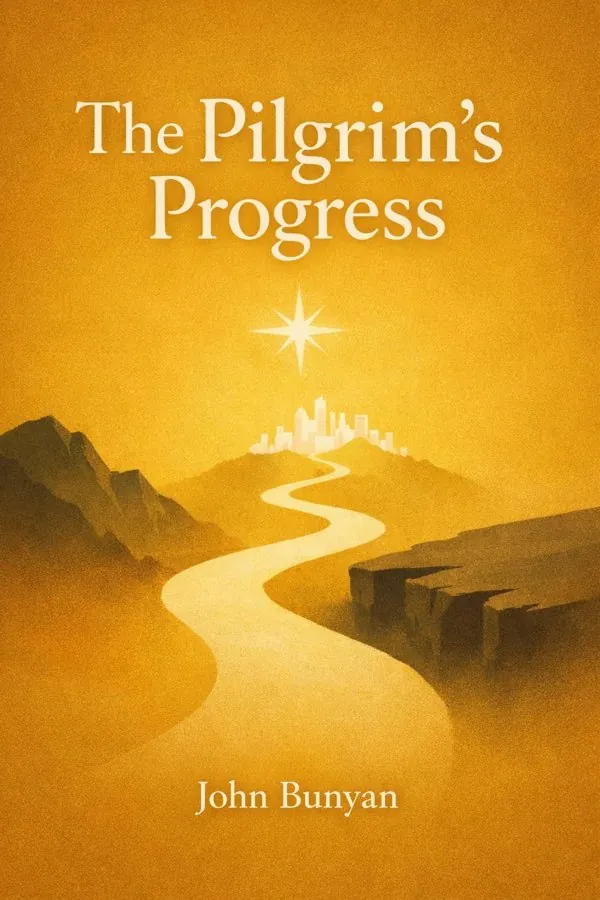
The Pilgrim's Progress: Summary & Key Insights
by John Bunyan
 10 min4 chaptersAudio available
What Is The Pilgrim's Progress About?
The Pilgrim's Progress by John Bunyan is a classics book spanning 4 pages. The Pilgrim's Progress is a Christian allegory written by John Bunyan in the 17th century. It follows the journey of a man named Christian from his hometown, the City of Destruction, to the Celestial City, symbolizing salvation. The narrative explores themes of faith, redemption, and perseverance, depicting the spiritual trials and triumphs of believers.
This FizzRead summary covers all 4 key chapters of The Pilgrim's Progress in approximately 10 minutes, distilling the most important ideas, arguments, and takeaways from John Bunyan's work. Also available as an audio summary and Key Quotes Podcast.
The Pilgrim's Progress
The Pilgrim's Progress is a Christian allegory written by John Bunyan in the 17th century. It follows the journey of a man named Christian from his hometown, the City of Destruction, to the Celestial City, symbolizing salvation. The narrative explores themes of faith, redemption, and perseverance, depicting the spiritual trials and triumphs of believers.
Who Should Read The Pilgrim's Progress?
This book is perfect for anyone interested in classics and looking to gain actionable insights in a short read. Whether you're a student, professional, or lifelong learner, the key ideas from The Pilgrim's Progress by John Bunyan will help you think differently.
- ✓Readers who enjoy classics and want practical takeaways
- ✓Professionals looking to apply new ideas to their work and life
- ✓Anyone who wants the core insights of The Pilgrim's Progress in just 10 minutes
Want the full summary?
Get instant access to this book summary and 100K+ more with Fizz Moment.
Get Free SummaryAvailable on App Store • Free to download
Key Chapters
When Christian first appears before us, he is a man tormented by revelation. Having read in the Book of God that his city lies under condemnation, he feels the full weight of his burden—a tangible symbol of guilt pressing upon his back. Those around him, including his family, believe him mad. The City of Destruction represents not merely a physical place but the soul’s condition of blindness and worldly security. To awaken is to estrange oneself from that comfortable doom.
His first helper, Evangelist, appears as the voice of divine mercy guiding him toward the Wicket Gate, the narrow entrance into salvation. Evangelist’s counsel does not remove Christian’s fear—it sharpens it into purpose. Here begins the timeless motion of the soul that seeks God: a restless flight from sin toward grace.
The road immediately reveals its dangers. Christian falls into the Slough of Despond, that bog of self-disgust and spiritual discouragement that often meets seekers after their first conviction. Many, in such a place, turn back. Christian might have drowned in despair were it not for Help, an emblem of divine assistance, who lifts him and sets him again upon the road. Step by step, Bunyan shows that salvation is not humanly earned; each rescue, each forward step, comes by a mercy greater than the traveler himself.
At last, Christian arrives at the Wicket Gate. There he is welcomed by Goodwill, who swings the gate wide not because Christian’s condition qualifies him but because grace itself opens to all who knock. With this entrance, the pilgrim begins not merely a journey across lands but a transformation of soul. The path beyond the gate leads to the Interpreter’s House—where understanding, through moral visions, will begin to reshape his heart.
In the Interpreter’s House, Christian encounters a series of living lessons—a catechism painted in action. The Interpreter shows him a picture of a man with eyes lifted to heaven, a dusty room swept clean only when sprinkled with water, and a fire burning despite torrents poured upon it. Each scene unveils a truth: that the divine gaze must guide thought, that the law alone cannot cleanse the heart without the water of grace, and that faith fed by Christ endures though adversity attempts to quench it. Theatre of conscience and vision, this house awakens Christian to divine realities not as abstractions but as living facts.
From there, he approaches the place of deliverance—the Cross. It is here that the narrative reaches its first climax. Standing before the emblem of Christ’s sacrifice, Christian feels his burden loosen, slide, and fall, tumbling into a sepulchre never to rise again. In that moment he experiences the miracle of redemption, not through striving but through belief. The new garments he receives symbolize righteousness imputed to him; the sealed scroll affirms his assurance of acceptance. From the viewpoint of the believer’s journey, this is the turning point—the conversion of guilt into gratitude, of striving into surrender.
Yet the road does not end in forgiveness. It continues into testing. Christian must climb Hill Difficulty, sleep in the arbour and lose his roll through spiritual negligence, awaken in terror, and recover what he let slip. These hardships teach him that salvation grants entrance, not exemption, from vigilance. At the summit he finds rest at the Palace Beautiful—the church of fellowship and instruction. There, among the sisters Discretion, Prudence, Piety, and Charity, he sups on doctrine and courage alike. For a time, faith feasts in community before venturing again into the battlefield of the world.
+ 2 more chapters — available in the FizzRead app
All Chapters in The Pilgrim's Progress
About the Author
John Bunyan (1628–1688) was an English writer and Puritan preacher best known for his allegorical works. Imprisoned for his nonconformist religious beliefs, Bunyan wrote The Pilgrim's Progress while incarcerated. His writings have had a lasting influence on English literature and Christian thought.
Get This Summary in Your Preferred Format
Read or listen to the The Pilgrim's Progress summary by John Bunyan anytime, anywhere. FizzRead offers multiple formats so you can learn on your terms — all free.
Available formats: App · Audio · PDF · EPUB — All included free with FizzRead
Download The Pilgrim's Progress PDF and EPUB Summary
Key Quotes from The Pilgrim's Progress
“When Christian first appears before us, he is a man tormented by revelation.”
“In the Interpreter’s House, Christian encounters a series of living lessons—a catechism painted in action.”
Frequently Asked Questions about The Pilgrim's Progress
The Pilgrim's Progress by John Bunyan is a classics book that explores key ideas across 4 chapters. The Pilgrim's Progress is a Christian allegory written by John Bunyan in the 17th century. It follows the journey of a man named Christian from his hometown, the City of Destruction, to the Celestial City, symbolizing salvation. The narrative explores themes of faith, redemption, and perseverance, depicting the spiritual trials and triumphs of believers.
You Might Also Like




Browse by Category
Ready to read The Pilgrim's Progress?
Get the full summary and 100K+ more books with Fizz Moment.