
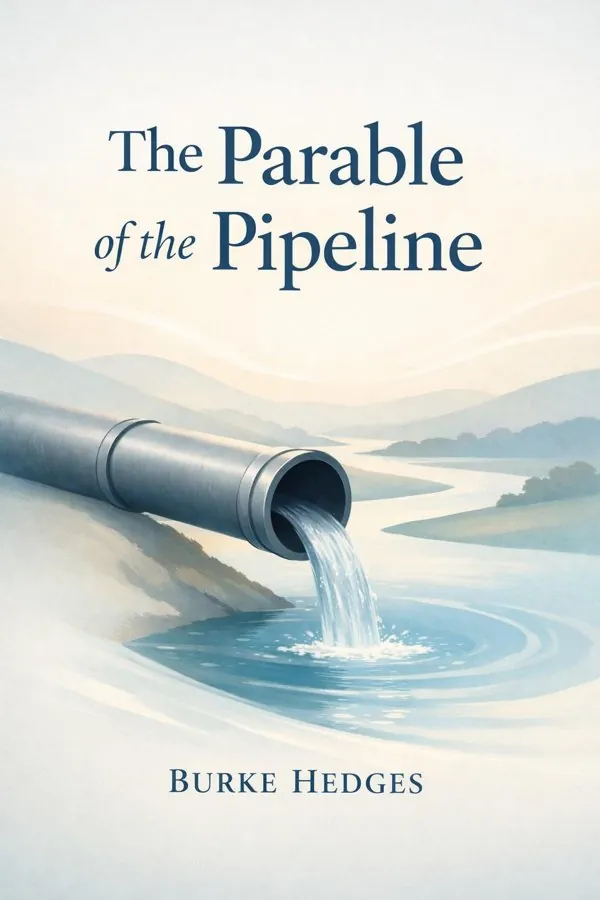
The Parable of the Pipeline: How Anyone Can Build a Pipeline of Ongoing Residual Income: Summary & Key Insights
by Burke Hedges
 10 min9 chaptersAudio available
Key Takeaways from The Parable of the Pipeline: How Anyone Can Build a Pipeline of Ongoing Residual Income
Most people never question the income model they inherited.
Every major change begins with an uncomfortable question: is there a better way?
The moment you stop doing what everyone else accepts, you invite doubt.
Money earned once is useful, but money that continues to arrive can change your life.
Financial transformation begins long before the bank balance changes.
What Is The Parable of the Pipeline: How Anyone Can Build a Pipeline of Ongoing Residual Income About?
The Parable of the Pipeline: How Anyone Can Build a Pipeline of Ongoing Residual Income by Burke Hedges is a entrepreneurship book spanning 6 pages. What if the biggest barrier to financial freedom is not how hard you work, but the way you think about work itself? In The Parable of the Pipeline, Burke Hedges uses a simple story to deliver a powerful lesson: most people spend their lives carrying buckets, earning money only when they actively labor, while a small minority build pipelines, systems that continue producing income long after the initial effort is made. This short, accessible book turns a complex financial idea into a vivid metaphor anyone can understand. Hedges argues that residual income is not reserved for the wealthy, the lucky, or financial experts. It is available to ordinary people willing to think long term, delay gratification, and commit to building assets instead of merely earning wages. The book matters because it challenges one of the most deeply ingrained assumptions in modern life: that security comes from a job alone. Instead, it proposes that true security comes from ownership, leverage, and systems. As an author and motivational speaker focused on entrepreneurship and financial independence, Burke Hedges brings enthusiasm, clarity, and practical persuasion to a topic that can reshape the reader’s future.
This FizzRead summary covers all 9 key chapters of The Parable of the Pipeline: How Anyone Can Build a Pipeline of Ongoing Residual Income in approximately 10 minutes, distilling the most important ideas, arguments, and takeaways from Burke Hedges's work. Also available as an audio summary and Key Quotes Podcast.
The Parable of the Pipeline: How Anyone Can Build a Pipeline of Ongoing Residual Income
What if the biggest barrier to financial freedom is not how hard you work, but the way you think about work itself? In The Parable of the Pipeline, Burke Hedges uses a simple story to deliver a powerful lesson: most people spend their lives carrying buckets, earning money only when they actively labor, while a small minority build pipelines, systems that continue producing income long after the initial effort is made. This short, accessible book turns a complex financial idea into a vivid metaphor anyone can understand.
Hedges argues that residual income is not reserved for the wealthy, the lucky, or financial experts. It is available to ordinary people willing to think long term, delay gratification, and commit to building assets instead of merely earning wages. The book matters because it challenges one of the most deeply ingrained assumptions in modern life: that security comes from a job alone. Instead, it proposes that true security comes from ownership, leverage, and systems.
As an author and motivational speaker focused on entrepreneurship and financial independence, Burke Hedges brings enthusiasm, clarity, and practical persuasion to a topic that can reshape the reader’s future.
Who Should Read The Parable of the Pipeline: How Anyone Can Build a Pipeline of Ongoing Residual Income?
This book is perfect for anyone interested in entrepreneurship and looking to gain actionable insights in a short read. Whether you're a student, professional, or lifelong learner, the key ideas from The Parable of the Pipeline: How Anyone Can Build a Pipeline of Ongoing Residual Income by Burke Hedges will help you think differently.
- ✓Readers who enjoy entrepreneurship and want practical takeaways
- ✓Professionals looking to apply new ideas to their work and life
- ✓Anyone who wants the core insights of The Parable of the Pipeline: How Anyone Can Build a Pipeline of Ongoing Residual Income in just 10 minutes
Want the full summary?
Get instant access to this book summary and 100K+ more with Fizz Moment.
Get Free SummaryAvailable on App Store • Free to download
Key Chapters
Most people never question the income model they inherited. Hedges begins with the image of villagers carrying buckets of water from a distant stream to the town cistern. The harder they work, the more water they deliver, and the more they get paid. It sounds fair, even noble. But the system contains a hidden weakness: income stops the moment labor stops. This is the trap of linear income, where earnings are directly tied to hours worked, energy spent, and physical presence.
The bucket-carrier metaphor represents employees, freelancers, consultants, and even many business owners who have created work for themselves rather than a true asset. They may be diligent and skilled, but they remain vulnerable to illness, burnout, layoffs, age, or market disruptions. Their effort creates immediate results, yet little enduring value beyond the day’s pay. In that sense, the problem is not hard work. The problem is a model that requires endless repetition just to stay in place.
Hedges is not dismissing jobs or effort. Instead, he wants readers to see the limits of relying on earned income alone. A teacher, accountant, driver, or designer may work responsibly for years and still feel financially fragile because every month starts at zero again. Without an asset that produces income independently, security remains temporary.
A practical way to apply this idea is to examine your current income sources and ask one key question: if I stopped working for 30 days, what would still come in? The answer reveals whether you are mostly carrying buckets or beginning to build a pipeline. Start by listing all income streams and identifying which depend entirely on your active labor. Actionable takeaway: stop glorifying busyness alone and begin measuring income by its sustainability, not just its size.
Every major change begins with an uncomfortable question: is there a better way? In Hedges’s parable, one villager grows tired of the exhausting routine of bucket-carrying and imagines building a pipeline from the stream to the village. At first, the idea seems unrealistic. Why spend unpaid time on a project when buckets already bring immediate income? Yet this dreamer understands something the others miss: today’s sacrifice can create tomorrow’s freedom.
The visionary represents the person who thinks beyond immediate wages and starts building an income-producing system. This could take many forms in real life: creating a scalable online business, investing in dividend-producing assets, writing a book, building a sales organization, licensing intellectual property, or developing products that can be sold repeatedly. The common feature is leverage. Instead of repeating the same action for each dollar earned, the builder creates a mechanism that can continue producing value over time.
This stage is psychologically difficult because the pipeline often looks like failure in the beginning. It generates little visible reward, requires learning new skills, and competes with short-term obligations. Friends may call it risky. Family may not understand why you are working extra hours with no immediate payoff. But every pipeline starts as an invisible project before it becomes an obvious success.
A useful modern example is someone with a full-time job who spends evenings building a digital course based on professional expertise. At first, there are no sales, only effort. But once the course is created and marketed, it can be sold many times without being rebuilt from scratch.
Actionable takeaway: choose one pipeline idea you can start this month, however small, and commit scheduled weekly time to building it before you expect it to pay.
The moment you stop doing what everyone else accepts, you invite doubt. One of the most valuable lessons in the book is that pipeline builders should expect resistance, not interpret it as a sign they are on the wrong path. In the parable, the villager building the pipeline is mocked by bucket carriers who cannot understand why he would invest effort in something that brings no immediate income. Their skepticism reflects a broader truth: society often rewards visible activity more quickly than strategic construction.
Hedges shows that new ventures usually pass through a lonely phase. Results are delayed, progress is uneven, and external validation is rare. This is where many people quit. They compare their temporary struggle with someone else’s stable paycheck and assume they made a mistake. In reality, they are experiencing the normal early stage of building any leveraged system. Pipelines require persistence precisely because they are front-loaded with work.
This idea applies strongly to entrepreneurship. A person may launch a subscription service, content platform, rental property business, or commission-based network venture and see little at first. Systems need time to be designed, tested, and optimized. Initial rejection does not invalidate the model. It often simply means the builder has not yet reached momentum.
The practical challenge is emotional endurance. To persevere, builders need clear goals, realistic timelines, and environments that support long-term thinking. Tracking leading indicators, such as leads generated, products created, or systems improved, can be more motivating than obsessing over early revenue.
Actionable takeaway: expect a season where effort outpaces reward, and create a persistence plan now, including milestones, supportive peers, and a minimum time commitment before you judge your pipeline idea.
Money earned once is useful, but money that continues to arrive can change your life. Hedges emphasizes that the true power of a pipeline lies in residual income, earnings that continue after the initial work has been done. This concept is central to the book because it shifts the goal from making more money today to building a source of money tomorrow, next year, and beyond.
Residual income creates leverage. Instead of trading one hour for one payment, you create something that keeps working. This could include royalties from creative work, profits from a systemized business, recurring subscriptions, commissions from an ongoing customer base, rental income, dividends, or network-based compensation structures. While each model has different risks and effort levels, they all share one advantage: they disconnect at least part of your earnings from your daily presence.
The deeper implication is freedom of choice. Residual income can reduce financial stress, provide a cushion during setbacks, and make it possible to spend more time on family, health, learning, or meaningful work. It does not necessarily mean retiring early or doing nothing. Often, it means gaining the power to choose what kind of work you do rather than being forced into any opportunity that pays immediately.
A practical application is to begin distinguishing between consumption and asset creation. Buying things may improve comfort, but building or acquiring income-producing assets improves resilience. Someone might use extra income not for lifestyle inflation, but to fund a simple website, invest in dividend funds, create a paid newsletter, or purchase equipment for a scalable side business.
Actionable takeaway: identify one asset class or business model capable of producing residual income and dedicate your next surplus of time or money toward building it rather than simply spending it.
Financial transformation begins long before the bank balance changes. Hedges argues that building pipelines requires a mindset shift from short-term labor to long-term ownership. Many people are trained to ask, how much can I earn this week? Pipeline thinkers ask, what can I build that will keep producing after this week is over? This difference may sound subtle, but it changes decisions about time, money, risk, and identity.
A labor mindset focuses on immediate compensation, predictability, and visible effort. It often values security, but in a narrow sense, assuming security comes from a stable paycheck. Ownership thinking sees security differently. It recognizes that depending on a single employer or a single form of active income can be precarious. Real security comes from assets, systems, relationships, and skills that create options.
This shift also affects how people view learning. Instead of seeing education as a one-time event that qualifies them for a job, pipeline thinkers treat learning as an investment in capability. They study marketing, communication, sales, finance, leadership, automation, and technology because these are tools for building systems. They become more patient, more strategic, and more willing to tolerate delayed rewards.
In practice, this mindset can start small. A graphic designer could move from one-off freelance projects toward templates, memberships, or digital products. A fitness coach could package expertise into a recurring subscription program. An employee could use salary income as seed capital for investments instead of merely increasing expenses.
Actionable takeaway: for the next 30 days, evaluate each major use of time and money by asking whether it supports consumption, wages, or ownership, and deliberately increase the share going toward ownership.
The hardest part of building a better future is accepting that it may pay less in the present. Hedges makes clear that pipeline construction demands delayed gratification. The bucket carriers receive immediate compensation. The pipeline builder often works for weeks, months, or years before the system begins to reward him. This is not a flaw in the process; it is the price of creating leverage.
In modern life, delayed gratification is difficult because instant rewards are everywhere. Salaries arrive regularly, consumer spending is easy, and social approval often follows visible success rather than patient preparation. Yet nearly every meaningful asset requires an upfront investment of time, money, or energy. Businesses need setup. Audiences need trust. Investments need time to compound. Skills need repetition. The reward curve is often slow before it accelerates.
Hedges’s lesson is that maturity in wealth-building means valuing future freedom more than present convenience. This may mean working evenings on a side venture, reinvesting profits instead of withdrawing them, living below your means while others inflate their lifestyle, or learning difficult skills before they become profitable. Such discipline can feel lonely at first, but it compounds into independence.
A practical example is someone who receives a raise and chooses not to upgrade their lifestyle immediately. Instead, they automate investments into assets or fund a small recurring-income business. In the short term, this feels restrictive. In the long term, it buys options.
Actionable takeaway: pick one area where you can delay gratification this quarter, such as spending, leisure time, or immediate cash withdrawals, and redirect that resource into building a future income-producing asset.
You do not create freedom merely by working harder; you create it by multiplying the effect of your effort. Although Hedges tells his message through a simple parable, the business principle underneath it is leverage. A pipeline allows one action to benefit many people repeatedly. That is why it scales beyond the limits of a bucket.
Leverage comes in different forms. There is financial leverage, where capital helps acquire assets. There is technological leverage, where software automates tasks once done manually. There is team leverage, where other people’s efforts expand output. There is intellectual leverage, where one idea, system, or product can be distributed endlessly. Pipeline thinking encourages readers to stop asking only, what can I do myself today, and start asking, what structure can keep working without my constant involvement?
This is especially relevant for entrepreneurs who accidentally build businesses that depend entirely on them. A consultant who handles every client personally may earn well, but remains a bucket carrier with premium pricing. By documenting processes, hiring support, productizing services, or creating recurring offers, that same person begins converting labor into a system.
Leverage does not mean avoiding work. It means directing work into assets and processes rather than endlessly repeating manual effort. The goal is not passivity but intelligent design. A well-built pipeline can still require maintenance, but maintenance is different from starting from zero every day.
Actionable takeaway: audit your current work and identify one repetitive activity that can be automated, delegated, standardized, or transformed into a reusable product so your effort creates more than a one-time result.
Depending on one source of income is risky, no matter how stable it appears. One of the broad implications of Hedges’s message is that the pipeline principle should not stop with a single stream. True financial resilience grows when people build multiple pipelines, because each one reduces dependence on the others. A job may be reliable until a company restructures. A business may perform well until a market changes. A single asset may decline. Diversified residual income creates stability through variety.
This does not mean chasing countless opportunities at once. It means understanding that long-term security comes from layers of income. One pipeline might begin as a side business. Another might be retirement investments. A third might be intellectual property or a recurring service model. Over time, these streams can interact, support each other, and absorb shocks.
Hedges’s parable is simple, but its real-world application encourages strategic diversification. An employee might keep a salary while slowly building investment income. A creator might combine courses, books, affiliate revenue, and memberships. A small business owner might pair active client work with software tools, licensing, or training products. Each additional pipeline expands freedom and lowers vulnerability.
The temptation is to wait until the first pipeline is perfect before starting another. A better approach is sequencing. Build one carefully, stabilize it, then use its cash flow, lessons, and confidence to launch the next. In this way, each pipeline becomes a foundation for the next stage of independence.
Actionable takeaway: map your current and potential income streams, then create a simple 12-month plan to strengthen one existing pipeline and begin one new, complementary source of residual income.
The ultimate purpose of a pipeline is not just wealth; it is freedom. Hedges’s message goes beyond money management into life design. People often assume financial success is about larger paychecks, nicer possessions, or earlier retirement. But the pipeline metaphor points toward something deeper: the ability to live with more autonomy, dignity, and choice because your life is not completely controlled by immediate economic necessity.
When income depends entirely on daily labor, every decision is constrained. Time off feels expensive. Career changes feel dangerous. Family needs create pressure. Personal growth gets postponed. By contrast, even modest residual income can widen possibilities. It can give someone room to refuse a bad job, recover from a setback, spend more time with children, care for health, relocate, learn a new skill, or pursue meaningful work.
This is why the book resonates with entrepreneurs, employees, and dreamers alike. It is not simply a guide to making money differently. It is an invitation to think about what money is for. Pipelines matter because they can support a life where work becomes more intentional and less desperate.
Applying this principle requires honesty. Freedom-based living does not begin with fantasies of effortless riches. It begins with disciplined building, smart choices, and clear definitions of what freedom means personally. For one person, freedom may mean debt reduction. For another, it may mean replacing one month of expenses with residual income. For another, it may mean eventually leaving a limiting career.
Actionable takeaway: define your personal version of freedom in concrete terms, then set a measurable pipeline goal, such as covering 10 percent of monthly expenses through residual income within the next year.
All Chapters in The Parable of the Pipeline: How Anyone Can Build a Pipeline of Ongoing Residual Income
About the Author
Burke Hedges is an American author, speaker, and business educator best known for his work on residual income, financial independence, and entrepreneurial thinking. He built his reputation by translating wealth-building concepts into clear, memorable lessons that everyday readers can understand and apply. Rather than focusing on abstract theory, Hedges often uses stories, metaphors, and practical motivation to help people rethink their assumptions about jobs, money, and success. His writing has resonated with readers interested in personal development, business ownership, and long-term financial freedom. The Parable of the Pipeline remains one of his most recognized books because it captures his core message so effectively: lasting security comes not only from hard work, but from creating income-producing systems that continue working over time.
Get This Summary in Your Preferred Format
Read or listen to the The Parable of the Pipeline: How Anyone Can Build a Pipeline of Ongoing Residual Income summary by Burke Hedges anytime, anywhere. FizzRead offers multiple formats so you can learn on your terms — all free.
Available formats: App · Audio · PDF · EPUB — All included free with FizzRead
Download The Parable of the Pipeline: How Anyone Can Build a Pipeline of Ongoing Residual Income PDF and EPUB Summary
Key Quotes from The Parable of the Pipeline: How Anyone Can Build a Pipeline of Ongoing Residual Income
“Most people never question the income model they inherited.”
“Every major change begins with an uncomfortable question: is there a better way?”
“The moment you stop doing what everyone else accepts, you invite doubt.”
“Money earned once is useful, but money that continues to arrive can change your life.”
“Financial transformation begins long before the bank balance changes.”
Frequently Asked Questions about The Parable of the Pipeline: How Anyone Can Build a Pipeline of Ongoing Residual Income
The Parable of the Pipeline: How Anyone Can Build a Pipeline of Ongoing Residual Income by Burke Hedges is a entrepreneurship book that explores key ideas across 9 chapters. What if the biggest barrier to financial freedom is not how hard you work, but the way you think about work itself? In The Parable of the Pipeline, Burke Hedges uses a simple story to deliver a powerful lesson: most people spend their lives carrying buckets, earning money only when they actively labor, while a small minority build pipelines, systems that continue producing income long after the initial effort is made. This short, accessible book turns a complex financial idea into a vivid metaphor anyone can understand. Hedges argues that residual income is not reserved for the wealthy, the lucky, or financial experts. It is available to ordinary people willing to think long term, delay gratification, and commit to building assets instead of merely earning wages. The book matters because it challenges one of the most deeply ingrained assumptions in modern life: that security comes from a job alone. Instead, it proposes that true security comes from ownership, leverage, and systems. As an author and motivational speaker focused on entrepreneurship and financial independence, Burke Hedges brings enthusiasm, clarity, and practical persuasion to a topic that can reshape the reader’s future.
You Might Also Like
Lean Analytics
Alistair Croll, Benjamin Yoskovitz
10 min
21 Days To A Big Idea: Creating Breakthrough Business Concepts
Bryan Mattimore
10 min
Sam Walton: Made in America: My Story
Sam Walton
10 min
10x Is Easier Than 2x: How World-Class Entrepreneurs Achieve More by Doing Less
Dan Sullivan, Benjamin Hardy
10 min
12 Months to $1 Million: How to Pick a Winning Product, Build a Real Business, and Become a Seven-Figure Entrepreneur
Ryan Daniel Moran
10 min
24 Assets: Create a Digital, Scalable, Valuable Business
Daniel Priestley
10 minBrowse by Category
Ready to read The Parable of the Pipeline: How Anyone Can Build a Pipeline of Ongoing Residual Income?
Get the full summary and 100K+ more books with Fizz Moment.