
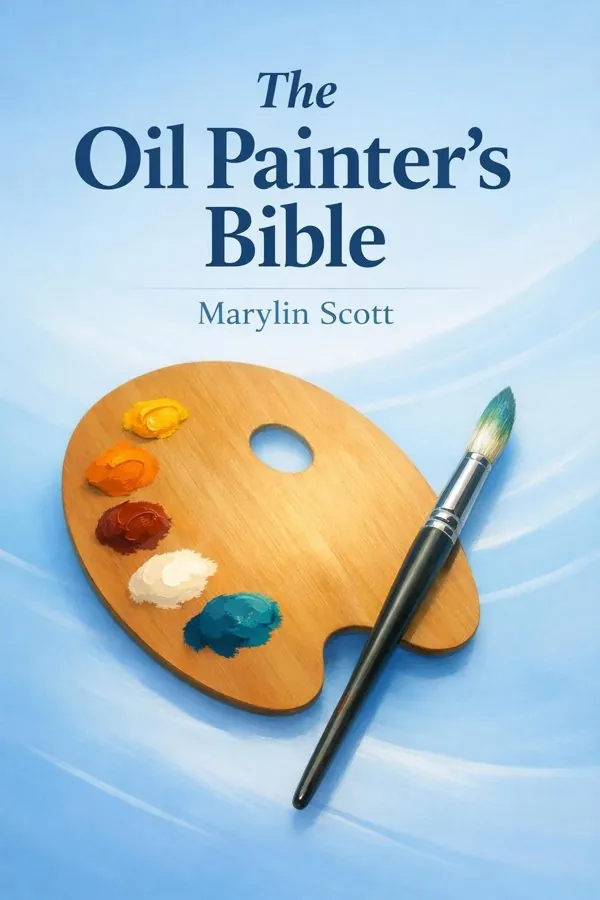
The Oil Painter's Bible: An Essential Reference for the Practicing Artist: Summary & Key Insights
 10 min10 chaptersAudio available
What Is The Oil Painter's Bible: An Essential Reference for the Practicing Artist About?
The Oil Painter's Bible: An Essential Reference for the Practicing Artist by Marylin Scott is a design book spanning 10 pages. This comprehensive guide provides oil painters with a complete reference to materials, techniques, and styles. It covers everything from color mixing and brushwork to composition and texture, offering step-by-step demonstrations and practical advice for artists at all levels.
This FizzRead summary covers all 10 key chapters of The Oil Painter's Bible: An Essential Reference for the Practicing Artist in approximately 10 minutes, distilling the most important ideas, arguments, and takeaways from Marylin Scott's work. Also available as an audio summary and Key Quotes Podcast.
The Oil Painter's Bible: An Essential Reference for the Practicing Artist
This comprehensive guide provides oil painters with a complete reference to materials, techniques, and styles. It covers everything from color mixing and brushwork to composition and texture, offering step-by-step demonstrations and practical advice for artists at all levels.
Who Should Read The Oil Painter's Bible: An Essential Reference for the Practicing Artist?
This book is perfect for anyone interested in design and looking to gain actionable insights in a short read. Whether you're a student, professional, or lifelong learner, the key ideas from The Oil Painter's Bible: An Essential Reference for the Practicing Artist by Marylin Scott will help you think differently.
- ✓Readers who enjoy design and want practical takeaways
- ✓Professionals looking to apply new ideas to their work and life
- ✓Anyone who wants the core insights of The Oil Painter's Bible: An Essential Reference for the Practicing Artist in just 10 minutes
Want the full summary?
Get instant access to this book summary and 100K+ more with Fizz Moment.
Get Free SummaryAvailable on App Store • Free to download
Key Chapters
Oil paint has a character unlike any other medium, and understanding it is the first step in learning to control it. Oil painting began in Europe during the early Renaissance, gaining popularity because of its versatility and its capacity for subtle transitions of tone and color. The key lies in its slow drying time; this allows artists to rework, blend, and layer without haste. Pigments are suspended in oil—traditionally linseed, walnut, or poppy seed—each giving a slightly different finish and drying speed. Linseed oil, for instance, tends to yellow over time but dries quickly, while poppy seed oil remains pale and is favored for white or delicate hues.\n\nI often tell students that oil painting feels like a dialogue rather than a command. Unlike acrylics or watercolor, which demand quick decisions, oils invite conversation. You apply, observe, adjust; the paint responds, the surface changes. Through this interaction you learn patience, texture, and nuance. This medium offers depth unmatched by others—the tiniest variation in opacity or blending can alter the entire emotional register of a work.\n\nOil’s characteristic luminous finish comes from its ability to build transparent layers. This is why many masters worked in multiple passes: first an underpainting, then successive glazes. Each layer refracts light differently, producing a deep, radiant effect that cannot be achieved by flat application. Once you grasp how the oil and pigment interact—how fat-over-lean principles prevent cracking, how drying oils form flexible films—you begin to handle your materials intelligently, not by guesswork but by understanding.
Selecting and understanding your tools is foundational. The right brush in your hand, the right support under your canvas, these decisions affect technique and outcome more than many realize. For brushes, I cover types from hog bristle to sable, each serving different purposes. Hog bristles are resilient and ideal for manipulating thick, textured paint. Sables, on the other hand, provide smoothness for detail and fine blending. As your style evolves, your preference for one over another will reveal something about how you see and construct form.\n\nYour palette is your stage. Traditionally made of wood or glass, it must allow easy mixing and maintain a neutral surface so colors remain true to the eye. Understanding mediums—linseed oil, turpentine, damar varnish—is vital. The right medium can thin paint for glazes or make it buttery for expressive impasto work. In the book, we explore how each ingredient controls drying time, sheen, and consistency.\n\nThen there is the ground—the base preparation that decides how the paint bonds and shines. A poorly prepared surface leads to endless frustration, so I emphasize priming, sealing, and understanding absorption. By mastering basic preparation, you ensure permanence and beauty in your finished work.\n\nFinally, keeping your tools clean and maintained is a mark of respect toward your craft. Brushes must be cleaned thoroughly after sessions, rags disposed of safely due to spontaneous combustion risks from oils, and palettes wiped down before new mixing—all habits that reflect professionalism and long-term care for your materials.
+ 8 more chapters — available in the FizzRead app
All Chapters in The Oil Painter's Bible: An Essential Reference for the Practicing Artist
About the Author
Marylin Scott is an experienced artist and author specializing in instructional art books. She has written several guides on painting and drawing techniques, known for their clarity and accessibility to both beginners and professionals.
Get This Summary in Your Preferred Format
Read or listen to the The Oil Painter's Bible: An Essential Reference for the Practicing Artist summary by Marylin Scott anytime, anywhere. FizzRead offers multiple formats so you can learn on your terms — all free.
Available formats: App · Audio · PDF · EPUB — All included free with FizzRead
Download The Oil Painter's Bible: An Essential Reference for the Practicing Artist PDF and EPUB Summary
Key Quotes from The Oil Painter's Bible: An Essential Reference for the Practicing Artist
“Oil paint has a character unlike any other medium, and understanding it is the first step in learning to control it.”
“Selecting and understanding your tools is foundational.”
Frequently Asked Questions about The Oil Painter's Bible: An Essential Reference for the Practicing Artist
The Oil Painter's Bible: An Essential Reference for the Practicing Artist by Marylin Scott is a design book that explores key ideas across 10 chapters. This comprehensive guide provides oil painters with a complete reference to materials, techniques, and styles. It covers everything from color mixing and brushwork to composition and texture, offering step-by-step demonstrations and practical advice for artists at all levels.
You Might Also Like

The Design of Everyday Things
Don Norman
10 min
The Better Angels of Our Nature
Steven Pinker
10 min
A Designer's Art
Paul Rand
10 min
Architects' Sketchbooks
Various Editors
10 min
Architectural Graphic Standards
The American Institute of Architects
10 min
Design Is Storytelling
Ellen Lupton
10 minBrowse by Category
Ready to read The Oil Painter's Bible: An Essential Reference for the Practicing Artist?
Get the full summary and 100K+ more books with Fizz Moment.