
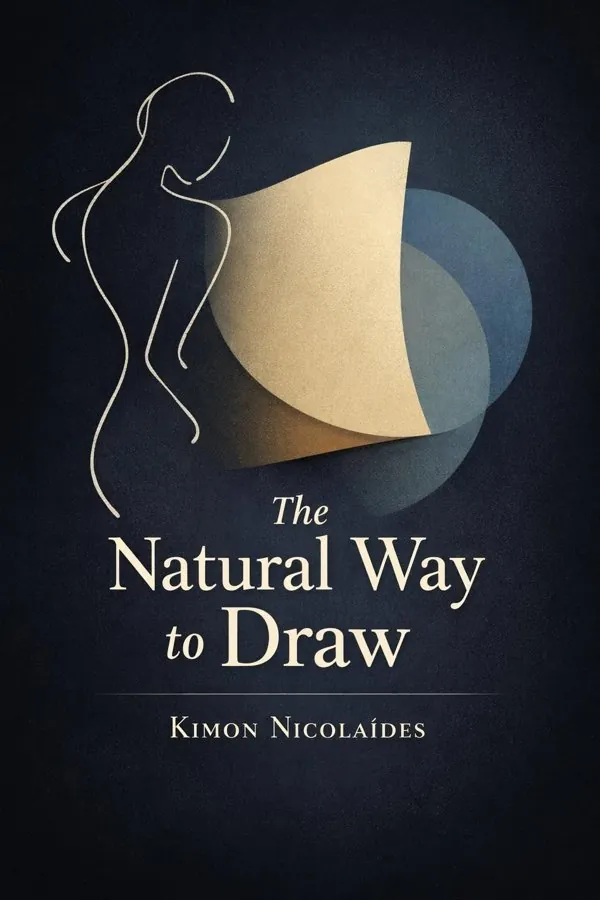
The Natural Way to Draw: A Working Plan for Art Study: Summary & Key Insights
 10 min11 chaptersAudio available
What Is The Natural Way to Draw: A Working Plan for Art Study About?
The Natural Way to Draw: A Working Plan for Art Study by Kimon Nicolaïdes is a design book spanning 11 pages. A comprehensive art instruction manual that emphasizes learning to draw through natural observation and continuous practice. The book presents a year-long program of exercises designed to develop the artist’s ability to perceive and express form, movement, and structure. It focuses on gesture drawing, contour drawing, and the integration of visual memory, encouraging students to draw from life and to cultivate a personal, intuitive approach to art.
This FizzRead summary covers all 11 key chapters of The Natural Way to Draw: A Working Plan for Art Study in approximately 10 minutes, distilling the most important ideas, arguments, and takeaways from Kimon Nicolaïdes's work. Also available as an audio summary and Key Quotes Podcast.
The Natural Way to Draw: A Working Plan for Art Study
A comprehensive art instruction manual that emphasizes learning to draw through natural observation and continuous practice. The book presents a year-long program of exercises designed to develop the artist’s ability to perceive and express form, movement, and structure. It focuses on gesture drawing, contour drawing, and the integration of visual memory, encouraging students to draw from life and to cultivate a personal, intuitive approach to art.
Who Should Read The Natural Way to Draw: A Working Plan for Art Study?
This book is perfect for anyone interested in design and looking to gain actionable insights in a short read. Whether you're a student, professional, or lifelong learner, the key ideas from The Natural Way to Draw: A Working Plan for Art Study by Kimon Nicolaïdes will help you think differently.
- ✓Readers who enjoy design and want practical takeaways
- ✓Professionals looking to apply new ideas to their work and life
- ✓Anyone who wants the core insights of The Natural Way to Draw: A Working Plan for Art Study in just 10 minutes
Want the full summary?
Get instant access to this book summary and 100K+ more with Fizz Moment.
Get Free SummaryAvailable on App Store • Free to download
Key Chapters
Gesture is the first impulse of life that the artist must learn to capture. When you look at a figure, before you note its contours or shading, feel its movement. Gesture drawing is the way to record that vitality — the living energy that defines what the subject is doing rather than merely what it looks like. A gesture drawing must be quick, fluid, and expressive. It is not an attempt to reproduce detail, but to translate motion into form.
Most of the exercises I give at the beginning focus on this process. You draw fast — perhaps in thirty seconds or one minute. You do not worry about proportion or accuracy; you worry about life. I urge students to draw not with their fingers, but with their entire body — to let the arm swing freely, to channel rhythm through motion. Gesture gives you access to emotional truth. You stop thinking in outlines and begin to feel in forces.
When students begin to draw gestures every day, their perception changes. They see walking not as two legs moving but as a series of sweeps and counterbalances. A sitting pose becomes a tense equilibrium of curves. Gesture drawing teaches you to engage with the subject with empathy — to understand it through movement. This is the foundation of all natural drawing.
Once you have learned to feel movement, you must learn to touch it with your eyes. Contour drawing is this act of touch. When you draw a contour, you trace the edge of a form with complete attention, as if your pencil were moving across the surface of the object itself. Early exercises include blind contour drawing — you keep your eyes on the model, never glancing at your paper. This forces you to rely on tactile perception rather than visual measurement.
When I teach contour drawing, I emphasize patience and slowness. You should draw as though your pencil were a finger. The object’s surface reveals its own rhythm if you follow it faithfully. Modified contour drawing allows you to occasionally glance at your paper, but still, the attention must remain on the subject.
Through contour, you develop respect for the integrity of form. You begin to understand that every edge carries weight and character. Contour drawing trains the connection between hand and eye — a coordination that later becomes instinctive. It also deepens sensitivity. Forms cease to be flat pictures; they become solid presences occupying space.
+ 9 more chapters — available in the FizzRead app
All Chapters in The Natural Way to Draw: A Working Plan for Art Study
About the Author
Kimon Nicolaïdes (1891–1938) was an American artist and art teacher known for his innovative methods of teaching drawing. He taught at the Art Students League of New York, where his emphasis on gesture and natural observation influenced generations of artists. His posthumously published book, 'The Natural Way to Draw,' remains a foundational text in art education.
Get This Summary in Your Preferred Format
Read or listen to the The Natural Way to Draw: A Working Plan for Art Study summary by Kimon Nicolaïdes anytime, anywhere. FizzRead offers multiple formats so you can learn on your terms — all free.
Available formats: App · Audio · PDF · EPUB — All included free with FizzRead
Download The Natural Way to Draw: A Working Plan for Art Study PDF and EPUB Summary
Key Quotes from The Natural Way to Draw: A Working Plan for Art Study
“Gesture is the first impulse of life that the artist must learn to capture.”
“Once you have learned to feel movement, you must learn to touch it with your eyes.”
Frequently Asked Questions about The Natural Way to Draw: A Working Plan for Art Study
The Natural Way to Draw: A Working Plan for Art Study by Kimon Nicolaïdes is a design book that explores key ideas across 11 chapters. A comprehensive art instruction manual that emphasizes learning to draw through natural observation and continuous practice. The book presents a year-long program of exercises designed to develop the artist’s ability to perceive and express form, movement, and structure. It focuses on gesture drawing, contour drawing, and the integration of visual memory, encouraging students to draw from life and to cultivate a personal, intuitive approach to art.
You Might Also Like
The Design of Everyday Things
Don Norman
10 min
The Better Angels of Our Nature
Steven Pinker
10 min
A Designer's Art
Paul Rand
10 min
Architects' Sketchbooks
Various Editors
10 min
Architectural Graphic Standards
The American Institute of Architects
10 min
Design Is Storytelling
Ellen Lupton
10 minBrowse by Category
Ready to read The Natural Way to Draw: A Working Plan for Art Study?
Get the full summary and 100K+ more books with Fizz Moment.