
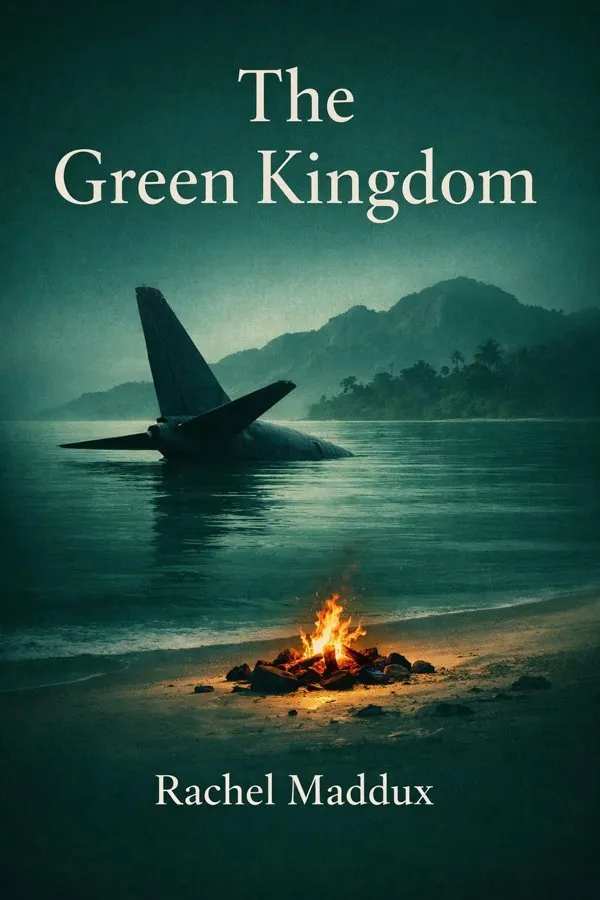
The Green Kingdom: Summary & Key Insights
 10 min3 chaptersAudio available
What Is The Green Kingdom About?
The Green Kingdom by Rachel Maddux is a classics book spanning 3 pages. A novel first published in 1957, *The Green Kingdom* by Rachel Maddux explores the lives of a group of people stranded on a mysterious island after a plane crash. The story delves into human nature, civilization, and the struggle for survival, blending allegory and psychological insight.
This FizzRead summary covers all 3 key chapters of The Green Kingdom in approximately 10 minutes, distilling the most important ideas, arguments, and takeaways from Rachel Maddux's work. Also available as an audio summary and Key Quotes Podcast.
The Green Kingdom
A novel first published in 1957, *The Green Kingdom* by Rachel Maddux explores the lives of a group of people stranded on a mysterious island after a plane crash. The story delves into human nature, civilization, and the struggle for survival, blending allegory and psychological insight.
Who Should Read The Green Kingdom?
This book is perfect for anyone interested in classics and looking to gain actionable insights in a short read. Whether you're a student, professional, or lifelong learner, the key ideas from The Green Kingdom by Rachel Maddux will help you think differently.
- ✓Readers who enjoy classics and want practical takeaways
- ✓Professionals looking to apply new ideas to their work and life
- ✓Anyone who wants the core insights of The Green Kingdom in just 10 minutes
Want the full summary?
Get instant access to this book summary and 100K+ more with Fizz Moment.
Get Free SummaryAvailable on App Store • Free to download
Key Chapters
The story begins in fragmentation—a crash, a burst of fire, the shattering of routine. Out of that chaos, the survivors awaken to a world untouched by maps or memory, a green expanse stretching beyond sight. The first sensation is relief: they are alive. But soon after comes bewilderment and the slow, dawning comprehension that they have become a closed world unto themselves.
At first, instinct drives them to recreate what is familiar. They organize camps, ration supplies, appoint leaders. The impulse to rebuild civilization is swift and almost comforting, as though by the act of naming tasks they can restore meaning. Yet in their efforts, one senses anxiety—the fragile belief that if they mimic the forms of the world left behind, its essence will follow.
The island itself seems benevolent. There is fruit, water, shelter from storms. But the more they come to depend on its generosity, the more the survivors realize the cost of their ignorance. The rhythms of weather, the sudden scarcity of certain foods, the invisible dangers of disease—all reveal that nature’s abundance masks a merciless equilibrium. The island gives, and the island takes.
That duality mirrors the growing tension among the group. The early days are buoyed by communal spirit; people share tasks and speak softly of rescue. Hope of returning to the known world binds them. Yet beneath that hope stirs a restlessness, the dawning realization that civilization, at its core, is a contract sustained by the expectation of return—that things will, eventually, go back to normal. As days turn to weeks, the silence from the skies becomes a louder presence than the crash itself.
From my author’s perspective, this first stage was crucial to establish tone. I wanted the lush beauty of the island to feel like a seduction—soothing, almost maternal—because only that contrast could later reveal how precarious comfort truly is. Security, I suggest, is an illusion: whether in cities or jungles, it exists only as long as we collectively desire it.
Cooperation, once a shared instinct, begins to falter. Leadership, once a necessity of coordination, turns into a contest of will. Every survivor carries a different memory of civilization—its hierarchies, its promises—and those memories begin to clash. The doctor appeals to reason and ethical duty; the businessman to pragmatism and control; the artist among them dreams of freedom instead of structure. In their quarrels, the island’s silence becomes sharper, as though listening.
This phase represents, to me, the disintegration of moral consensus. At the crash’s outset, survival was physical—gathering food, treating wounds, finding refuge. Now survival becomes psychological: whose vision of order will prevail? The arguments are not merely about leadership but about meaning. Is order an end in itself, or a tool of domination disguised as virtue?
At times, the conflict turns intimate. Alliances form out of loneliness, not conviction. Desire and fear mingle; small acts of selfishness ripple outward until they reshape the group’s fabric. As the social body weakens, nature’s presence grows stronger—the whisper of the sea, the pulse of heat. Civilization, in its absence, is shown to be a delicate fiction maintained only by mutual faith in its necessity. Remove that faith, and we revert to independence that feels both liberating and lethal.
In writing these sections, I thought often of ancient myths—of the moment humanity steps out of the garden and becomes self-aware. The fall, in this context, is not prompted by defiance, but by fatigue. People simply tire of restraint. They tire of pretending that goodness is effortless. And as that fatigue spreads, order unravels not with violence but with indifference, a slow turning away from the collective toward the self.
By this midpoint of the novel, the green kingdom ceases to be merely a place—it becomes a state of mind: the wilderness within that blooms when structure fades.
+ 1 more chapters — available in the FizzRead app
All Chapters in The Green Kingdom
About the Author
Rachel Maddux (1915–1983) was an American novelist and short story writer known for her thoughtful explorations of human behavior and moral complexity. Her works often combined realism with allegorical or historical elements.
Get This Summary in Your Preferred Format
Read or listen to the The Green Kingdom summary by Rachel Maddux anytime, anywhere. FizzRead offers multiple formats so you can learn on your terms — all free.
Available formats: App · Audio · PDF · EPUB — All included free with FizzRead
Download The Green Kingdom PDF and EPUB Summary
Key Quotes from The Green Kingdom
“The story begins in fragmentation—a crash, a burst of fire, the shattering of routine.”
“Cooperation, once a shared instinct, begins to falter.”
Frequently Asked Questions about The Green Kingdom
The Green Kingdom by Rachel Maddux is a classics book that explores key ideas across 3 chapters. A novel first published in 1957, *The Green Kingdom* by Rachel Maddux explores the lives of a group of people stranded on a mysterious island after a plane crash. The story delves into human nature, civilization, and the struggle for survival, blending allegory and psychological insight.
You Might Also Like

Browse by Category
Ready to read The Green Kingdom?
Get the full summary and 100K+ more books with Fizz Moment.