
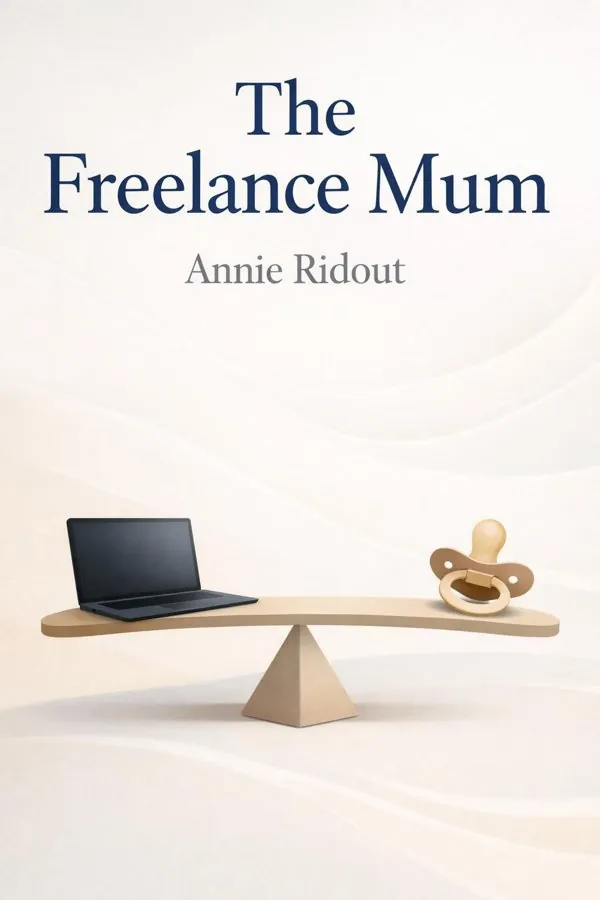
The Freelance Mum: Summary & Key Insights
by Annie Ridout
 10 min10 chaptersAudio available
Key Takeaways from The Freelance Mum
Freedom is appealing, but freelancing only works well when we are honest about what our lives can currently support.
A freelance career becomes sustainable when talent meets demand.
The biggest freelance myth is that good work alone will somehow be discovered.
Undercharging often begins as a confidence issue, but it quickly becomes a sustainability problem.
Time management for freelance mothers is not really about squeezing more into the day; it is about aligning work with reality.
What Is The Freelance Mum About?
The Freelance Mum by Annie Ridout is a career book spanning 10 pages. The Freelance Mum is a practical, encouraging guide for mothers who want to build a career on their own terms without pretending that parenthood leaves life neat, quiet, or perfectly scheduled. Annie Ridout explores freelancing not as a fantasy of effortless flexibility, but as a realistic path to autonomy, creativity, and income for women navigating childcare, identity shifts, and changing professional ambitions. The book combines personal experience with insights from other freelance mothers, making it feel both intimate and broadly useful. Ridout covers the essentials—choosing a niche, finding clients, setting rates, managing money, and structuring time—while also addressing the emotional realities of self-employment, including guilt, self-doubt, and the pressure to “do it all.” What makes the book especially valuable is its grounded tone: it does not promise instant success, but it does show how consistent, strategic action can create a sustainable working life. For mothers rethinking conventional employment, or anyone curious about building a flexible career around family responsibilities, The Freelance Mum offers a reassuring and actionable roadmap from uncertainty to independence.
This FizzRead summary covers all 10 key chapters of The Freelance Mum in approximately 10 minutes, distilling the most important ideas, arguments, and takeaways from Annie Ridout's work. Also available as an audio summary and Key Quotes Podcast.
The Freelance Mum
The Freelance Mum is a practical, encouraging guide for mothers who want to build a career on their own terms without pretending that parenthood leaves life neat, quiet, or perfectly scheduled. Annie Ridout explores freelancing not as a fantasy of effortless flexibility, but as a realistic path to autonomy, creativity, and income for women navigating childcare, identity shifts, and changing professional ambitions. The book combines personal experience with insights from other freelance mothers, making it feel both intimate and broadly useful. Ridout covers the essentials—choosing a niche, finding clients, setting rates, managing money, and structuring time—while also addressing the emotional realities of self-employment, including guilt, self-doubt, and the pressure to “do it all.” What makes the book especially valuable is its grounded tone: it does not promise instant success, but it does show how consistent, strategic action can create a sustainable working life. For mothers rethinking conventional employment, or anyone curious about building a flexible career around family responsibilities, The Freelance Mum offers a reassuring and actionable roadmap from uncertainty to independence.
Who Should Read The Freelance Mum?
This book is perfect for anyone interested in career and looking to gain actionable insights in a short read. Whether you're a student, professional, or lifelong learner, the key ideas from The Freelance Mum by Annie Ridout will help you think differently.
- ✓Readers who enjoy career and want practical takeaways
- ✓Professionals looking to apply new ideas to their work and life
- ✓Anyone who wants the core insights of The Freelance Mum in just 10 minutes
Want the full summary?
Get instant access to this book summary and 100K+ more with Fizz Moment.
Get Free SummaryAvailable on App Store • Free to download
Key Chapters
Freedom is appealing, but freelancing only works well when we are honest about what our lives can currently support. One of the book’s most useful starting points is the idea that before launching into self-employment, mothers need to assess their readiness in practical, emotional, and financial terms. It is easy to romanticize freelancing as a simple solution to the rigidity of office life. But working for yourself while caring for children can be liberating and exhausting at the same time. Ridout encourages readers to pause and take stock: How much time do you truly have each week? What are your financial pressures? Do you have childcare support, a partner who shares responsibilities, or family help nearby? What kind of work can realistically fit around your current season of life?
This readiness check matters because freelancing magnifies both strengths and weaknesses. If you are organized, resourceful, and willing to learn, you may thrive. If you are expecting instant income or waiting for ideal conditions, frustration may come quickly. Ridout does not suggest that everything must be perfectly in place before starting. Rather, she argues for self-awareness. A mother with ten focused hours a week can still build something meaningful if she plans accordingly. A parent returning from maternity leave may begin with a side hustle before making a full transition.
A practical way to apply this is to conduct a personal audit. List your available hours, monthly expenses, existing skills, energy patterns, and support systems. Then identify what kind of freelance model fits that reality. Actionable takeaway: before seeking clients, create a one-page readiness plan that defines your available time, income target, childcare situation, and first service offering.
A freelance career becomes sustainable when talent meets demand. Ridout emphasizes that setting up as a freelancer is not just about deciding to work independently; it is about identifying a service people will pay for and presenting it clearly. Many mothers begin with broad interests—writing, design, social media, consulting, editing, virtual assistance—but struggle because they describe themselves too vaguely. Clients are more likely to hire someone who solves a specific problem than someone with a general list of skills.
Choosing a niche does not mean boxing yourself in forever. It means creating clarity at the beginning. A former magazine editor might position herself as a copywriter for wellness brands. A teacher might become an educational content creator. A marketing professional might specialize in Instagram strategy for small businesses. Narrowing your focus helps potential clients understand your value quickly, and it makes self-promotion less confusing.
Ridout also shows that the setup phase includes practical foundations: deciding on a business name if needed, creating a simple website or portfolio, clarifying your services, and putting administrative basics in place. You do not need a complex brand identity or expensive software to start. Often, one strong profile, a few samples, and a clear offer are enough. The goal is momentum, not perfection.
For example, instead of saying, “I do freelance writing,” you might say, “I write blog posts and newsletters for parenting and lifestyle brands.” That single sentence can immediately attract better-fit work. Actionable takeaway: define one core service, one ideal client type, and one short positioning statement that explains exactly what you do and for whom.
The biggest freelance myth is that good work alone will somehow be discovered. Ridout makes clear that finding clients is an active process, especially in the early stages. Freelancers must become comfortable being visible, asking for opportunities, and building relationships. This can feel intimidating for mothers already stretched thin, but client generation does not have to mean aggressive sales tactics. Often it starts with simple, consistent actions: telling people what you do, reaching out to former colleagues, sharing your work online, and pitching relevant businesses directly.
Ridout highlights the importance of using existing networks before chasing strangers. Previous employers, friends, parent communities, LinkedIn contacts, and people in local business groups may all know someone who needs help. Referrals often come from weak ties rather than best friends. She also encourages proactive outreach. If you admire a brand and can see how your skills would help them, contact them with a short, thoughtful pitch. Explain what you do, why you are a fit, and what kind of result you can help create.
A practical example: a freelance writer might send five tailored emails a week to small companies with outdated blogs, offering article ideas that match their audience. A social media freelancer might post tips regularly on LinkedIn, making her expertise visible and attracting inbound enquiries over time. The key is consistency rather than intensity. One hour a day of business development can be more effective than occasional bursts of panic.
Actionable takeaway: build a simple weekly client routine that includes one visibility task, one relationship-building task, and three to five targeted pitches or outreach messages.
Undercharging often begins as a confidence issue, but it quickly becomes a sustainability problem. Ridout addresses one of the hardest parts of freelancing: deciding what to charge and learning how to negotiate without apology. Many mothers entering freelance work are tempted to price low out of fear that they are inexperienced, rusty after a career break, or lucky to receive any work at all. But low rates do more than reduce income; they can create resentment, attract poor-fit clients, and leave too little time for family because too many hours are needed to earn enough.
The book encourages freelancers to think beyond hourly effort and consider the value of the outcome. If your work helps a client attract customers, save time, improve communication, or strengthen their brand, that value matters. Researching industry norms, speaking to peers, and experimenting with pricing models can help. Some work is best charged hourly, but project rates or retainers can often create more stability and reward efficiency.
Negotiation is also reframed as a normal business conversation, not a personal judgment. When a client pushes back, it does not necessarily mean your rate is unreasonable. It may simply mean their budget and your pricing do not align. Ridout’s approach helps readers see that saying no is sometimes essential. A lower-paying project that consumes your limited childcare hours may cost more than it earns.
A useful practice is to set a minimum acceptable rate based on your income goals, time constraints, and business costs. Then communicate prices clearly and calmly. Actionable takeaway: calculate your minimum viable rate, create a standard pricing menu for your services, and practice one confident sentence for handling negotiation.
Time management for freelance mothers is not really about squeezing more into the day; it is about aligning work with reality. Ridout rejects the fantasy of endless productive hours and instead focuses on building a system that fits around childcare, school runs, illness, naps, and the unpredictability of family life. Traditional productivity advice often assumes uninterrupted blocks of time. For parents, especially those with young children, that assumption can make normal life feel like failure. The better approach is to design work around available windows and energy levels.
Ridout suggests identifying when focused work is most likely to happen. That might be during nursery hours, early mornings, evenings, or one protected weekend block. Once those windows are clear, high-value tasks should go there: client work, pitches, or strategic planning. Lower-energy tasks like invoicing, admin, or social media can fill fragmented moments. This distinction matters because not all work deserves your best attention.
She also encourages realistic planning. If a week contains twenty potential work hours, plan for fifteen. That buffer protects against disruption and reduces stress. Systems help too: batching similar tasks, using templates for emails and proposals, keeping a content calendar, and building routines that reduce decision fatigue. Productivity becomes less about discipline and more about structure.
For example, a mother might reserve Tuesday and Thursday mornings for billable work, use one lunchtime for outreach, and handle invoices every Friday. That rhythm may be modest, but consistency compounds. Actionable takeaway: map your week according to your actual childcare and energy patterns, then assign your most important freelance tasks to your most reliable focus windows.
Confidence rarely arrives before action; more often, it grows because of action. Ridout is especially strong on the emotional side of freelancing, including imposter syndrome, self-doubt, and the loss of professional identity many mothers feel after stepping away from traditional work. It is common to wonder whether you are still competent, whether clients will take you seriously, or whether your ambitions are selfish. The book treats these feelings not as signs to stop, but as common companions on the path to independence.
One of Ridout’s key insights is that confidence comes from evidence. Every pitch sent, client won, invoice paid, and positive testimonial becomes proof that you can do this. Waiting to feel fully ready often keeps talented people stuck. Instead, she encourages readers to begin before they feel certain. Start with one project. Publish one portfolio sample. Contact one potential client. Small wins gradually replace vague fear with concrete capability.
Language also matters. How you describe yourself influences how others respond. Saying “I’m just trying a bit of freelancing” creates uncertainty. Saying “I’m a freelance editor working with wellness and parenting brands” signals professionalism. That shift can feel uncomfortable at first, but it helps establish identity.
Ridout also points to community and peer examples as confidence builders. Seeing other mothers earn, create, and negotiate makes success feel possible rather than abstract. Actionable takeaway: keep a visible “proof list” of every achievement, however small, and pair it with one weekly action that stretches your confidence, such as pitching, raising a rate, or publishing your work.
Freelancing offers flexibility, but without financial structure that flexibility can become stress. Ridout argues that managing finances is not a dry administrative task; it is a form of self-protection. Income may fluctuate, payments may arrive late, and taxes do not withhold themselves. For mothers balancing household responsibilities and business growth, money systems are essential because uncertainty in one area of life can quickly spill into another.
The book encourages readers to separate personal and business finances wherever possible, track invoices carefully, set money aside for tax, and understand the true cost of being self-employed. That includes software, childcare, pension contributions, insurance, and unpaid time spent on marketing or admin. Many new freelancers focus only on money coming in, but not on irregularity, delayed payments, or hidden costs. Ridout’s practical tone helps normalize planning for all of it.
She also suggests creating a financial runway or buffer, even if small. A few months of savings can reduce desperation and make it easier to decline poor-fit work. Likewise, building recurring income through retainers or repeat clients can soften the instability of project-based work. This matters especially for parents, whose families depend on predictability even when their work model is flexible.
A practical system might include a spreadsheet or software for every invoice, a rule to save a fixed percentage for tax, and a monthly “money date” to review cash flow. These habits are not glamorous, but they create peace of mind. Actionable takeaway: establish a simple freelance finance system this week with invoice tracking, a tax savings percentage, and a monthly review of income, expenses, and upcoming obligations.
Balance is often presented as a perfect split, but for freelance mothers it is better understood as ongoing adjustment. Ridout’s approach to work-life balance is refreshingly realistic: some weeks work will need more from you, other weeks family will. The goal is not symmetry. The goal is a life in which your work supports your values rather than constantly colliding with them. That starts with letting go of impossible standards—the idea that you should be fully present, endlessly productive, financially ambitious, and emotionally serene all at once.
The book speaks directly to maternal guilt, which often appears in two forms. When working, mothers may feel they are neglecting their children. When parenting, they may feel they are neglecting their careers. Freelancing can reduce some tensions by offering flexibility, but it can also blur boundaries and create a sense that you are always partly on duty. Ridout encourages readers to set limits intentionally. That might mean defined working hours, a separate workspace, phone-free family time, or a decision not to respond to emails after a certain hour.
Balance also depends on communication. Partners, family members, and clients need to understand when you are available and when you are not. If your work is constantly treated as optional because it happens at home, resentment follows. Respect for your business begins with the expectations you set.
A useful exercise is to define what “enough” looks like in this season: enough income, enough family time, enough rest. Those definitions may evolve, but they provide guidance. Actionable takeaway: choose three non-negotiables for your current season—such as school pickup, no weekend work, or a monthly income floor—and use them to shape every work decision.
Self-employment may be independent, but it should not be isolated. Ridout highlights the importance of support networks and community, especially for mothers whose working lives can feel fragmented or invisible. One of the quiet risks of freelancing is trying to solve everything alone: pricing, client problems, tax questions, childcare disruptions, confidence dips. Community shortens the learning curve. It offers practical advice, emotional reassurance, referrals, and a sense that your challenges are shared rather than personal failings.
This support can take many forms: online groups for freelancers, local parent entrepreneur meetups, accountability partnerships, former colleagues, mentors, or paid communities. The point is not to collect contacts but to build reciprocal relationships. Ask questions, share resources, recommend others, and celebrate wins. Over time, these connections can lead directly to opportunities. A designer may pass on a writing client. A copywriter may recommend a social media manager. A peer may share how she structured retainers or handled late payment.
For mothers in particular, community also normalizes the practical messiness of building a business with children in the background. Hearing that others have worked around naps, school holidays, and interrupted Zoom calls helps replace shame with perspective. It becomes easier to keep going when you realize that successful freelancers are not superhuman; they are supported.
Ridout’s emphasis here is strategic as well as emotional. Community is part of business development, professional development, and resilience. Actionable takeaway: join one relevant freelance or business community this month and commit to contributing weekly, whether by asking a question, sharing a resource, or building a peer relationship.
The most empowering version of freelancing is not merely surviving month to month; it is building a career that can evolve with your life. Ridout closes the loop by encouraging readers to think beyond immediate income and toward long-term planning. Once the early scramble of setting up, finding clients, and stabilizing cash flow begins to settle, the next question becomes: what do you want this business to become? Without that reflection, freelancers can end up trapped in a self-made job that depends entirely on their constant availability.
Long-term growth can mean many things. For some, it means raising rates and working fewer hours. For others, it means moving into consulting, productizing a service, launching a course, writing a book, or building an agency. Growth does not have to mean becoming bigger in every sense. It can also mean becoming more selective, more profitable, or more aligned with family priorities.
Ridout encourages regular review. Which clients drain you and which energize you? Which services are most profitable? What skills are worth developing? What would make your business less vulnerable to illness, maternity leave, or school holidays? These questions shift the focus from reactive hustle to intentional design.
A practical example is replacing scattered one-off projects with two reliable monthly retainers, or turning repeated client requests into a packaged offer with clearer pricing and boundaries. Sustainable growth often comes from simplification rather than expansion. Actionable takeaway: schedule a quarterly review of your freelance business and decide on one strategic improvement—such as raising rates, refining services, building recurring revenue, or investing in a skill that increases your earning power.
All Chapters in The Freelance Mum
About the Author
Annie Ridout is a British journalist, author, and entrepreneur whose work focuses on motherhood, careers, freelancing, and modern working life. She has written for major publications including The Guardian, The Telegraph, and Forbes, where she has explored the changing realities of work and identity, especially for women. Ridout is also the founder of a platform dedicated to supporting women in business and freelancing, reflecting her wider commitment to creating practical resources and community for ambitious mothers. Her writing stands out for its honesty, warmth, and usefulness: she combines professional insight with lived experience. In The Freelance Mum, that combination gives her unusual credibility. She understands both the business mechanics of self-employment and the emotional complexity of trying to build meaningful work around family life.
Get This Summary in Your Preferred Format
Read or listen to the The Freelance Mum summary by Annie Ridout anytime, anywhere. FizzRead offers multiple formats so you can learn on your terms — all free.
Available formats: App · Audio · PDF · EPUB — All included free with FizzRead
Download The Freelance Mum PDF and EPUB Summary
Key Quotes from The Freelance Mum
“Freedom is appealing, but freelancing only works well when we are honest about what our lives can currently support.”
“A freelance career becomes sustainable when talent meets demand.”
“The biggest freelance myth is that good work alone will somehow be discovered.”
“Undercharging often begins as a confidence issue, but it quickly becomes a sustainability problem.”
“Time management for freelance mothers is not really about squeezing more into the day; it is about aligning work with reality.”
Frequently Asked Questions about The Freelance Mum
The Freelance Mum by Annie Ridout is a career book that explores key ideas across 10 chapters. The Freelance Mum is a practical, encouraging guide for mothers who want to build a career on their own terms without pretending that parenthood leaves life neat, quiet, or perfectly scheduled. Annie Ridout explores freelancing not as a fantasy of effortless flexibility, but as a realistic path to autonomy, creativity, and income for women navigating childcare, identity shifts, and changing professional ambitions. The book combines personal experience with insights from other freelance mothers, making it feel both intimate and broadly useful. Ridout covers the essentials—choosing a niche, finding clients, setting rates, managing money, and structuring time—while also addressing the emotional realities of self-employment, including guilt, self-doubt, and the pressure to “do it all.” What makes the book especially valuable is its grounded tone: it does not promise instant success, but it does show how consistent, strategic action can create a sustainable working life. For mothers rethinking conventional employment, or anyone curious about building a flexible career around family responsibilities, The Freelance Mum offers a reassuring and actionable roadmap from uncertainty to independence.
You Might Also Like

60 Seconds & You're Hired!
Robin Ryan
10 min
A New Way for Mothers: A Revolutionary Approach for Mothers to Use Their Skills and Talents While Their Children Are at School
Louise Webster
10 min
Betting on You: How to Put Yourself First and (Finally) Take Control of Your Career
Laurie Ruettimann
10 min
Born for This: How to Find the Work You Were Meant to Do
Chris Guillebeau
10 min
Brag Better: Master the Art of Fearless Self-Promotion
Meredith Fineman
10 min
Build for Tomorrow: An Action Plan for Embracing Change, Adapting Fast, and Future-Proofing Your Career
Jason Feifer
10 minBrowse by Category
Ready to read The Freelance Mum?
Get the full summary and 100K+ more books with Fizz Moment.