
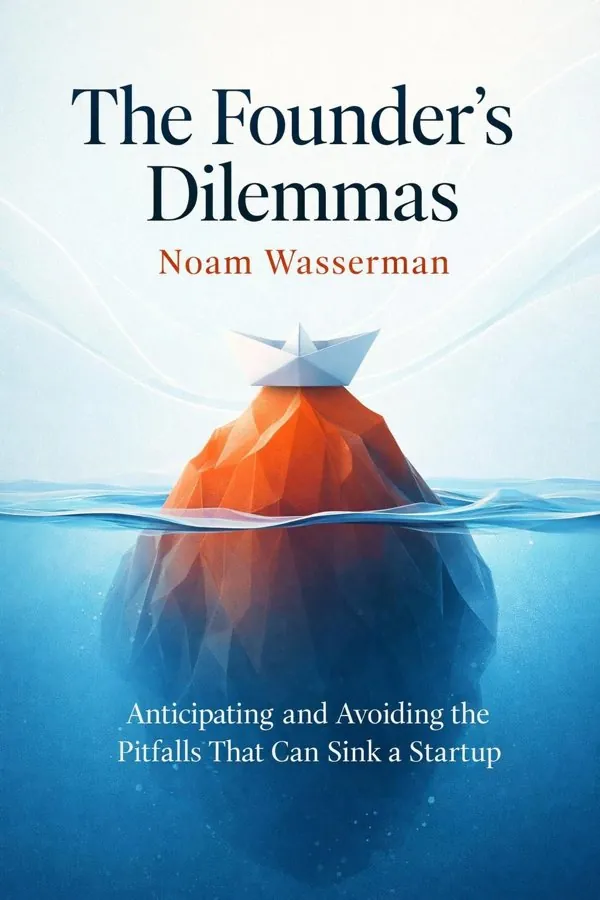
The Founder's Dilemmas: Anticipating and Avoiding the Pitfalls That Can Sink a Startup: Summary & Key Insights
 10 min11 chaptersAudio available
What Is The Founder's Dilemmas: Anticipating and Avoiding the Pitfalls That Can Sink a Startup About?
The Founder's Dilemmas: Anticipating and Avoiding the Pitfalls That Can Sink a Startup by Noam Wasserman is a entrepreneurship book spanning 11 pages. In The Founder's Dilemmas, Noam Wasserman explores the critical decisions entrepreneurs face when launching and growing startups. Drawing on a decade of research involving thousands of founders, the book examines issues such as equity splits, hiring, and the choice between control and wealth. Wasserman provides data-driven insights and real-world examples to help founders anticipate challenges and make informed decisions that increase their chances of long-term success.
This FizzRead summary covers all 11 key chapters of The Founder's Dilemmas: Anticipating and Avoiding the Pitfalls That Can Sink a Startup in approximately 10 minutes, distilling the most important ideas, arguments, and takeaways from Noam Wasserman's work. Also available as an audio summary and Key Quotes Podcast.
The Founder's Dilemmas: Anticipating and Avoiding the Pitfalls That Can Sink a Startup
In The Founder's Dilemmas, Noam Wasserman explores the critical decisions entrepreneurs face when launching and growing startups. Drawing on a decade of research involving thousands of founders, the book examines issues such as equity splits, hiring, and the choice between control and wealth. Wasserman provides data-driven insights and real-world examples to help founders anticipate challenges and make informed decisions that increase their chances of long-term success.
Who Should Read The Founder's Dilemmas: Anticipating and Avoiding the Pitfalls That Can Sink a Startup?
This book is perfect for anyone interested in entrepreneurship and looking to gain actionable insights in a short read. Whether you're a student, professional, or lifelong learner, the key ideas from The Founder's Dilemmas: Anticipating and Avoiding the Pitfalls That Can Sink a Startup by Noam Wasserman will help you think differently.
- ✓Readers who enjoy entrepreneurship and want practical takeaways
- ✓Professionals looking to apply new ideas to their work and life
- ✓Anyone who wants the core insights of The Founder's Dilemmas: Anticipating and Avoiding the Pitfalls That Can Sink a Startup in just 10 minutes
Want the full summary?
Get instant access to this book summary and 100K+ more with Fizz Moment.
Get Free SummaryAvailable on App Store • Free to download
Key Chapters
One of the first and most personal decisions you’ll make as a founder is whether to go it alone or to join forces with others. There’s undeniable appeal to building a startup with people you trust—your best friend from college, a former colleague, or someone who shares your passion. But this decision shapes everything that follows, and it is often where founders unknowingly create the seeds of future conflict.
In my research, solo founders made up roughly half of all startups examined, while the rest began with multiple cofounders. Solo founders enjoy clarity of decision-making, unchallenged control, and a unity of vision. Yet they often face isolation—fewer resources, limited expertise, and overwhelming workload. Conversely, founding with partners can multiply skills and credibility but introduces shared decision-making and potential disagreement.
The founding team dynamic doesn’t just affect operational execution; it molds the emotional and strategic foundation. I’ve seen duos and trios struggle under the weight of diverging commitment levels, risk tolerance, or personal goals. The healthiest founding teams communicate openly about expectations—not just what they’ll do but what they want out of the journey. Without this clarity, what starts as friendship can end in broken trust.
Forming a founding team should feel like forming a lasting partnership rather than a casual collaboration. It means asking difficult questions early: Are we equally committed? Do we share the same long-term vision? Are we comfortable confronting each other honestly? The answers to these questions define not only harmony but resilience when crises arise.
Choosing a cofounder may be the most consequential hiring decision you will ever make. And yet, most founders base this choice on comfort, not complementarity. My data revealed that nearly forty percent of founding teams formed through prior social relationships—friends, relatives, classmates. The logic is simple: you know them, you trust them, you can speak freely. But familiarity can mask fundamental differences in risk appetite and strategic thinking.
The key insight is that successful founding partnerships often balance familiarity with complementarity. Shared values build cohesion, but distinct skills build strength. For example, one founder may be visionary while another excels in execution; one brings technical expertise while the other masters customer relationships. The tension between these approaches, when well managed, produces disciplined innovation.
When founders choose partners purely out of comfort, they tend to avoid hard discussions about roles, equity, and goals. This avoidance becomes perilous as the company evolves. A friendship rarely includes negotiation training, but a cofounder relationship demands it. Paradoxically, professional distance can foster clarity and long-term alignment. Thus, if you’re forming a team, remember that “trust” must extend beyond emotional safety—it must include confidence in competence and alignment in vision.
+ 9 more chapters — available in the FizzRead app
All Chapters in The Founder's Dilemmas: Anticipating and Avoiding the Pitfalls That Can Sink a Startup
About the Author
Noam Wasserman is an American academic and author specializing in entrepreneurship and leadership. He served as a professor at Harvard Business School and later became the dean of Yeshiva University’s Sy Syms School of Business. His research focuses on the early decisions that shape startup success and founder dynamics.
Get This Summary in Your Preferred Format
Read or listen to the The Founder's Dilemmas: Anticipating and Avoiding the Pitfalls That Can Sink a Startup summary by Noam Wasserman anytime, anywhere. FizzRead offers multiple formats so you can learn on your terms — all free.
Available formats: App · Audio · PDF · EPUB — All included free with FizzRead
Download The Founder's Dilemmas: Anticipating and Avoiding the Pitfalls That Can Sink a Startup PDF and EPUB Summary
Key Quotes from The Founder's Dilemmas: Anticipating and Avoiding the Pitfalls That Can Sink a Startup
“One of the first and most personal decisions you’ll make as a founder is whether to go it alone or to join forces with others.”
“Choosing a cofounder may be the most consequential hiring decision you will ever make.”
Frequently Asked Questions about The Founder's Dilemmas: Anticipating and Avoiding the Pitfalls That Can Sink a Startup
The Founder's Dilemmas: Anticipating and Avoiding the Pitfalls That Can Sink a Startup by Noam Wasserman is a entrepreneurship book that explores key ideas across 11 chapters. In The Founder's Dilemmas, Noam Wasserman explores the critical decisions entrepreneurs face when launching and growing startups. Drawing on a decade of research involving thousands of founders, the book examines issues such as equity splits, hiring, and the choice between control and wealth. Wasserman provides data-driven insights and real-world examples to help founders anticipate challenges and make informed decisions that increase their chances of long-term success.
You Might Also Like
Lean Analytics
Alistair Croll, Benjamin Yoskovitz
10 min
21 Days To A Big Idea: Creating Breakthrough Business Concepts
Bryan Mattimore
10 min
Sam Walton: Made in America: My Story
Sam Walton
10 min
10x Is Easier Than 2x: How World-Class Entrepreneurs Achieve More by Doing Less
Dan Sullivan, Benjamin Hardy
10 min
12 Months to $1 Million: How to Pick a Winning Product, Build a Real Business, and Become a Seven-Figure Entrepreneur
Ryan Daniel Moran
10 min
24 Assets: Create a Digital, Scalable, Valuable Business
Daniel Priestley
10 minBrowse by Category
Ready to read The Founder's Dilemmas: Anticipating and Avoiding the Pitfalls That Can Sink a Startup?
Get the full summary and 100K+ more books with Fizz Moment.