
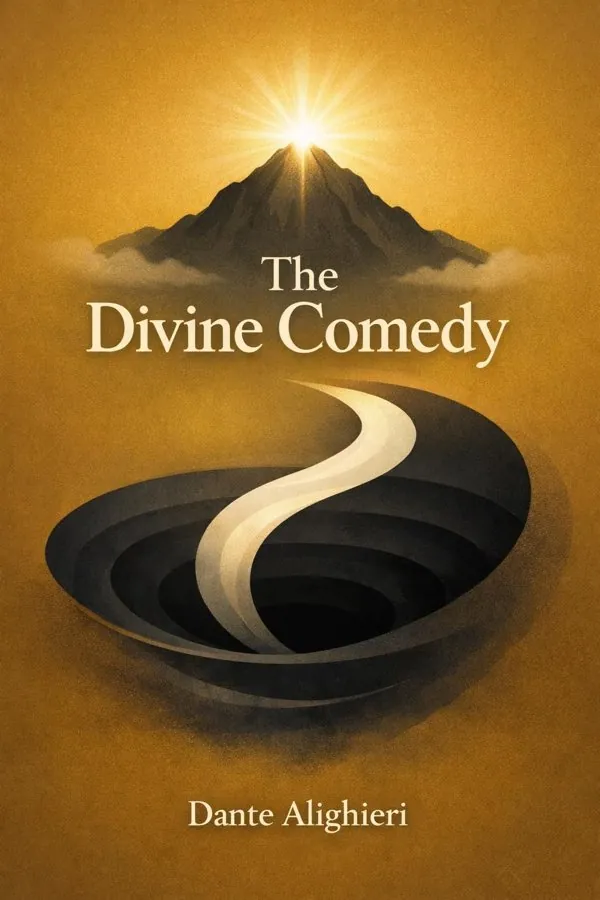
The Divine Comedy: Summary & Key Insights
 10 min3 chaptersAudio available
What Is The Divine Comedy About?
The Divine Comedy by Dante Alighieri is a classics book spanning 3 pages. The Divine Comedy is an epic poem by Dante Alighieri, written between 1304 and 1321. It is considered one of the greatest works of world literature and describes Dante’s allegorical journey through Hell, Purgatory, and Paradise, guided first by Virgil and then by Beatrice. The poem explores themes of divine justice, redemption, and love, offering a profound vision of the human condition and medieval spirituality.
This FizzRead summary covers all 3 key chapters of The Divine Comedy in approximately 10 minutes, distilling the most important ideas, arguments, and takeaways from Dante Alighieri's work. Also available as an audio summary and Key Quotes Podcast.
The Divine Comedy
The Divine Comedy is an epic poem by Dante Alighieri, written between 1304 and 1321. It is considered one of the greatest works of world literature and describes Dante’s allegorical journey through Hell, Purgatory, and Paradise, guided first by Virgil and then by Beatrice. The poem explores themes of divine justice, redemption, and love, offering a profound vision of the human condition and medieval spirituality.
Who Should Read The Divine Comedy?
This book is perfect for anyone interested in classics and looking to gain actionable insights in a short read. Whether you're a student, professional, or lifelong learner, the key ideas from The Divine Comedy by Dante Alighieri will help you think differently.
- ✓Readers who enjoy classics and want practical takeaways
- ✓Professionals looking to apply new ideas to their work and life
- ✓Anyone who wants the core insights of The Divine Comedy in just 10 minutes
Want the full summary?
Get instant access to this book summary and 100K+ more with Fizz Moment.
Get Free SummaryAvailable on App Store • Free to download
Key Chapters
When I stood before the gates of Hell, the words inscribed there—'Abandon all hope, you who enter here'—became a threshold of terrifying clarity. They proclaimed not merely despair, but the truth that in rejecting divine order, the soul cuts itself off from hope itself. Virgil and I stepped forward into a space formed entirely by the logic of divine justice—Hell’s nine descending circles, each a mirror of disordered love.
In the first circles dwell those who, though virtuous in human terms, lacked the light of divine grace. Then come the souls enslaved to passions—incontinence, lust, gluttony, greed. I saw in them a reflection of our own desires when left unchecked by reason. Each punishment is not arbitrary cruelty but the natural consequence of sin: the lustful whirled forever in endless winds, the gluttonous wallowing in filth, the spendthrifts and hoarders clashing ceaselessly. Their suffering is the anatomy of the soul disfigured by excess.
As we descend, sins grow darker—deliberate malice, violence, deceit. Here are tyrants steeped in blood, flatterers sunk in excrement, hypocrites weighed down by gilded cloaks of lead. I recognized in these layers the degrees by which pride transforms intelligence into cunning, ambition into betrayal. Even those of my own Florence appeared before me, damned by the politics they placed above virtue. In recording their names, I do not gloat—I mourn. For Hell is not vengeance; it is the freezing of love.
At the very base we came upon Cocytus, the frozen lake of treachery. Its icy silence contrasts the shrieks above: here, where warmth and movement of charity are utterly absent, Lucifer himself lies encased. Three faces, eternally chewing on Judas, Brutus, and Cassius—the ultimate betrayers of sacred trust. His wings, beating to escape, only deepen his prison. And as we clamber over his ribs to emerge once more beneath the stars, I realize the profound irony: even in Hell, we must descend before we can ascend.
Emerging beneath the southern sky, I beheld Mount Purgatory rising from the ocean—a symbol of renewed hope. Where Hell was an abyss of paralysis, Purgatory is a mountain of movement. Souls here are penitent, not damned; they long for Heaven, and though they suffer, their suffering purifies rather than condemns.
Virgil remains my guide, the voice of reason still necessary to orient my steps. The terraces of Purgatory correspond to the seven deadly sins, transformed now from guilt into opportunity for restoration. The proud bend beneath heavy stones until humility is learned. The envious share their joy in others’ good, shedding the tears that once blinded them. The slothful hurry in ceaseless motion, reclaiming the zeal once forsaken. Each terrace embodies not only correction but education of the will—an ascetic artistry of love reborn.
What most moved me was the atmosphere of shared compassion. In Hell, souls isolate themselves; here they urge one another upward, praying for those still living, whose prayers in turn hasten their ascent. Divine justice here blends seamlessly with mercy; the divine economy of grace allows the living and the dead to assist each other in love.
As we near the summit, Virgil’s mission reaches its end. Upon the threshold of the Earthly Paradise, he crowns me master of self through reason, but confesses he can guide me no further. 'Your will is now free, upright, and whole,' he tells me. Yet reason can only lift us to the gate of Eden—it cannot grant entrance. When Beatrice appears, arrayed in divine light, I am overcome with trembling. She embodies both reproach and redemption. In her gaze I confront all my failings, but also the love that transforms failure into glory. Under her guidance, reason yields to revelation.
+ 1 more chapters — available in the FizzRead app
All Chapters in The Divine Comedy
About the Author
Dante Alighieri (1265–1321) was an Italian poet, writer, and political thinker, widely regarded as the father of the Italian language. His masterpiece, The Divine Comedy, profoundly influenced Western literature and culture. Exiled from Florence due to political conflicts, Dante spent much of his later life in exile, where he completed his monumental work.
Get This Summary in Your Preferred Format
Read or listen to the The Divine Comedy summary by Dante Alighieri anytime, anywhere. FizzRead offers multiple formats so you can learn on your terms — all free.
Available formats: App · Audio · PDF · EPUB — All included free with FizzRead
Download The Divine Comedy PDF and EPUB Summary
Key Quotes from The Divine Comedy
“When I stood before the gates of Hell, the words inscribed there—'Abandon all hope, you who enter here'—became a threshold of terrifying clarity.”
“Emerging beneath the southern sky, I beheld Mount Purgatory rising from the ocean—a symbol of renewed hope.”
Frequently Asked Questions about The Divine Comedy
The Divine Comedy by Dante Alighieri is a classics book that explores key ideas across 3 chapters. The Divine Comedy is an epic poem by Dante Alighieri, written between 1304 and 1321. It is considered one of the greatest works of world literature and describes Dante’s allegorical journey through Hell, Purgatory, and Paradise, guided first by Virgil and then by Beatrice. The poem explores themes of divine justice, redemption, and love, offering a profound vision of the human condition and medieval spirituality.
You Might Also Like





Browse by Category
Ready to read The Divine Comedy?
Get the full summary and 100K+ more books with Fizz Moment.