
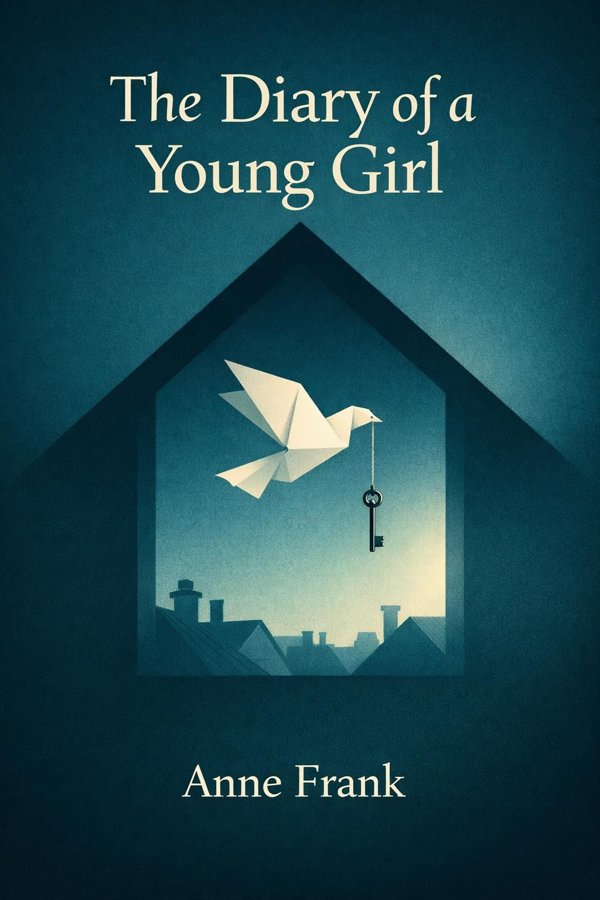
The Diary of a Young Girl: Summary & Key Insights
by Anne Frank
 10 min6 chaptersAudio available
What Is The Diary of a Young Girl About?
The Diary of a Young Girl by Anne Frank is a classics book spanning 6 pages. Discovered in the attic in which she spent the last years of her life, Anne Frank’s remarkable diary has become a world classic—a powerful reminder of the horrors of war and the enduring strength of the human spirit. Written while in hiding during the Nazi occupation of Holland, the diary captures the thoughts, fears, and hopes of a young Jewish girl whose voice continues to resonate across generations.
This FizzRead summary covers all 6 key chapters of The Diary of a Young Girl in approximately 10 minutes, distilling the most important ideas, arguments, and takeaways from Anne Frank's work. Also available as an audio summary and Key Quotes Podcast.
The Diary of a Young Girl
Discovered in the attic in which she spent the last years of her life, Anne Frank’s remarkable diary has become a world classic—a powerful reminder of the horrors of war and the enduring strength of the human spirit. Written while in hiding during the Nazi occupation of Holland, the diary captures the thoughts, fears, and hopes of a young Jewish girl whose voice continues to resonate across generations.
Who Should Read The Diary of a Young Girl?
This book is perfect for anyone interested in classics and looking to gain actionable insights in a short read. Whether you're a student, professional, or lifelong learner, the key ideas from The Diary of a Young Girl by Anne Frank will help you think differently.
- ✓Readers who enjoy classics and want practical takeaways
- ✓Professionals looking to apply new ideas to their work and life
- ✓Anyone who wants the core insights of The Diary of a Young Girl in just 10 minutes
Want the full summary?
Get instant access to this book summary and 100K+ more with Fizz Moment.
Get Free SummaryAvailable on App Store • Free to download
Key Chapters
In the summer of 1942, my world narrowed at an alarming pace. Amsterdam, the city I had always known as home, became a web of forbidden streets and dangerous glances. Germany’s occupation of the Netherlands had already stripped us of freedoms, but now the nooses tightened: we had to wear the Star of David, forbidden to attend our schools, go to theaters, or use public transportation. Each law carved away a piece of our normal lives. The fear crept closer every day—the sudden knock at a neighbor’s door, the empty house next week.
My father, Otto Frank, had seen what was coming long before we children could comprehend it. He prepared rooms behind his office building on Prinsengracht—a hidden space where we could live undetected. We called it the Secret Annex. The night my sister Margot received a call-up notice to report for deportation was the night the decision became urgent. On July 6, 1942, we packed our belongings in silence and stepped into hiding. The familiar city vanished behind us. From that moment, our lives would be measured not by days of sun or laughter, but by whispers, shadows, and endless waiting.
The uncertainty at first was intolerable. I missed my friends, my school, my cherished cat. But among the terror there was also a strange excitement, as though we were stepping into a secret story whose ending no one yet knew. I clung to my diary, calling it ‘Kitty,’ and spoke to it as if to a trusted friend who could absorb all the emotions the world would no longer permit me to show. That act of writing was a lifeline—proof that I was still alive, still thinking, still feeling.
The Annex became our new universe—eight people contained within a few rooms, surrounded by silence so thick it could almost be heard. We shared our hiding place with the Van Pels family—Mr. and Mrs. Van Pels and their son Peter—and later with Mr. Dussel, a dentist. Each arrival changed the rhythm of our existence. Privacy vanished, replaced by the irritating closeness of bodies and habits. We lived under constant fear; a dropped fork could mean exposure. Every creak in the floorboards was a threat. The world outside—the office employees, the streets, the war—continued as usual, but we remained shadows concealed behind ordinary life.
Days merged into weeks. We rose early, but could not make noise until after the warehouse workers left each evening. We cooked, cleaned, washed ourselves with little water, and rationed every crumb. Yet amid the monotony, my mind wandered freely. I observed everyone—my mother’s anxious sighs, Mr. Van Pels’s arrogance, Mrs. Van Pels’s vanity, and Peter’s quiet sting of loneliness. The tension often exploded in petty quarrels, words sharper than hunger. I noticed my own impatience, the difficulty of growing up when confined with adults who expected obedience yet offered no understanding.
But the most remarkable thing was how our spirits refused to die. Even in confinement, we managed to celebrate birthdays, enjoy shared meals, and laugh at absurdities. Each little joy was a rebellion against despair. My writing became more introspective—I began to question who I really was. Was I still the playful girl from school? Or had the hidden Anne become a person entirely different, wiser and more fragile? Within the silence, I discovered that the mind is vast enough to escape any prison.
+ 4 more chapters — available in the FizzRead app
All Chapters in The Diary of a Young Girl
About the Author
Anne Frank (1929–1945) was a Jewish girl who went into hiding in Amsterdam during World War II. Her diary, written between 1942 and 1944, was published posthumously by her father, Otto Frank, and has become one of the most widely read and influential personal accounts of the Holocaust.
Get This Summary in Your Preferred Format
Read or listen to the The Diary of a Young Girl summary by Anne Frank anytime, anywhere. FizzRead offers multiple formats so you can learn on your terms — all free.
Available formats: App · Audio · PDF · EPUB — All included free with FizzRead
Download The Diary of a Young Girl PDF and EPUB Summary
Key Quotes from The Diary of a Young Girl
“In the summer of 1942, my world narrowed at an alarming pace.”
“The Annex became our new universe—eight people contained within a few rooms, surrounded by silence so thick it could almost be heard.”
Frequently Asked Questions about The Diary of a Young Girl
The Diary of a Young Girl by Anne Frank is a classics book that explores key ideas across 6 chapters. Discovered in the attic in which she spent the last years of her life, Anne Frank’s remarkable diary has become a world classic—a powerful reminder of the horrors of war and the enduring strength of the human spirit. Written while in hiding during the Nazi occupation of Holland, the diary captures the thoughts, fears, and hopes of a young Jewish girl whose voice continues to resonate across generations.
You Might Also Like


Browse by Category
Ready to read The Diary of a Young Girl?
Get the full summary and 100K+ more books with Fizz Moment.