
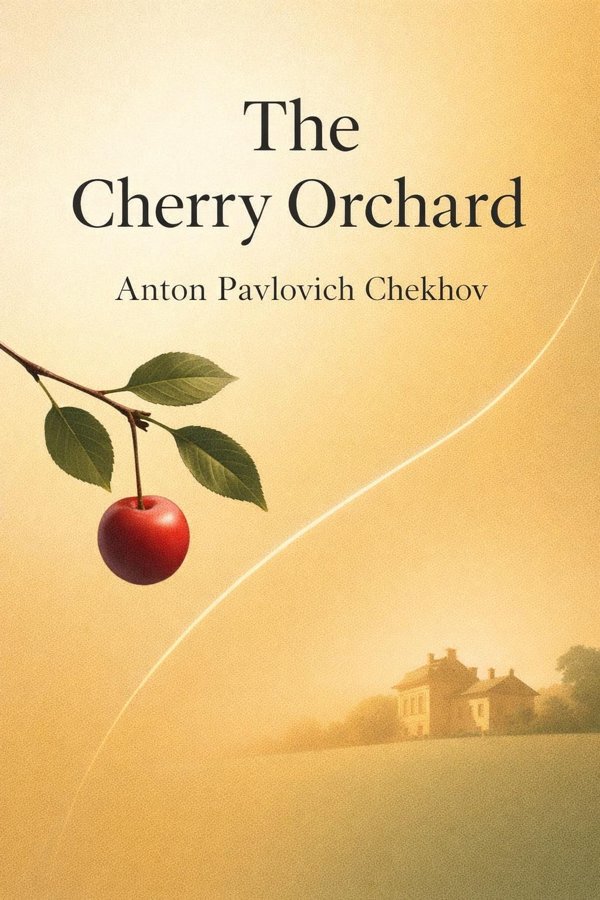
The Cherry Orchard: Summary & Key Insights
 10 min5 chaptersAudio available
What Is The Cherry Orchard About?
The Cherry Orchard by Anton Pavlovich Chekhov is a classics book spanning 5 pages. The Cherry Orchard is Anton Chekhov’s final play, written in 1903 and first performed at the Moscow Art Theatre in 1904. It portrays the decline of an aristocratic estate and the passing of an old social order, symbolized by the sale of the cherry orchard. Through the fates of its characters, Chekhov captures the social changes in early 20th-century Russia, blending tragedy and comedy with subtle psychological insight.
This FizzRead summary covers all 5 key chapters of The Cherry Orchard in approximately 10 minutes, distilling the most important ideas, arguments, and takeaways from Anton Pavlovich Chekhov's work. Also available as an audio summary and Key Quotes Podcast.
The Cherry Orchard
The Cherry Orchard is Anton Chekhov’s final play, written in 1903 and first performed at the Moscow Art Theatre in 1904. It portrays the decline of an aristocratic estate and the passing of an old social order, symbolized by the sale of the cherry orchard. Through the fates of its characters, Chekhov captures the social changes in early 20th-century Russia, blending tragedy and comedy with subtle psychological insight.
Who Should Read The Cherry Orchard?
This book is perfect for anyone interested in classics and looking to gain actionable insights in a short read. Whether you're a student, professional, or lifelong learner, the key ideas from The Cherry Orchard by Anton Pavlovich Chekhov will help you think differently.
- ✓Readers who enjoy classics and want practical takeaways
- ✓Professionals looking to apply new ideas to their work and life
- ✓Anyone who wants the core insights of The Cherry Orchard in just 10 minutes
Want the full summary?
Get instant access to this book summary and 100K+ more with Fizz Moment.
Get Free SummaryAvailable on App Store • Free to download
Key Chapters
The curtain rises on the cherry orchard in full bloom, and that sight alone captures the essence of memory and beauty—the perfection before decay. Lyuba Ranevskaya returns from Paris, her life abroad marked by emotional exhaustion and failed love. She comes home not only to her ancestral estate but also to the ghosts she left behind. The cherry orchard glistens in the May sunlight, yet its brilliance conceals the rot of financial mismanagement and denial. The family is drowning in debt, the estate is threatened by sale, and only a decisive act could save it.
But Ranevskaya and her brother Gaev are incapable of action. Their world belongs to another time, built on the illusions of aristocratic permanence. Lopakhin, the robust merchant—the son of a serf once owned by this very family—embodies the new Russia. He proposes a practical solution: divide the land, lease it for summer cottages, and preserve some semblance of wealth. But to Ranevskaya, this is sacrilege. She cannot imagine her orchard desecrated, its ancient trees cut to make way for progress. The act becomes a dialogue between two worlds—the sentimental and the pragmatic—and a mirror of my country’s transition.
In these opening scenes, I wish you to feel how nostalgia intoxicates and paralyzes. The beauty of the cherry blooms seduces the characters into reverie, while the ticking of the clock—each debt unpaid, each letter unopened—whispers doom. My approach was not to condemn them, but to show the humanity in their blindness. Life rarely offers villains; it offers only the innocent errors of love, the inability to see beyond what one treasures most. Even as Lopakhin advocates change, he is touched by the tenderness of what stands to be lost. His voice trembles between ambition and affection, between his desire to rise and his pity for those who fall.
As summer deepens, so does the anxiety surrounding the impending auction. The estate’s future hangs like a storm cloud over every conversation. I set the second act outdoors—the open air becomes a stage for philosophical reflection, the orchard itself a silent witness to the passing age.
Ranevskaya still clings to the poetry of her surroundings, her eyes fixed upon the trees, the scent of blossoms that recall her youth. She refuses to confront the cold reality of economics. Her brother Gaev talks of billiards, of noble sentiments, but words cannot mend the crumbling estate. Meanwhile, Lopakhin, practical yet yearning, pleads again to save them through modern enterprise. His frustration reveals the painful truth: old ideals die hard, even when survival demands transformation.
In Anya and Trofimov, I placed the spirit of the new generation. Anya, Ranevskaya’s daughter, listens with open heart to Trofimov, the eternal student, the seeker of purity and freedom. His speeches about work, progress, and moral renewal are not simply ideological—they are the voice of my own vision for Russia's awakening. He sees through the layers of privilege and decay, calling for a world built on labor and intelligence rather than birthright. Their bond is fragile and idealistic, but it glimmers with promise. I wanted their dialogue to contrast sharply with Ranevskaya’s emotional inertia. The orchard may soon be sold, but its symbolic seeds are being replanted within their youthful hopes.
This act captures how people sense change without fully comprehending it. Each character gazes at the same horizon yet interprets it differently—some with fear, others with faith. It was my intention to reflect the way societies approach revolution—not through grand gestures but through the quiet tremors of individuals wrestling with their own identities. As the sound of distant music drifts across the trees, they stand at the threshold of history, still unable to step forward.
+ 3 more chapters — available in the FizzRead app
All Chapters in The Cherry Orchard
About the Author
Anton Pavlovich Chekhov (1860–1904) was a Russian writer, playwright, and physician, regarded as one of the greatest masters of short fiction and modern drama. His works are known for their deep psychological realism, humanism, and delicate humor. Chekhov’s influence on world literature and theater remains profound.
Get This Summary in Your Preferred Format
Read or listen to the The Cherry Orchard summary by Anton Pavlovich Chekhov anytime, anywhere. FizzRead offers multiple formats so you can learn on your terms — all free.
Available formats: App · Audio · PDF · EPUB — All included free with FizzRead
Download The Cherry Orchard PDF and EPUB Summary
Key Quotes from The Cherry Orchard
“The curtain rises on the cherry orchard in full bloom, and that sight alone captures the essence of memory and beauty—the perfection before decay.”
“As summer deepens, so does the anxiety surrounding the impending auction.”
Frequently Asked Questions about The Cherry Orchard
The Cherry Orchard by Anton Pavlovich Chekhov is a classics book that explores key ideas across 5 chapters. The Cherry Orchard is Anton Chekhov’s final play, written in 1903 and first performed at the Moscow Art Theatre in 1904. It portrays the decline of an aristocratic estate and the passing of an old social order, symbolized by the sale of the cherry orchard. Through the fates of its characters, Chekhov captures the social changes in early 20th-century Russia, blending tragedy and comedy with subtle psychological insight.
You Might Also Like


Browse by Category
Ready to read The Cherry Orchard?
Get the full summary and 100K+ more books with Fizz Moment.