
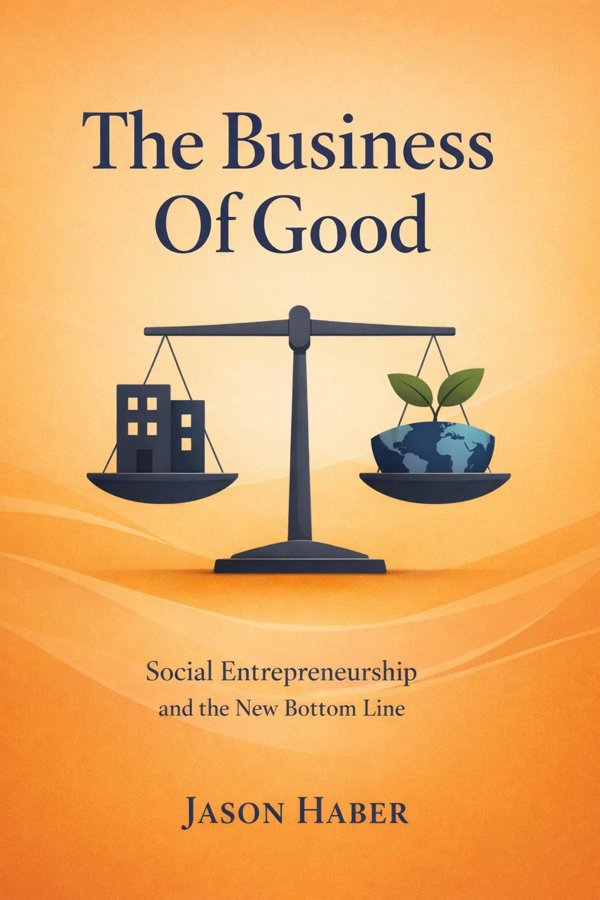
The Business Of Good: Social Entrepreneurship and the New Bottom Line: Summary & Key Insights
by Jason Haber
 10 min5 chaptersAudio available
What Is The Business Of Good: Social Entrepreneurship and the New Bottom Line About?
The Business Of Good: Social Entrepreneurship and the New Bottom Line by Jason Haber is a entrepreneurship book spanning 5 pages. The Business of Good explores the rise of social entrepreneurship, highlighting how individuals and organizations are redefining success by combining profit with purpose. Through case studies and personal stories, Jason Haber illustrates how social entrepreneurs are tackling global challenges, creating jobs, and driving sustainable change.
This FizzRead summary covers all 5 key chapters of The Business Of Good: Social Entrepreneurship and the New Bottom Line in approximately 10 minutes, distilling the most important ideas, arguments, and takeaways from Jason Haber's work. Also available as an audio summary and Key Quotes Podcast.
The Business Of Good: Social Entrepreneurship and the New Bottom Line
The Business of Good explores the rise of social entrepreneurship, highlighting how individuals and organizations are redefining success by combining profit with purpose. Through case studies and personal stories, Jason Haber illustrates how social entrepreneurs are tackling global challenges, creating jobs, and driving sustainable change.
Who Should Read The Business Of Good: Social Entrepreneurship and the New Bottom Line?
This book is perfect for anyone interested in entrepreneurship and looking to gain actionable insights in a short read. Whether you're a student, professional, or lifelong learner, the key ideas from The Business Of Good: Social Entrepreneurship and the New Bottom Line by Jason Haber will help you think differently.
- ✓Readers who enjoy entrepreneurship and want practical takeaways
- ✓Professionals looking to apply new ideas to their work and life
- ✓Anyone who wants the core insights of The Business Of Good: Social Entrepreneurship and the New Bottom Line in just 10 minutes
Want the full summary?
Get instant access to this book summary and 100K+ more with Fizz Moment.
Get Free SummaryAvailable on App Store • Free to download
Key Chapters
+ 3 more chapters — available in the FizzRead app
All Chapters in The Business Of Good: Social Entrepreneurship and the New Bottom Line
About the Author
Jason Haber is an American entrepreneur, author, and real estate executive known for his work in social entrepreneurship and innovation. He has founded several ventures focused on social impact and has been a lecturer and speaker on entrepreneurship and business ethics.
Get This Summary in Your Preferred Format
Read or listen to the The Business Of Good: Social Entrepreneurship and the New Bottom Line summary by Jason Haber anytime, anywhere. FizzRead offers multiple formats so you can learn on your terms — all free.
Available formats: App · Audio · PDF · EPUB — All included free with FizzRead
Download The Business Of Good: Social Entrepreneurship and the New Bottom Line PDF and EPUB Summary
Key Quotes from The Business Of Good: Social Entrepreneurship and the New Bottom Line
“To understand the movement toward social entrepreneurship, we must first understand the system it emerged to challenge.”
“What drives someone to build a company that puts social good at the center?”
Frequently Asked Questions about The Business Of Good: Social Entrepreneurship and the New Bottom Line
The Business Of Good: Social Entrepreneurship and the New Bottom Line by Jason Haber is a entrepreneurship book that explores key ideas across 5 chapters. The Business of Good explores the rise of social entrepreneurship, highlighting how individuals and organizations are redefining success by combining profit with purpose. Through case studies and personal stories, Jason Haber illustrates how social entrepreneurs are tackling global challenges, creating jobs, and driving sustainable change.
You Might Also Like

Lean Analytics
Alistair Croll, Benjamin Yoskovitz
10 min
21 Days To A Big Idea: Creating Breakthrough Business Concepts
Bryan Mattimore
10 min
Sam Walton: Made in America: My Story
Sam Walton
10 min
10x Is Easier Than 2x: How World-Class Entrepreneurs Achieve More by Doing Less
Dan Sullivan, Benjamin Hardy
10 min
12 Months to $1 Million: How to Pick a Winning Product, Build a Real Business, and Become a Seven-Figure Entrepreneur
Ryan Daniel Moran
10 min
24 Assets: Create a Digital, Scalable, Valuable Business
Daniel Priestley
10 minBrowse by Category
Ready to read The Business Of Good: Social Entrepreneurship and the New Bottom Line?
Get the full summary and 100K+ more books with Fizz Moment.