
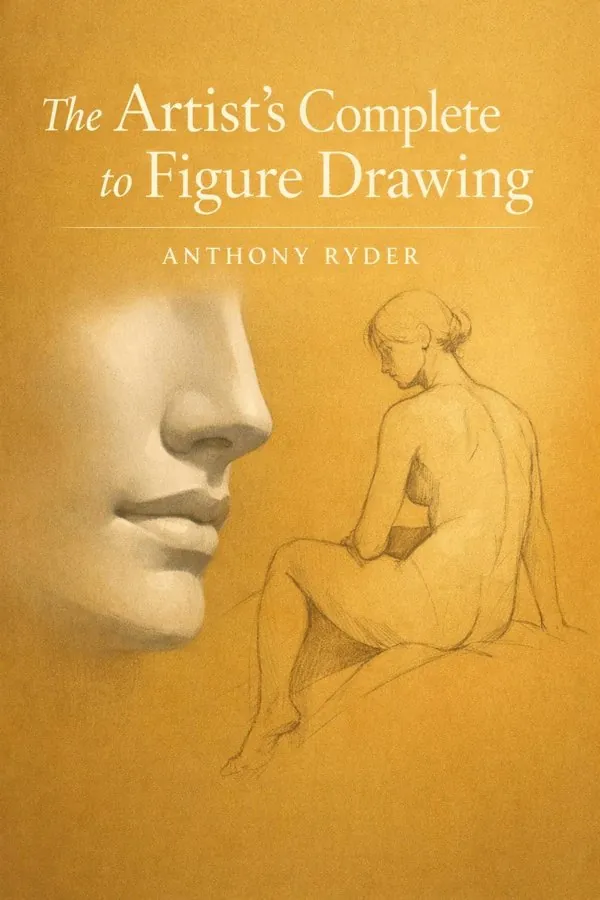
The Artist's Complete Guide to Figure Drawing: A Contemporary Perspective on the Classical Tradition: Summary & Key Insights
 10 min6 chaptersAudio available
What Is The Artist's Complete Guide to Figure Drawing: A Contemporary Perspective on the Classical Tradition About?
The Artist's Complete Guide to Figure Drawing: A Contemporary Perspective on the Classical Tradition by Anthony Ryder is a design book spanning 6 pages. This comprehensive guide by Anthony Ryder presents a modern approach to classical figure drawing. It emphasizes observation, proportion, and the use of light and shadow to create lifelike human forms. The book combines traditional techniques with contemporary insights, offering step-by-step demonstrations and detailed illustrations that help artists develop their skills in rendering the human figure with accuracy and expression.
This FizzRead summary covers all 6 key chapters of The Artist's Complete Guide to Figure Drawing: A Contemporary Perspective on the Classical Tradition in approximately 10 minutes, distilling the most important ideas, arguments, and takeaways from Anthony Ryder's work. Also available as an audio summary and Key Quotes Podcast.
The Artist's Complete Guide to Figure Drawing: A Contemporary Perspective on the Classical Tradition
This comprehensive guide by Anthony Ryder presents a modern approach to classical figure drawing. It emphasizes observation, proportion, and the use of light and shadow to create lifelike human forms. The book combines traditional techniques with contemporary insights, offering step-by-step demonstrations and detailed illustrations that help artists develop their skills in rendering the human figure with accuracy and expression.
Who Should Read The Artist's Complete Guide to Figure Drawing: A Contemporary Perspective on the Classical Tradition?
This book is perfect for anyone interested in design and looking to gain actionable insights in a short read. Whether you're a student, professional, or lifelong learner, the key ideas from The Artist's Complete Guide to Figure Drawing: A Contemporary Perspective on the Classical Tradition by Anthony Ryder will help you think differently.
- ✓Readers who enjoy design and want practical takeaways
- ✓Professionals looking to apply new ideas to their work and life
- ✓Anyone who wants the core insights of The Artist's Complete Guide to Figure Drawing: A Contemporary Perspective on the Classical Tradition in just 10 minutes
Want the full summary?
Get instant access to this book summary and 100K+ more with Fizz Moment.
Get Free SummaryAvailable on App Store • Free to download
Key Chapters
Observation is the foundation of all figure drawing, but true observation goes well beyond simply looking. It’s an act of engagement, of learning to perceive the truth of what sits before you rather than projecting what you think you know. When I begin working with a student, I ask them to slow down. Before they even pick up the pencil, I encourage them to look—really look—at the model. Noticing the relationships between parts, the tilts, the subtle rhythms that bring life.
In classical drawing, seeing means recognizing proportion and gesture simultaneously. The eye must learn to measure without rigidity, to sense the harmony of parts as they relate to the whole. You can imagine your gaze tracing a pathway from head to toe, discovering not just distances but flows of energy and balance. Through simple exercises in measurement and alignment, you’ll begin to notice the underlying order beneath complexity.
Observation also means embracing patience. Rapid drawing can capture vitality, but true mastery emerges when the eye has learned the subtleties of form—the way a clavicle rises beneath the skin, how light dissolves into shadow at the curve of the shoulder. These discoveries are personal revelations. They build sensitivity and intimacy between artist and subject. The more you refine your seeing, the more your drawing will breathe with authenticity.
Gesture drawing is where life begins on your page. When you sketch a quick gesture, you’re not capturing anatomy so much as energy, intention, and movement. The gesture defines the inner rhythm of the body—the invisible line of force that binds all elements together.
I regard gesture as the heartbeat of figure drawing. Without it, a drawing may be technically correct yet lifeless. With it, even the simplest mark can express vitality. When you draw a standing pose, for example, look for the line of action—the flow that runs through the spine, down the leg, into the foot. Gesture sketching is the act of finding that flow.
In practice, I encourage working lightly and intuitively, using soft lines and fluid strokes that respond to the model’s movement. The gesture stage is fast; it’s about accumulation of impressions. You might make numerous small studies before committing to a larger composition. Over time, gesture becomes your instrument for capturing life—in the dancer’s bend, in the quiet repose of a sleeping figure, in the dynamic stretch of an athlete. Gesture connects body and emotion, reminding you that drawing the figure is a living exploration, not a static record.
+ 4 more chapters — available in the FizzRead app
All Chapters in The Artist's Complete Guide to Figure Drawing: A Contemporary Perspective on the Classical Tradition
About the Author
Anthony Ryder is an American artist and instructor known for his mastery of classical drawing and painting techniques. He studied at the Art Students League of New York and the École Albert Defois in France. Ryder founded The Ryder Studio in Santa Fe, New Mexico, where he teaches figure drawing and painting, continuing the tradition of classical realism.
Get This Summary in Your Preferred Format
Read or listen to the The Artist's Complete Guide to Figure Drawing: A Contemporary Perspective on the Classical Tradition summary by Anthony Ryder anytime, anywhere. FizzRead offers multiple formats so you can learn on your terms — all free.
Available formats: App · Audio · PDF · EPUB — All included free with FizzRead
Download The Artist's Complete Guide to Figure Drawing: A Contemporary Perspective on the Classical Tradition PDF and EPUB Summary
Key Quotes from The Artist's Complete Guide to Figure Drawing: A Contemporary Perspective on the Classical Tradition
“Observation is the foundation of all figure drawing, but true observation goes well beyond simply looking.”
“Gesture drawing is where life begins on your page.”
Frequently Asked Questions about The Artist's Complete Guide to Figure Drawing: A Contemporary Perspective on the Classical Tradition
The Artist's Complete Guide to Figure Drawing: A Contemporary Perspective on the Classical Tradition by Anthony Ryder is a design book that explores key ideas across 6 chapters. This comprehensive guide by Anthony Ryder presents a modern approach to classical figure drawing. It emphasizes observation, proportion, and the use of light and shadow to create lifelike human forms. The book combines traditional techniques with contemporary insights, offering step-by-step demonstrations and detailed illustrations that help artists develop their skills in rendering the human figure with accuracy and expression.
You Might Also Like

The Design of Everyday Things
Don Norman
10 min
The Better Angels of Our Nature
Steven Pinker
10 min
A Designer's Art
Paul Rand
10 min
Architects' Sketchbooks
Various Editors
10 min
Architectural Graphic Standards
The American Institute of Architects
10 min
Design Is Storytelling
Ellen Lupton
10 minBrowse by Category
Ready to read The Artist's Complete Guide to Figure Drawing: A Contemporary Perspective on the Classical Tradition?
Get the full summary and 100K+ more books with Fizz Moment.