
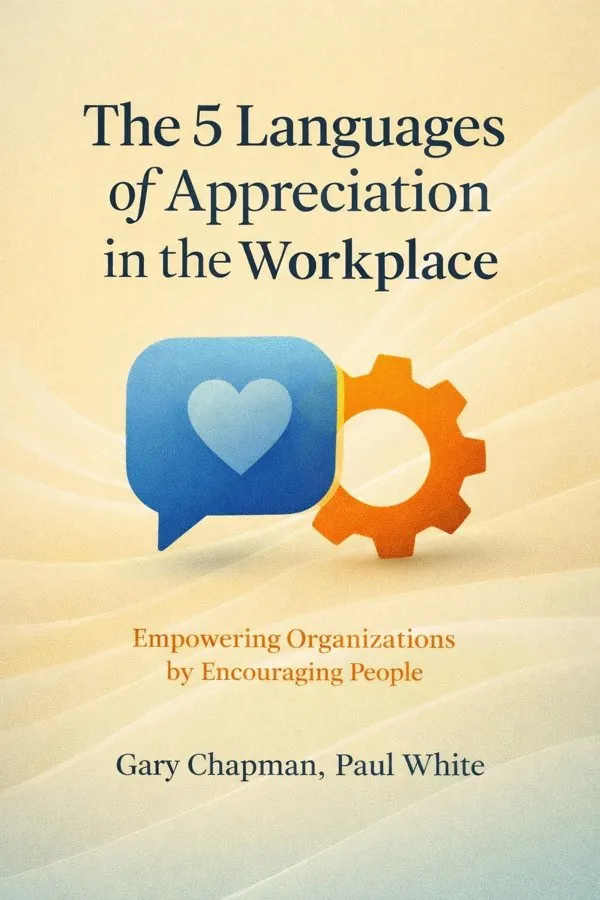
The 5 Languages of Appreciation in the Workplace: Empowering Organizations by Encouraging People: Summary & Key Insights
 10 min4 chaptersAudio available
What Is The 5 Languages of Appreciation in the Workplace: Empowering Organizations by Encouraging People About?
The 5 Languages of Appreciation in the Workplace: Empowering Organizations by Encouraging People by Gary Chapman, Paul White is a organization book spanning 4 pages. The book explores how to effectively express appreciation and encouragement in professional settings by applying the concept of 'love languages' to workplace relationships. It identifies five distinct ways people feel valued—words of affirmation, quality time, acts of service, tangible gifts, and physical touch—and provides practical strategies for managers and colleagues to foster a culture of recognition and engagement.
This FizzRead summary covers all 4 key chapters of The 5 Languages of Appreciation in the Workplace: Empowering Organizations by Encouraging People in approximately 10 minutes, distilling the most important ideas, arguments, and takeaways from Gary Chapman, Paul White's work. Also available as an audio summary and Key Quotes Podcast.
The 5 Languages of Appreciation in the Workplace: Empowering Organizations by Encouraging People
The book explores how to effectively express appreciation and encouragement in professional settings by applying the concept of 'love languages' to workplace relationships. It identifies five distinct ways people feel valued—words of affirmation, quality time, acts of service, tangible gifts, and physical touch—and provides practical strategies for managers and colleagues to foster a culture of recognition and engagement.
Who Should Read The 5 Languages of Appreciation in the Workplace: Empowering Organizations by Encouraging People?
This book is perfect for anyone interested in organization and looking to gain actionable insights in a short read. Whether you're a student, professional, or lifelong learner, the key ideas from The 5 Languages of Appreciation in the Workplace: Empowering Organizations by Encouraging People by Gary Chapman, Paul White will help you think differently.
- ✓Readers who enjoy organization and want practical takeaways
- ✓Professionals looking to apply new ideas to their work and life
- ✓Anyone who wants the core insights of The 5 Languages of Appreciation in the Workplace: Empowering Organizations by Encouraging People in just 10 minutes
Want the full summary?
Get instant access to this book summary and 100K+ more with Fizz Moment.
Get Free SummaryAvailable on App Store • Free to download
Key Chapters
Just as in personal relationships, every individual at work has a unique way of experiencing appreciation. When an organization defaults to a one-size-fits-all recognition model—like generic bonuses or annual awards—it often fails to touch the hearts of those who need affirmation differently. Here’s where the five languages serve as our compass.
Words of Affirmation are about sincere verbal or written expressions of appreciation. Some people thrive when their contributions are noticed and acknowledged verbally. A manager who says, “I really appreciate your attention to detail on that project” can encourage a team member far more effectively than a generic thank-you. But it must be specific and personal. Empty flattery breeds cynicism; genuine, targeted praise builds trust.
Quality Time, on the other hand, is about giving someone your focused attention. This is not about clocking long hours together—it’s about intentional presence. Sitting down to listen, asking about their ideas, or including them meaningfully in decision-making can communicate appreciation more clearly than any award ceremony. In a world of constant distraction, focused time says, “You matter to me.”
Acts of Service resonate deeply with individuals who believe that support speaks louder than words. When deadlines loom and a leader rolls up their sleeves to help finish a task, that quiet action says, “I see what you’re facing, and I’m with you.” For people in this group, appreciation is best expressed through shared effort rather than compliments.
Then there are those who feel valued through Tangible Gifts. We’re not talking about expensive extravagances, but symbols of thoughtfulness—a favorite snack during a busy week, a small token of recognition chosen with care. The key is that the gift reflects personal knowledge of the recipient; without that, it’s just another item on a shelf.
Finally, Physical Touch, while the most sensitive in workplace contexts, remains a real form of appreciation for some individuals. A firm handshake, a pat on the back, or a brief congratulatory gesture—appropriately timed and culturally aware—can communicate camaraderie and goodwill. The guiding principle is simple: always ensure that touch is respectful, consensual, and situationally appropriate.
Through these five languages, appreciation becomes multidimensional. It breaks the uniformity of generic recognition and allows people to feel known and valued in the way that resonates most deeply with them.
Identifying how each team member prefers to receive appreciation is the turning point in transforming workplace culture. This begins with observation and dialogue. Some clues are obvious—those who often affirm others usually value encouraging words themselves. Others who make time for personal connections may see quality time as their appreciation language. But these are hypotheses, not certainties.
This is why we developed the Motivating By Appreciation Inventory, a practical tool that helps each person identify their primary and secondary appreciation languages. With this insight, managers can approach their teams with precision rather than guesswork. A blanket approach, no matter how well-intentioned, often misses the mark; personalization is the key to authenticity.
In organizations that have implemented this process, the shift is remarkable. Teams that once struggled with misunderstanding or low morale begin to communicate more openly. Leaders become more empathetic because they finally grasp how varied human needs are. And employees begin to reciprocate appreciation, creating a communal rhythm of encouragement that feeds both performance and morale. What often surprises organizations is how quickly the tone changes once appreciation becomes intentional rather than accidental. People who were cynical about workplace recognition start saying, “This feels different—it’s real.”
+ 2 more chapters — available in the FizzRead app
All Chapters in The 5 Languages of Appreciation in the Workplace: Empowering Organizations by Encouraging People
About the Authors
Gary Chapman is a counselor, pastor, and author best known for his 'The 5 Love Languages' series, focusing on improving relationships through better communication of emotional needs. Paul White is a psychologist, speaker, and consultant specializing in workplace relationships and organizational health.
Get This Summary in Your Preferred Format
Read or listen to the The 5 Languages of Appreciation in the Workplace: Empowering Organizations by Encouraging People summary by Gary Chapman, Paul White anytime, anywhere. FizzRead offers multiple formats so you can learn on your terms — all free.
Available formats: App · Audio · PDF · EPUB — All included free with FizzRead
Download The 5 Languages of Appreciation in the Workplace: Empowering Organizations by Encouraging People PDF and EPUB Summary
Key Quotes from The 5 Languages of Appreciation in the Workplace: Empowering Organizations by Encouraging People
“Just as in personal relationships, every individual at work has a unique way of experiencing appreciation.”
“Identifying how each team member prefers to receive appreciation is the turning point in transforming workplace culture.”
Frequently Asked Questions about The 5 Languages of Appreciation in the Workplace: Empowering Organizations by Encouraging People
The 5 Languages of Appreciation in the Workplace: Empowering Organizations by Encouraging People by Gary Chapman, Paul White is a organization book that explores key ideas across 4 chapters. The book explores how to effectively express appreciation and encouragement in professional settings by applying the concept of 'love languages' to workplace relationships. It identifies five distinct ways people feel valued—words of affirmation, quality time, acts of service, tangible gifts, and physical touch—and provides practical strategies for managers and colleagues to foster a culture of recognition and engagement.
You Might Also Like

A Guide to the Project Management Body of Knowledge (PMBOK® Guide)
Project Management Institute
10 min
Organizational Behavior
Stephen P. Robbins
10 min
Accelerate: The Science of Lean Software and DevOps – Building and Scaling High Performing Technology Organizations
Nicole Forsgren, Jez Humble, Gene Kim
10 min
Awakening Compassion at Work: The Quiet Power That Elevates People and Organizations
Monica C. Worline, Jane E. Dutton
10 min
Building an Inclusive Organization: Leveraging the Power of a Diverse Workforce
Stephen Frost
10 min
Collaborative Intelligence: Thinking with People Who Think Differently
Dawna Markova, Angie McArthur
10 minBrowse by Category
Ready to read The 5 Languages of Appreciation in the Workplace: Empowering Organizations by Encouraging People?
Get the full summary and 100K+ more books with Fizz Moment.