
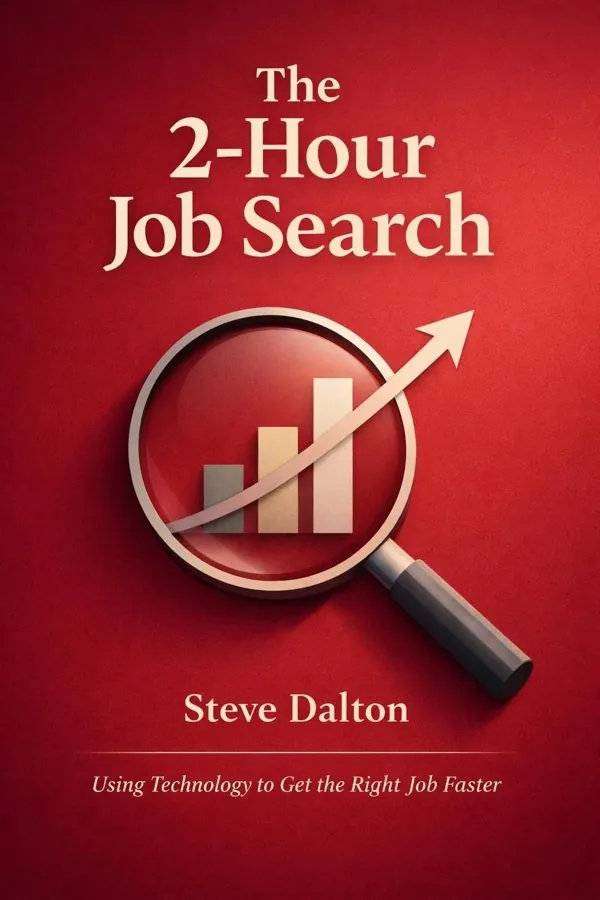
The 2-Hour Job Search: Using Technology to Get the Right Job Faster: Summary & Key Insights
by Steve Dalton
 10 min4 chaptersAudio available
What Is The 2-Hour Job Search: Using Technology to Get the Right Job Faster About?
The 2-Hour Job Search: Using Technology to Get the Right Job Faster by Steve Dalton is a career book spanning 4 pages. The 2-Hour Job Search provides a step-by-step system for efficiently finding and securing a job using modern technology. Steve Dalton, a career consultant at Duke University’s Fuqua School of Business, introduces a structured approach that helps job seekers identify target employers, network effectively, and secure interviews. The book emphasizes practical tools such as LinkedIn and Excel to streamline the job search process, focusing on prioritization and relationship-building rather than endless online applications.
This FizzRead summary covers all 4 key chapters of The 2-Hour Job Search: Using Technology to Get the Right Job Faster in approximately 10 minutes, distilling the most important ideas, arguments, and takeaways from Steve Dalton's work. Also available as an audio summary and Key Quotes Podcast.
The 2-Hour Job Search: Using Technology to Get the Right Job Faster
The 2-Hour Job Search provides a step-by-step system for efficiently finding and securing a job using modern technology. Steve Dalton, a career consultant at Duke University’s Fuqua School of Business, introduces a structured approach that helps job seekers identify target employers, network effectively, and secure interviews. The book emphasizes practical tools such as LinkedIn and Excel to streamline the job search process, focusing on prioritization and relationship-building rather than endless online applications.
Who Should Read The 2-Hour Job Search: Using Technology to Get the Right Job Faster?
This book is perfect for anyone interested in career and looking to gain actionable insights in a short read. Whether you're a student, professional, or lifelong learner, the key ideas from The 2-Hour Job Search: Using Technology to Get the Right Job Faster by Steve Dalton will help you think differently.
- ✓Readers who enjoy career and want practical takeaways
- ✓Professionals looking to apply new ideas to their work and life
- ✓Anyone who wants the core insights of The 2-Hour Job Search: Using Technology to Get the Right Job Faster in just 10 minutes
Want the full summary?
Get instant access to this book summary and 100K+ more with Fizz Moment.
Get Free SummaryAvailable on App Store • Free to download
Key Chapters
Everything begins with clarity. Most job seekers skip straight to applying, hoping volume will compensate for lack of focus. But true efficiency starts with prioritization — knowing where your energy will have the highest return. That’s why the first step of my system is the LAMP method: List, Alumni, Motivation, and Posting. Each word represents a filter that helps you identify and rank potential employers.
Start by creating a broad list of organizations that interest you — perhaps fifty or more. Don’t judge them yet; this is your universe of options. Next, you score each company across the remaining three dimensions. The 'A' stands for Alumni: through LinkedIn or your school’s alumni network, look for people who work there and might share meaningful common ground with you. The easier it is to find a connection, the higher the score. 'M' is Motivation: how much does this company excite you? Could you genuinely see yourself contributing there? 'P' means Posting: does the company have relevant openings now? These simple letters let you build a spreadsheet that transforms vague dreaming into quantifiable focus.
As you fill out this chart in Excel, something powerful happens — the chaos of job searching begins to take shape. You realize that not all companies deserve equal attention, and more importantly, that networking efforts yield the best return when guided by clear data. The goal of the LAMP exercise is not perfection but momentum. By the end, you’ll have a prioritized list of targets where meaningful outreach can begin.
The beauty of this method lies in its adaptability. Whether your network is huge or minimal, technology fills the gaps. LinkedIn gives you immediate access to professional intersections you never imagined. Excel becomes your silent partner in strategy, keeping you disciplined and objective. I always remind my students that this step, though seemingly analytical, is where emotional clarity begins too: you start seeing your career not as response to markets, but as a deliberate, self-directed journey.
Once your LAMP list is built, we move from strategy to action — but with precision. The heart of successful job searching isn’t mass messaging; it’s genuine connection. And genuine connection begins with intelligent outreach. In this step, our goal is to turn your prioritized list into living, breathing human contact.
Start with informational interviews. These are not job pitches or requests for favors, but conversations designed to learn, explore, and demonstrate curiosity. Thanks to LinkedIn, alumni networks, and online directories, finding the right people has never been easier. The challenge is not access — it’s approach. That’s why I teach a disciplined outreach email strategy: short, respectful, curious, and clear. For example, a concise three-line note that references shared background and a specific, time-limited request for a brief conversation will consistently outperform long, self-focused messages.
The response rates to such emails depend on persistence and timing, but spreadsheets and reminders can make your follow-ups systematic rather than emotional. The goal here is rhythm — sending, tracking, following up once, then moving on. You’ll learn to depersonalize rejection and treat outreach as a process. Over time, what begins as mechanical data entry evolves into genuine networking — people who respond to your curiosity become invested in your success.
These conversations expand your understanding of company culture, role expectations, and hiring dynamics. More importantly, they build allies. When handled correctly, informational interviews turn strangers into advocates. By inviting professionals to share their experiences rather than asking for jobs, you show maturity and respect. People remember energy and gratitude much longer than credentials.
Technology, when used as a partner rather than a crutch, allows you to scale this human process. LinkedIn search filters, Boolean queries, and contact-tracking spreadsheets give you structure. They prevent drift, letting you focus on what works instead of guessing where to go next. The result is a unified system where your research naturally flows into relationships.
+ 2 more chapters — available in the FizzRead app
All Chapters in The 2-Hour Job Search: Using Technology to Get the Right Job Faster
About the Author
Steve Dalton is the head of MBA Career Services at Duke University’s Fuqua School of Business. He specializes in job search strategy and career development, helping students and professionals navigate the modern employment landscape. Dalton is known for his practical frameworks that combine technology and behavioral science to make job searching more efficient.
Get This Summary in Your Preferred Format
Read or listen to the The 2-Hour Job Search: Using Technology to Get the Right Job Faster summary by Steve Dalton anytime, anywhere. FizzRead offers multiple formats so you can learn on your terms — all free.
Available formats: App · Audio · PDF · EPUB — All included free with FizzRead
Download The 2-Hour Job Search: Using Technology to Get the Right Job Faster PDF and EPUB Summary
Key Quotes from The 2-Hour Job Search: Using Technology to Get the Right Job Faster
“Most job seekers skip straight to applying, hoping volume will compensate for lack of focus.”
“Once your LAMP list is built, we move from strategy to action — but with precision.”
Frequently Asked Questions about The 2-Hour Job Search: Using Technology to Get the Right Job Faster
The 2-Hour Job Search: Using Technology to Get the Right Job Faster by Steve Dalton is a career book that explores key ideas across 4 chapters. The 2-Hour Job Search provides a step-by-step system for efficiently finding and securing a job using modern technology. Steve Dalton, a career consultant at Duke University’s Fuqua School of Business, introduces a structured approach that helps job seekers identify target employers, network effectively, and secure interviews. The book emphasizes practical tools such as LinkedIn and Excel to streamline the job search process, focusing on prioritization and relationship-building rather than endless online applications.
You Might Also Like

60 Seconds & You're Hired!
Robin Ryan
10 min
A New Way for Mothers: A Revolutionary Approach for Mothers to Use Their Skills and Talents While Their Children Are at School
Louise Webster
10 min
Betting on You: How to Put Yourself First and (Finally) Take Control of Your Career
Laurie Ruettimann
10 min
Born for This: How to Find the Work You Were Meant to Do
Chris Guillebeau
10 min
Brag Better: Master the Art of Fearless Self-Promotion
Meredith Fineman
10 min
Build for Tomorrow: An Action Plan for Embracing Change, Adapting Fast, and Future-Proofing Your Career
Jason Feifer
10 minBrowse by Category
Ready to read The 2-Hour Job Search: Using Technology to Get the Right Job Faster?
Get the full summary and 100K+ more books with Fizz Moment.