
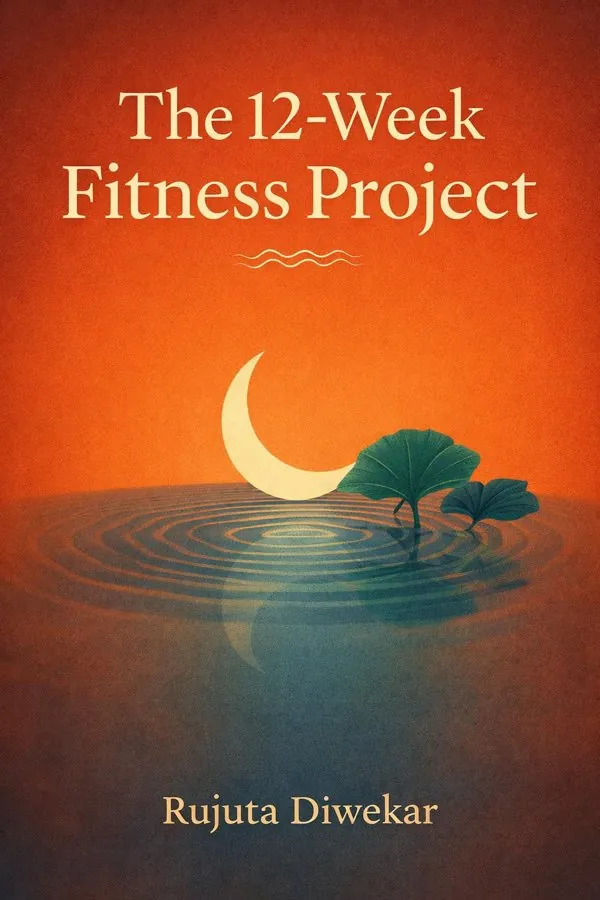
The 12-Week Fitness Project: Summary & Key Insights
 10 min9 chaptersAudio available
Key Takeaways from The 12-Week Fitness Project
A healthier body is often built less by dramatic effort than by the quiet order of everyday routines.
When food becomes a source of fear, fitness quickly becomes impossible to sustain.
The most powerful changes are often too small to feel impressive in the moment.
The best exercise plan is not the one that looks impressive on paper, but the one you can keep doing when life gets busy.
Many people try to earn health through effort while quietly sabotaging it through exhaustion.
What Is The 12-Week Fitness Project About?
The 12-Week Fitness Project by Rujuta Diwekar is a general book. The 12-Week Fitness Project is a practical, habit-based guide to becoming healthier without turning fitness into punishment. In this book, nutritionist and wellness expert Rujuta Diwekar argues that lasting change does not come from extreme diets, punishing workouts, or chasing a perfect body. Instead, it comes from restoring a sane relationship with food, movement, sleep, digestion, and everyday routines. Structured as a 12-week journey, the book helps readers focus on small, repeatable actions that gradually improve strength, stamina, metabolism, and confidence. What makes the book especially valuable is its realism. Diwekar does not promise overnight transformation. She encourages readers to work with their body, culture, schedule, and natural rhythms rather than against them. Her advice blends nutrition, exercise, lifestyle, and self-awareness in a way that feels accessible even for beginners. Rujuta Diwekar is widely known for her work as a celebrity nutritionist, but her larger contribution lies in challenging fad-driven wellness culture. With this book, she offers a grounded alternative: a structured but flexible program for building fitness in a way that is sustainable, enjoyable, and deeply connected to everyday life.
This FizzRead summary covers all 9 key chapters of The 12-Week Fitness Project in approximately 10 minutes, distilling the most important ideas, arguments, and takeaways from Rujuta Diwekar's work. Also available as an audio summary and Key Quotes Podcast.
The 12-Week Fitness Project
The 12-Week Fitness Project is a practical, habit-based guide to becoming healthier without turning fitness into punishment. In this book, nutritionist and wellness expert Rujuta Diwekar argues that lasting change does not come from extreme diets, punishing workouts, or chasing a perfect body. Instead, it comes from restoring a sane relationship with food, movement, sleep, digestion, and everyday routines. Structured as a 12-week journey, the book helps readers focus on small, repeatable actions that gradually improve strength, stamina, metabolism, and confidence.
What makes the book especially valuable is its realism. Diwekar does not promise overnight transformation. She encourages readers to work with their body, culture, schedule, and natural rhythms rather than against them. Her advice blends nutrition, exercise, lifestyle, and self-awareness in a way that feels accessible even for beginners.
Rujuta Diwekar is widely known for her work as a celebrity nutritionist, but her larger contribution lies in challenging fad-driven wellness culture. With this book, she offers a grounded alternative: a structured but flexible program for building fitness in a way that is sustainable, enjoyable, and deeply connected to everyday life.
Who Should Read The 12-Week Fitness Project?
This book is perfect for anyone interested in general and looking to gain actionable insights in a short read. Whether you're a student, professional, or lifelong learner, the key ideas from The 12-Week Fitness Project by Rujuta Diwekar will help you think differently.
- ✓Readers who enjoy general and want practical takeaways
- ✓Professionals looking to apply new ideas to their work and life
- ✓Anyone who wants the core insights of The 12-Week Fitness Project in just 10 minutes
Want the full summary?
Get instant access to this book summary and 100K+ more with Fizz Moment.
Get Free SummaryAvailable on App Store • Free to download
Key Chapters
A healthier body is often built less by dramatic effort than by the quiet order of everyday routines. One of the central ideas in The 12-Week Fitness Project is that fitness is not a short burst of motivation but a rhythm created through consistent habits. Rujuta Diwekar shifts the focus away from intensity and toward regularity: waking up on time, eating at appropriate intervals, moving every day, getting enough sleep, and respecting the body’s natural signals.
This matters because many people approach fitness as a temporary campaign. They overexercise for two weeks, cut calories aggressively, skip meals, and then burn out. Diwekar argues that the body responds far better to predictability than to punishment. Stable routines support digestion, hormonal balance, energy levels, recovery, and mental clarity. In other words, discipline is not about doing the hardest thing possible; it is about doing sensible things consistently.
A practical application of this idea is to examine your current day before trying to overhaul your body. Do you wake and sleep at erratic hours? Do you delay breakfast, snack mindlessly, and then eat too much late at night? Do you sit for long stretches and expect one gym session to fix everything? The book encourages readers to identify these patterns and improve them one by one. A person who starts sleeping better, eating meals on time, and walking daily may see more durable progress than someone following an unsustainable crash plan.
The larger lesson is that fitness is cumulative. It grows through repetition, not drama. Your body is shaped by what you do most days, not what you do once in a while. Actionable takeaway: choose three anchors for your day this week, such as a regular wake-up time, timely meals, and a daily walk, and protect them before adding anything more ambitious.
When food becomes a source of fear, fitness quickly becomes impossible to sustain. Diwekar strongly challenges the modern tendency to label foods as strictly good or bad, clean or dirty, safe or sinful. In The 12-Week Fitness Project, she promotes a more grounded idea: food is nourishment, memory, culture, recovery, and energy. A healthy body does not come from obsessive restriction but from eating well, regularly, and with attention.
Her approach stands against the confusion created by fad diets, detox plans, and trendy exclusions. Many readers are used to being told to avoid carbohydrates, skip traditional staples, or eat according to imported wellness rules. Diwekar instead emphasizes familiar, local, seasonal foods and meals that are realistic in daily life. This way of eating is easier to maintain and often more satisfying, which matters because satisfaction reduces bingeing and erratic eating behavior.
Practically, this means not skipping meals in the hope of losing weight faster. It means eating breakfast instead of surviving on coffee, including balanced meals instead of random snacking, and seeing traditional foods as allies rather than obstacles. Someone who eats fruit, nuts, home-cooked meals, and appropriate portions through the day is likely to feel more energetic and less deprived than someone following a rigid low-calorie plan that collapses by evening.
The book also suggests that a calm relationship with food is itself part of health. Guilt, fear, and overcontrol can disconnect people from hunger, fullness, and pleasure. By removing unnecessary anxiety, readers can make more stable choices.
Food should support your life, not dominate your thoughts. Actionable takeaway: stop demonizing one everyday food you enjoy, and instead build a regular eating schedule around balanced, familiar meals that leave you nourished rather than deprived.
The most powerful changes are often too small to feel impressive in the moment. A major strength of The 12-Week Fitness Project is its insistence that transformation does not require a complete personality change. Diwekar breaks the process into manageable weekly shifts, helping readers understand that sustainable progress comes from incremental improvements compounded over time.
This matters because all-or-nothing thinking destroys momentum. Many people wait for a perfect Monday, a free month, or a surge of willpower before starting. Then they attempt extreme changes: two-hour workouts, strict diets, zero sugar, no eating out, and flawless discipline. Inevitably, real life interrupts. The plan collapses, and they conclude they lack commitment. Diwekar offers a more realistic model: begin with what you can repeat. Add one behavior, stabilize it, and then build further.
Examples of small changes include carrying fruit instead of relying on packaged snacks, adding mobility work before sleep, improving meal timing, reducing long sedentary periods, or introducing strength exercises gradually. None of these changes is dramatic alone, but together they alter how the body functions. Better digestion improves energy. Better energy improves movement. More movement improves sleep. Better sleep supports appetite control and recovery. Fitness emerges from these connected systems.
Another key application is psychological. Smaller goals are easier to track and complete, which builds confidence. Confidence matters because people stick to habits that make them feel capable. A reader who successfully drinks enough water, walks consistently, and eats breakfast daily develops evidence that change is possible. That sense of success can later support bigger goals like improved endurance or body composition.
The book’s deeper wisdom is that consistency beats intensity when intensity cannot be maintained. Actionable takeaway: identify one habit that is so small you cannot reasonably fail at it, such as a 15-minute walk after lunch or eating one proper breakfast daily, and commit to it for the next seven days.
The best exercise plan is not the one that looks impressive on paper, but the one you can keep doing when life gets busy. Diwekar presents fitness as something that should work with ordinary schedules, family responsibilities, and energy fluctuations. Instead of glorifying punishing regimens, The 12-Week Fitness Project emphasizes practical movement that fits into a real human life.
This idea is especially important for people who feel excluded by conventional fitness culture. Not everyone wants to train like an athlete, spend hours in a gym, or perform highly demanding routines. Diwekar broadens the meaning of movement to include walking, mobility, strength work, and regular activity woven through the day. The goal is not perfection but functionality: a body that can move well, recover well, and feel alive.
A practical example is the difference between a plan you admire and a plan you actually follow. If a person signs up for six intense gym sessions a week but regularly misses four, the plan is not working. But if that same person walks five days a week, performs basic strength exercises twice weekly, climbs stairs, and avoids excessive sitting, they may become fitter in a far more durable way. Sustainability matters more than fantasy.
The book also reinforces that movement should support long-term health, not just appearance. Better mobility, stronger muscles, improved balance, and reduced stiffness all contribute to quality of life. Exercise should help you function better in the body you live in every day.
Rather than asking, “What is the hardest workout I can survive?” the better question is, “What form of movement can I consistently return to?” Actionable takeaway: design a weekly movement plan based on your actual schedule, not your idealized self, and include at least one activity you genuinely enjoy enough to repeat.
Many people try to earn health through effort while quietly sabotaging it through exhaustion. One of the most practical lessons in The 12-Week Fitness Project is that recovery is not a luxury; it is part of the fitness process itself. Diwekar highlights sleep, rest, and nervous system balance as foundational to metabolism, exercise recovery, appetite regulation, mood, and hormonal health.
This is an important corrective in a culture that praises being busy, under-rested, and constantly productive. People often believe they can compensate for poor sleep with coffee, supplements, or an extra workout. But the body keeps score. Inadequate rest can increase cravings, worsen decision-making, reduce workout quality, impair recovery, and make healthy routines harder to maintain. A tired body is less resilient, and a tired mind is more likely to choose convenience over care.
In practical terms, prioritizing recovery may mean creating a consistent sleep window, reducing late-night screen exposure, avoiding very heavy meals too close to bedtime, or not scheduling hard exercise when already deeply fatigued. It may also mean recognizing that rest days are productive, especially when they allow the body to absorb training and return stronger. A person who sleeps seven to eight hours regularly may see better progress than someone who trains more but recovers poorly.
Diwekar’s broader point is that health does not improve simply because we demand more from the body. It improves when we also create the conditions in which the body can repair and adapt. Recovery allows all the other efforts to work.
If your fitness routine feels harder than it should, the missing ingredient may not be more discipline but more restoration. Actionable takeaway: choose one recovery habit to improve this week, such as setting a fixed bedtime or protecting 30 screen-free minutes before sleep, and treat it as seriously as a workout.
Progress does not always mean abandoning the old for the new. A defining feature of Diwekar’s work is her confidence in traditional food habits and local practices that have sustained people long before the wellness industry began selling shortcuts. In The 12-Week Fitness Project, she encourages readers to trust cultural food wisdom, seasonal eating, and routines shaped by lived experience rather than blindly chasing imported trends.
This idea matters because many people feel pressured to replace ordinary meals with expensive powders, exotic superfoods, or highly processed diet products. Diwekar pushes back against the assumption that fitness must be purchased in modern packaging. Familiar foods prepared sensibly can be deeply nourishing, and traditional practices often carry embedded intelligence about climate, digestion, appetite, and lifestyle.
For example, eating seasonal fruits, home-cooked meals, and regionally appropriate staples is often more practical and sustainable than following a social-media diet built around scarcity and novelty. Someone who returns to balanced, culturally familiar meals may find it easier to eat regularly, digest comfortably, and enjoy food without confusion. This also reduces dependency on food rules that change every year.
There is also a psychological benefit. Respecting one’s food culture helps build continuity rather than conflict. Readers do not need to choose between health and identity. They can become fitter while remaining connected to the foods and habits that feel natural, meaningful, and accessible.
Diwekar is not arguing for blind nostalgia. She is suggesting discernment: keep what serves health, question what does not, and do not assume newer automatically means better. Actionable takeaway: bring one simple traditional, home-style food practice back into your week, such as a regular homemade meal or seasonal fruit, and observe how it affects satisfaction and consistency.
People rarely build a strong, healthy life by constantly humiliating themselves into it. Another powerful theme in The 12-Week Fitness Project is that fitness should emerge from respect for the body, not hatred of it. Diwekar challenges the common pattern in which people begin health journeys only after reaching a point of disgust, panic, or shame. While those emotions may create short-term urgency, they rarely support steady, compassionate discipline.
A respectful approach does not mean complacency. It means acknowledging that the body deserves care even before it changes. When readers stop seeing food as punishment and exercise as repayment, they can make decisions from a place of support rather than self-attack. This shift reduces the emotional volatility that often drives extreme dieting, bingeing, overtraining, or giving up after one setback.
In practice, body respect can look like choosing movement that energizes rather than injures, eating enough to function well, wearing clothes that fit during the process instead of waiting to “deserve” comfort, and tracking improvements beyond weight. Better digestion, deeper sleep, less fatigue, improved strength, and a calmer mind are all signs of progress. They matter because they show the body is becoming more resilient, even if appearance changes slowly.
This mindset is especially useful during plateaus. If your only motivation is dissatisfaction with how you look, any delay in visible results can feel unbearable. But if you are building health out of self-respect, consistency becomes easier because the habits are valuable in themselves.
The body responds better to cooperation than contempt. Actionable takeaway: replace one appearance-based goal this month with a function-based goal, such as better sleep, improved stamina, or the ability to walk or lift with greater ease.
Change begins when we notice our patterns honestly, but it stalls when self-monitoring turns into control and anxiety. Diwekar promotes awareness throughout The 12-Week Fitness Project, yet she avoids the trap of making health feel like a full-time surveillance project. The goal is to observe how you eat, move, sleep, and feel so you can make better choices, not to become consumed by numbers, guilt, or constant correction.
This distinction is crucial. Awareness helps people identify their real problems. For one person, the issue may be skipped meals leading to evening overeating. For another, it may be poor sleep, a sedentary workday, or inconsistent hydration. Without awareness, people often copy generic solutions that do not address their actual situation. With awareness, they can intervene intelligently.
But Diwekar’s approach is not obsessive tracking for its own sake. She does not frame wellness as endless measuring. Instead, she emphasizes noticing signals: energy after meals, hunger timing, bowel habits, workout recovery, sleep quality, and mood changes. These are practical markers because they show how daily habits affect the body in real time.
A useful application is a simple weekly review. Ask: When did I feel most energetic? Which meals kept me satisfied? On which days did I move well? What disrupted my sleep? This kind of reflection can reveal more than strict calorie counting if your larger aim is sustainable health.
The deeper message is that self-awareness should create clarity, not fear. You are learning how your body responds, not trying to control every variable. Actionable takeaway: for one week, keep a simple daily note on meal timing, movement, sleep, and energy levels, then use the patterns you notice to make one targeted adjustment instead of attempting a total reset.
Any routine can seem effective for a few days; the real question is whether it still works after enthusiasm fades. Perhaps the most important idea in The 12-Week Fitness Project is that sustainability is not a compromise but the true measure of a good health plan. Diwekar repeatedly steers readers away from temporary intensity and toward choices they can live with over months and years.
This principle changes how success is defined. A plan is not successful because it delivers quick visible results at a high personal cost. It is successful if it improves health while fitting into ordinary life, preserving mental balance, and allowing continuity. If a routine depends on constant deprivation, social isolation, or extraordinary willpower, it is fragile. The moment stress, travel, work pressure, or family demands increase, it breaks.
A sustainable routine leaves room for real life. It allows flexibility in meals, practical forms of exercise, and occasional disruptions without total collapse. For example, a person may not exercise every day during a stressful week, but if they keep eating regular meals, walking when possible, and returning to routine quickly, their progress remains intact. Sustainability creates resilience.
This idea also protects people from the repeated cycle of starting over. Every abandoned extreme plan erodes trust in oneself. A gentler but steadier approach builds identity: “I am someone who takes care of my body.” That identity is more powerful than any short-term challenge.
In the end, the body benefits most from what can be repeated. Actionable takeaway: review your current fitness efforts and remove one rule that is too rigid to maintain, replacing it with a version you could realistically follow even during a busy or imperfect week.
All Chapters in The 12-Week Fitness Project
About the Author
Rujuta Diwekar is an Indian nutritionist, author, and wellness advocate known for her practical approach to food and fitness. She rose to public prominence through her work with high-profile clients, but her broader influence comes from challenging diet fads and promoting everyday health habits rooted in simplicity and cultural relevance. Diwekar often emphasizes local and seasonal foods, regular eating patterns, sleep, movement, and long-term consistency over restrictive plans and quick fixes. Through her books, talks, and public guidance, she has built a reputation for making nutrition feel accessible rather than intimidating. Her work appeals to readers who want realistic, sustainable health advice that respects both the body and the realities of daily life.
Get This Summary in Your Preferred Format
Read or listen to the The 12-Week Fitness Project summary by Rujuta Diwekar anytime, anywhere. FizzRead offers multiple formats so you can learn on your terms — all free.
Available formats: App · Audio · PDF · EPUB — All included free with FizzRead
Download The 12-Week Fitness Project PDF and EPUB Summary
Key Quotes from The 12-Week Fitness Project
“A healthier body is often built less by dramatic effort than by the quiet order of everyday routines.”
“When food becomes a source of fear, fitness quickly becomes impossible to sustain.”
“The most powerful changes are often too small to feel impressive in the moment.”
“The best exercise plan is not the one that looks impressive on paper, but the one you can keep doing when life gets busy.”
“Many people try to earn health through effort while quietly sabotaging it through exhaustion.”
Frequently Asked Questions about The 12-Week Fitness Project
The 12-Week Fitness Project by Rujuta Diwekar is a general book that explores key ideas across 9 chapters. The 12-Week Fitness Project is a practical, habit-based guide to becoming healthier without turning fitness into punishment. In this book, nutritionist and wellness expert Rujuta Diwekar argues that lasting change does not come from extreme diets, punishing workouts, or chasing a perfect body. Instead, it comes from restoring a sane relationship with food, movement, sleep, digestion, and everyday routines. Structured as a 12-week journey, the book helps readers focus on small, repeatable actions that gradually improve strength, stamina, metabolism, and confidence. What makes the book especially valuable is its realism. Diwekar does not promise overnight transformation. She encourages readers to work with their body, culture, schedule, and natural rhythms rather than against them. Her advice blends nutrition, exercise, lifestyle, and self-awareness in a way that feels accessible even for beginners. Rujuta Diwekar is widely known for her work as a celebrity nutritionist, but her larger contribution lies in challenging fad-driven wellness culture. With this book, she offers a grounded alternative: a structured but flexible program for building fitness in a way that is sustainable, enjoyable, and deeply connected to everyday life.
You Might Also Like
Duct Tape Marketing: The World's Most Practical Small Business Marketing Guide
John Jantsch
10 minDusk, Night, Dawn: On Revival and Courage
Anne Lamott
10 minFinish Big: How Great Entrepreneurs Exit Their Companies on Top
Bo Burlingham
10 minFirst As Tragedy, Then As Farce
Slavoj Zizek
10 minFirst Principles: What America's Founders Learned from the Greeks and Romans and How That Shaped Our Country
Thomas E. Ricks
10 minGood Habits, Bad Habits: The Science of Making Positive Changes That Stick
Wendy Wood
10 minBrowse by Category
Ready to read The 12-Week Fitness Project?
Get the full summary and 100K+ more books with Fizz Moment.